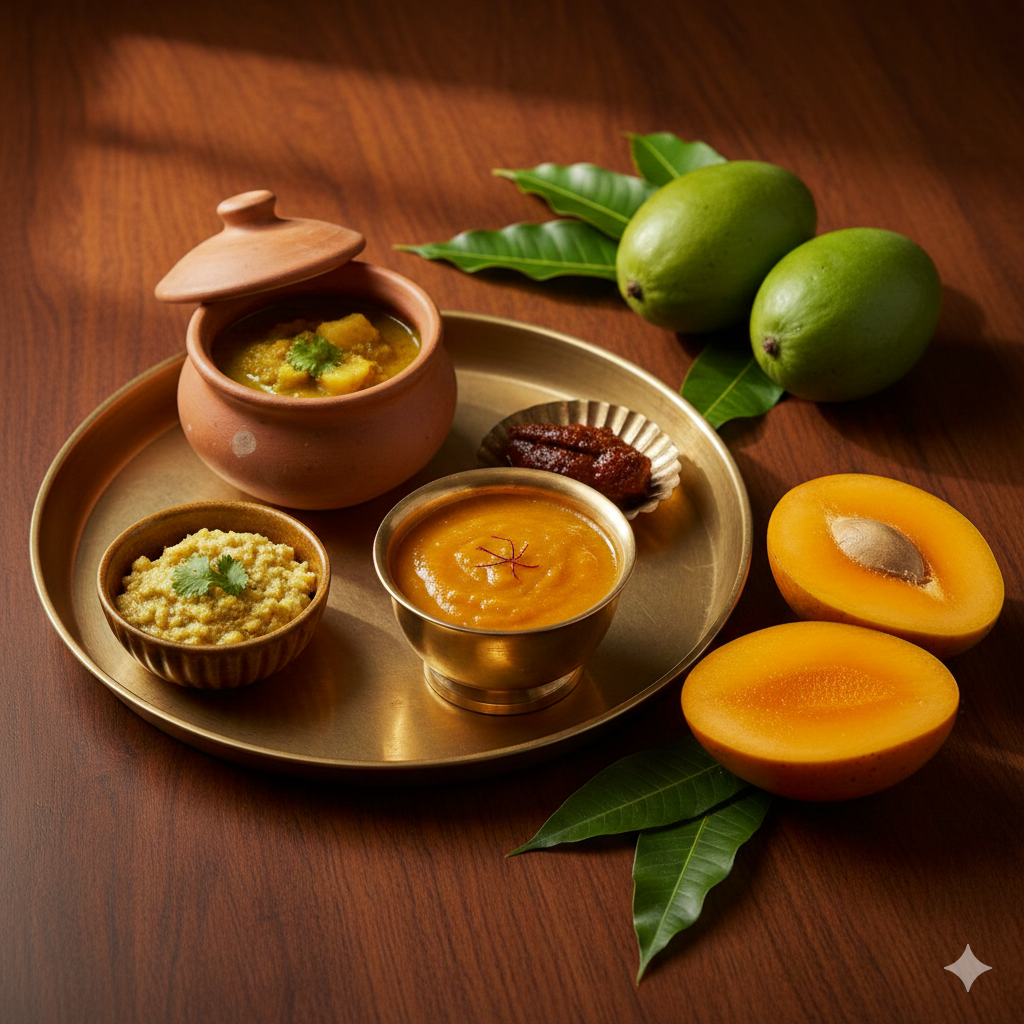
In Konkan, the mango does not simply arrive for summer — it transforms the entire kitchen. From the moment the first raw kairi appears on the tree in January to the final ripe Hapus of May, every stage of the mango’s life cycle finds a purposeful place in Konkan cooking. Konkan cuisine is one of India’s most layered and underappreciated culinary traditions, and the mango sits at the very center of it — starring in everything from silky morning desserts to sharp afternoon pickles to rich coconut-laced curries served over steaming rice.
Aamras: The Soul of a Konkan Summer
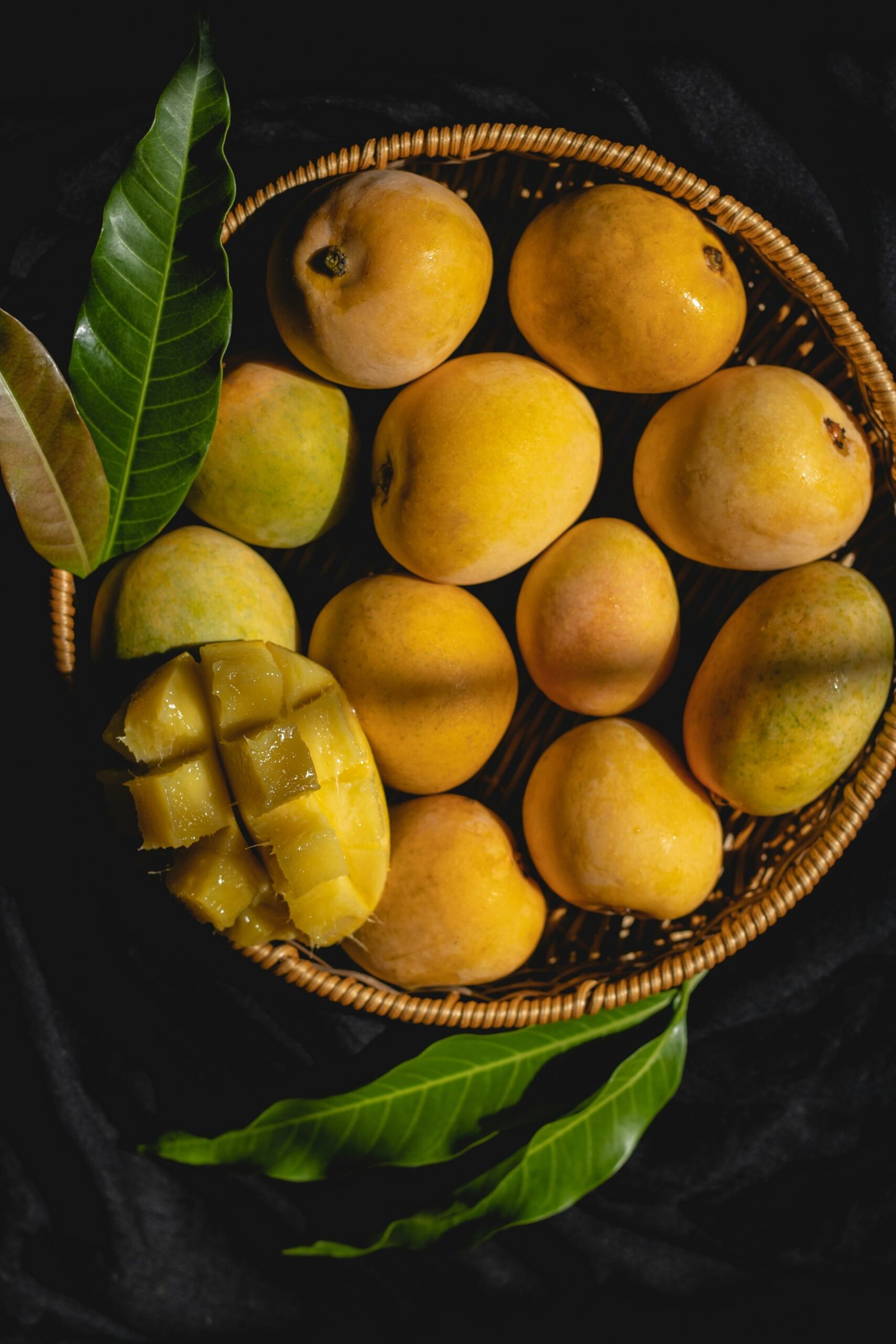
No dish defines the Konkan mango season more completely than aamras — a thick, hand-pressed Alphonso mango pulp that is at once a beverage, a sauce, and a dessert. The Konkan method of making aamras is distinctly different from the blender-based versions common elsewhere. Konkan families press and squeeze ripe Hapus mangoes entirely by hand, preserving a slightly textured, unevenly pulped consistency that carries the true character of the fruit.
What truly separates Konkan aamras from other versions is the seasoning. While most regions add cardamom, the traditional Konkani aamras is flavored with roughly crushed black pepper and a generous pour of sajuk toop — clarified ghee — stirred in just before serving. The black pepper adds a warm, surprising depth that elevates the natural sweetness of the Alphonso without masking it. Served alongside crisp, hot puris, Konkan-style aamras is not a side dish — it is the entire meal, celebrated as a ritual of the season.
Kairichi Aamti: Raw Mango Curry with Coconut
Before the Alphonso ripens, the raw green kairi takes center stage in one of Konkan cuisine’s most beloved savory dishes — kairichi aamti, a tangy raw mango curry cooked with freshly grated coconut, jaggery, red chillies, and a fragrant tempering of mustard seeds and curry leaves.
The genius of this dish lies in its balance. The raw mango provides a sharp, citrusy sourness; the jaggery tempers it with earthy sweetness; and the freshly ground coconut paste wraps everything in a creamy, rich base. The result is a curry that is simultaneously tangy, sweet, and mildly spicy — a combination that is distinctly Konkan and impossibly satisfying with plain steamed rice and a spoonful of ghee. Every Konkan household has its own variation of this recipe, adjusted by family preference, the specific variety of raw mango used, and the cook’s instinct for seasoning.
Ambe Dal: The Raw Mango Chutney That Misleads
The name ambe dal suggests a lentil preparation, but this is a deliberately misleading title for one of Konkan’s most refreshing condiments — a raw mango chutney made with soaked chana dal. Fresh raw mango pulp is mixed with ground chana dal, mustard seeds, cumin, red chillies, and curry leaves into a thick, coarse chutney that serves as both a condiment and a standalone accompaniment in a traditional Maharashtrian thali.
Ambe dal captures the raw mango at its most honest — no heat, no slow cooking, no transformation. It is the taste of the fruit exactly as the tree offers it, sharpened by spice and brightened by the nuttiness of the dal. During the season, it appears at the Konkan lunch table with such regularity that its absence feels like an oversight rather than a choice.
Ambe Upakari: The Whole Mango Curry
If kairichi aamti uses raw mango, ambe upakari celebrates the ripe one — cooking small, sweet-tart local mango varieties whole in a light, golden curry of coconut milk, jaggery, salt, and a simple tempering of mustard seeds, urad dal, curry leaves, and dried red chillies. The mangoes used in authentic ambe upakari are not the premium Alphonso — they are the smaller, fibrous ghot ambo or katt ambo varieties found in village backyards, which release their sweet-sour juice directly into the curry as they cook.
This dish is intensely seasonal and deeply personal to Konkan village households. It tastes best on the second day, when the mango juice has fully infused the curry base, and is served over brown ukde bhat — parboiled rice — in a manner that transforms a simple meal into something quietly extraordinary.
Amba Lonche: The Pickle That Outlives the Season
When the mango season ends, amba lonche — the traditional Konkan raw mango pickle — ensures that the taste of summer survives through the monsoon and well into the following year. Made with raw mango pieces, mustard seeds, red chilli powder, salt, and groundnut oil, the Maharashtrian-style lonche is a fiercely spiced, deeply aromatic pickle that forms an essential part of the everyday Konkan thali.
The Konkani variation, called karmbi nonche, takes a simpler and more immediate approach — raw mango pieces salted and left to cure for just a few hours, creating a quick pickle with an intensely tangy, salty punch. This version is not meant for long storage. It is the mango at its most spontaneous — made quickly, eaten immediately, and enjoyed with brown rice congee, neer dosa, or curd rice. Its simplicity is its entire point.
Mango Saav: Where Sweetness Meets Mustard
Among Konkan’s more unusual mango preparations is mango saav — also known as ambe sasav — a ripe mango curry in which mustard paste plays the starring role alongside coconut, jaggery, and curry leaves. The mustard introduces a pungent bitterness that cuts through the sweetness of the ripe fruit, creating a flavor contrast that is boldly Konkani in its refusal to be straightforward or predictable.
The use of mustard as a primary flavoring agent rather than a tempering spice is a hallmark of Konkan and coastal Karnataka cuisine — and in ambe saav, it finds its most expressive stage. Thick, creamy, and deeply layered, this dish represents everything Konkan cooking does best: finding complexity in seasonal abundance.
The Mango as Konkan’s Culinary Identity
The range of traditional dishes that Konkan cuisine builds around the mango — from hand-pressed aamras to slow-simmered ambe upakari to hour-cured karmbi nonche — reveals a culinary intelligence that treats every stage of the fruit’s life as an opportunity rather than a limitation. Raw or ripe, whole or pressed, sweet or sour, the mango appears in Konkan kitchens in forms that no other regional cuisine has imagined. To eat your way through a traditional Konkan mango season is to understand that great cuisine is not about technique alone. It is about paying close, devoted attention to a single extraordinary ingredient — and honoring it in every way the season allows.