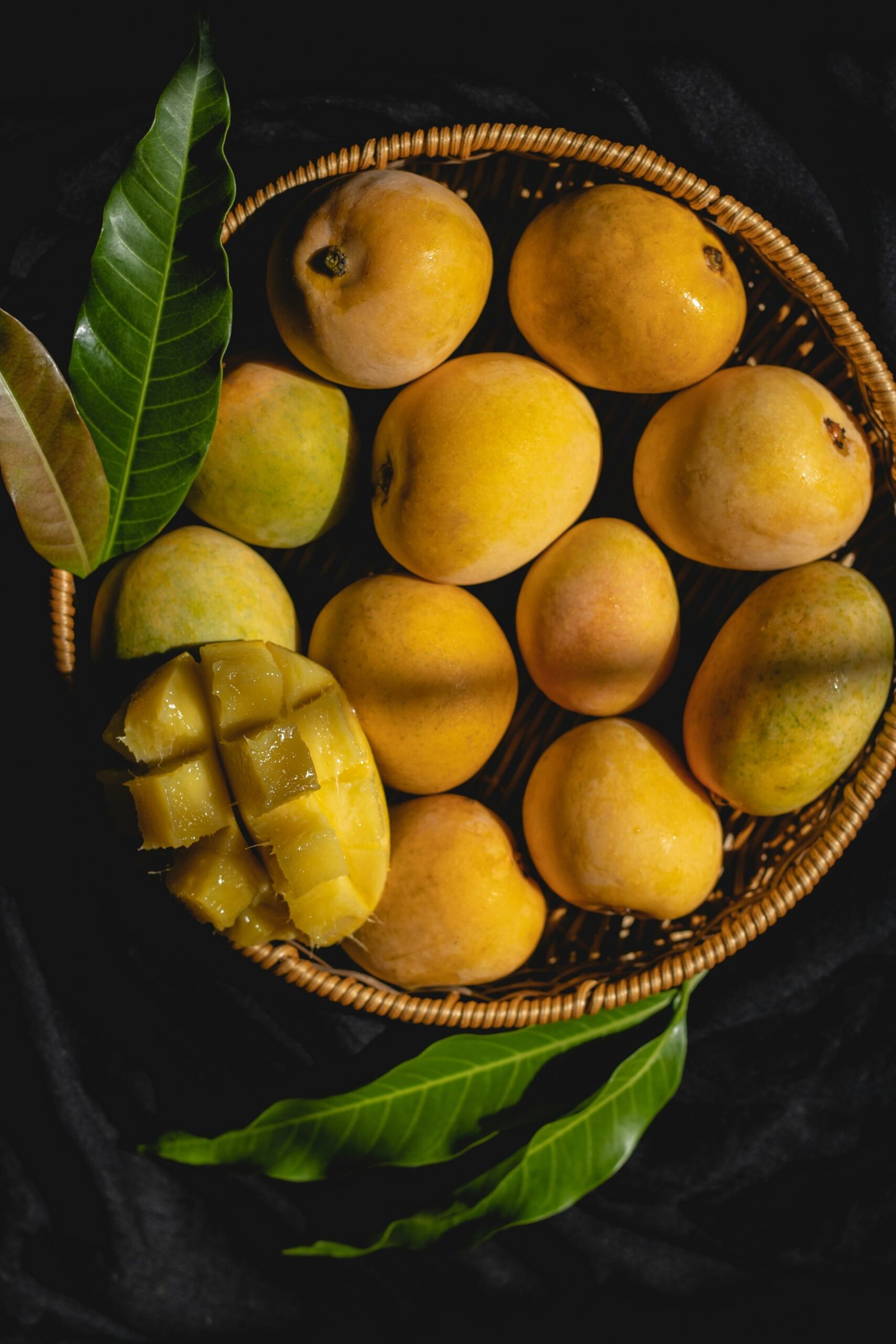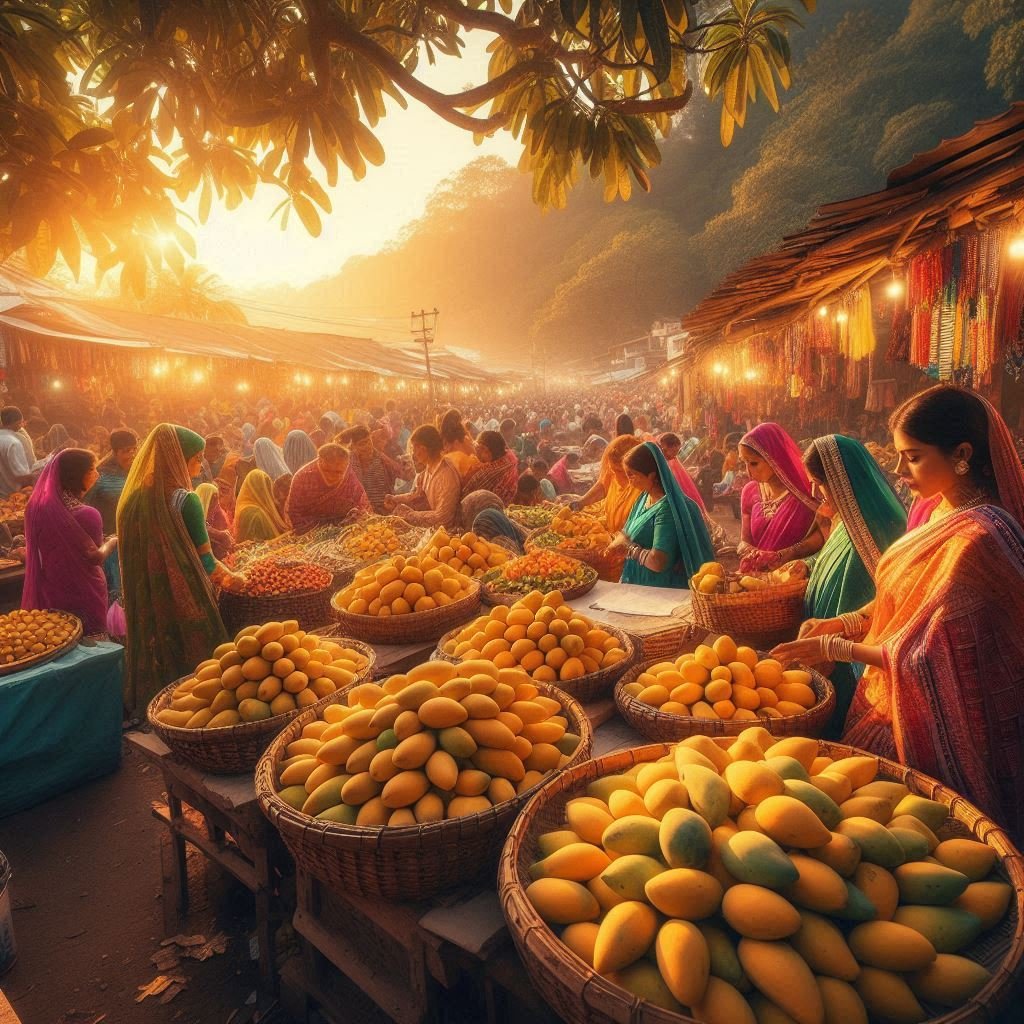
When most people think of Ratnagiri, they think Alphonso. And rightly so — the Ratnagiri Hapus is the jewel in India’s mango crown, celebrated across the world for its golden hue, intoxicating aroma, and unmatched sweetness. But Ratnagiri is far more than a one-variety story. Spread across 67,749 hectares of laterite hillsides and coastal farmland, Ratnagiri district nurtures a remarkable collection of mango varieties — some born from centuries of natural selection, others carefully bred by agricultural scientists at BSKKV Dapoli specifically for Konkan’s unique conditions. Each variety has its own personality, season, and culinary identity, and together they make Ratnagiri one of the most diverse mango-growing regions in all of India.
Alphonso (Hapus): The Undisputed King
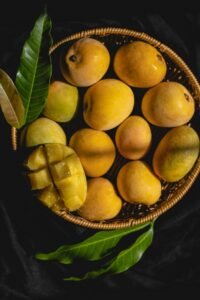
No article about Ratnagiri mangoes can begin anywhere other than the Alphonso. Known locally as Hapus, this variety holds a Geographical Indication (GI) tag that legally certifies its unique quality as being inseparable from the geography of five Konkan districts, with Ratnagiri at the center. The Ratnagiri Alphonso is distinguished by its golden-yellow skin with a characteristic reddish blush, completely fiber-free creamy pulp, a small seed-to-pulp ratio, and an aroma so powerful that a single box of ripe Hapus can fill an entire room with fragrance.
The fruit ripens between March and June and accounts for nearly 60% of India’s mango exports. Its sugar-acid balance — rich sweetness underscored by a gentle, barely perceptible tang — is the product of Ratnagiri’s laterite soil, coastal sea air, and precise monsoon-dry seasonal rhythm working in perfect unison. No fertilizer, no artificial ripening agent, and no orchard outside this geography has ever reproduced what the Ratnagiri Alphonso delivers naturally.
Ratna: The Productive Powerhouse
Released in 1981 by BSKKV Dapoli through the cross-breeding of Neelum and Alphonso, Ratna is one of Ratnagiri’s most commercially significant varieties after Hapus. The Ratna mango produces large, ovate-shaped fruits with deep orange pulp, no fiber, and a completely spongy-tissue-free flesh — a quality that makes it particularly attractive for both fresh consumption and export.
What sets Ratna apart as a farming variety is its cluster-bearing habit — producing fruit in bunches — combined with its status as a regular bearer that delivers consistent yields every season, unlike the alternate-bearing tendency of Alphonso. The flavor profile is tropical and full-bodied, with a citrus-forward sweetness and an aroma that echoes its Alphonso parentage. For farmers seeking a variety that delivers both quality and reliable yield, Ratna is the natural choice in Ratnagiri’s mango orchards.
Sindhu: The Nearly Seedless Marvel
If Ratna is the workhorse of Ratnagiri’s orchard economy, Sindhu is its most remarkable scientific achievement. Released in 1992 by BSKKV Dapoli as a cross between Ratna and Alphonso, Sindhu is celebrated as one of India’s only nearly seedless mango varieties — producing fruit with an extraordinarily thin, papery seed that maximizes pulp content to an extent no other commercial variety approaches.
The Sindhu mango has a vibrant orange-yellow skin, smooth fiber-free pulp, total soluble solids exceeding 20 Brix, and a sweet, aromatic flavor that carries clear Alphonso influence. Its high pulp-to-seed ratio makes it exceptionally well-suited for processing — mango pulp, juice, and dessert applications — as well as for premium fresh consumption. In a region where the value of a mango is often measured by how much of it you can eat, the Sindhu’s near-seedless quality is genuinely extraordinary.
Konkan Ruchi: Built for Processing and Scale
Released in 1999 by BSKKV Dapoli, Konkan Ruchi was developed through the same Neelum-Alphonso cross that produced Ratna — but with a significantly different agricultural and culinary outcome. Konkan Ruchi produces large fruits with thick skin, a light orange firm pulp with good keeping quality of three to four days post-harvest, and a flavor profile that balances sweetness with pronounced acidity.
This acidity, which makes Konkan Ruchi less appealing as a standalone fresh fruit compared to Alphonso, is precisely what makes it valuable to the food processing industry. Mango pulp, pickles, aamras for commercial production, and preserved mango products all benefit from a variety with high acidity and thick flesh. Konkan Ruchi does quietly critical economic work in Ratnagiri’s mango sector — grown widely across the district, contributing significantly to agro-processing revenue, yet rarely mentioned by name in the markets where its pulp eventually arrives.
Pairi: The Early Season Arrival
The Pairi mango holds a special place in Ratnagiri’s seasonal calendar as the earliest variety to ripen — arriving weeks before the Alphonso season peaks, making it the first fresh mango of summer for Konkan households. Medium-sized with a rounded form and greenish-yellow to golden skin that blushes red or pink on the sun-facing side, the Pairi has a juicy, buttery-textured pulp with a flavor that perfectly balances sweetness and tang.
The Pairi manThe Different Varieties of Mangoes Grown in Ratnagirigo is intensely aromatic — floral and tropical — and is the variety of choice for traditional aamras in Ratnagiri homes during the weeks before Hapus reaches its peak. Its relatively short shelf life has kept it out of large-scale commercial markets, but this same perishability has preserved it as a beloved local variety. To eat a freshly ripened Pairi in Ratnagiri is to experience the true beginning of the mango season — a fleeting, intensely local pleasure that no export-oriented variety can replace.
Konkan Samrat: The New Generation Contender
Released in 2014 by BSKKV Dapoli, Konkan Samrat represents the most recent chapter in Ratnagiri’s mango variety story. This colorful, aromatic variety boasts a high percentage of perfect flowers and a regular-bearing pattern, producing fruits free from spongy tissue with low fiber content and a pulp percentage exceeding 73%. Its total soluble solids exceed 20 Brix, placing it firmly in the premium sweetness range.
Konkan Samrat was bred specifically to address the weaknesses of Alphonso — the alternate-bearing tendency, the susceptibility to spongy tissue, and the sensitivity to climatic fluctuation — while retaining the richness, aroma, and flavor complexity that defines the Konkan mango standard. It is a variety built for the future of Ratnagiri’s orchards: maintaining the region’s world-class quality while adapting to the realities of a changing climate and an increasingly demanding global market.
Mankurad: The Coastal Neighbor
While Mankurad is most strongly associated with Goa, it is also grown in the southern parts of Ratnagiri district, particularly in areas bordering Sindhudurg. This uniform golden-yellow, oblong mango develops characteristic black spots as it ripens — an appearance that misleads buyers unfamiliar with the variety into undervaluing one of the most flavor-rich mangoes in the Konkan region. The Mankurad has a remarkably small, flat seed, an exceptionally high pulp ratio, no fiber, and a rich, intensely sweet flavor that has earned it a devoted following among connoisseurs.
Ratnagiri’s mango diversity is, in the end, a reflection of the region’s extraordinary agricultural intelligence — centuries of farmers observing what their specific land, climate, and soil could produce, and generations of scientists building on that foundation to create varieties that extend the season, serve new markets, and ensure that the legacy of Konkan mango excellence continues long into the future.