A mango, for all its glory, has always had one minor inconvenience — getting to the flesh. The large, flat seed at the center, the slippery skin, and the juice that seems determined to escape the moment a blade makes contact have challenged home cooks and professional chefs alike for as long as mangoes have been in kitchens. The good news is that over the years, a thoughtful collection of tools has evolved to make mango preparation faster, cleaner, safer, and far more enjoyable — whether you are preparing fresh Alphonso slices for a simple dessert, cooking a Konkani mango curry, or pressing pulp for a batch of traditional aamras. Here are the tools that every mango lover genuinely needs.
The Chef’s Knife: The Foundation of Everything
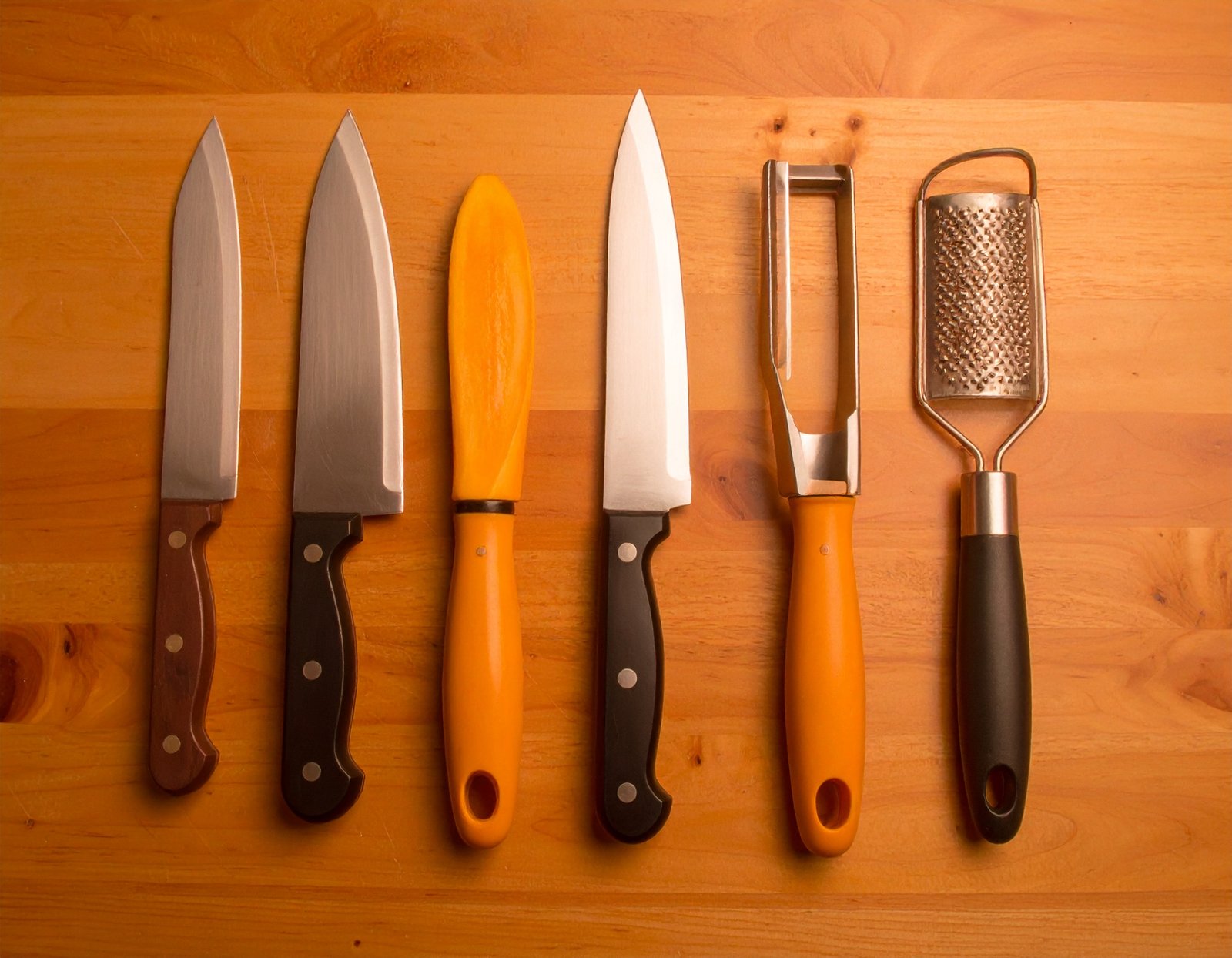
No specialized mango gadget will ever replace a well-maintained, sharp chef’s knife — and this truth applies to mango preparation above all other tasks. A dull knife is the number one cause of mango preparation accidents: because the blade slips off the mango’s smooth skin rather than entering cleanly, requiring dangerous extra force to be applied. A sharp 8-inch chef’s knife with a comfortable, non-slip handle allows you to slice cleanly along each side of the mango seed in one controlled motion, producing neat mango cheeks without waste.
The key technique is knowing where the seed lies. The Alphonso’s seed is relatively flat and positioned centrally — place the mango upright, feel for the narrow edge of the seed with your thumb, and make two cuts parallel to either side of it, approximately 1 cm from the center. With a truly sharp knife, this takes three seconds and produces perfect results every time. Invest in a quality knife — a Victorinox Fibrox or similar — and maintain it with a honing steel before every use. Everything else is secondary.
The Mango Splitter: Speed and Consistency in One Motion
For households that consume mangoes daily during the season — or for anyone preparing mangoes in volume for aamras, salads, or chutney — the mango splitter is the single most useful upgrade from a knife. This tool works on the same geometric logic as an apple corer: a central oval slot fits over the mango’s narrow seed profile, and two stainless steel blades on either side slice through the flesh simultaneously, separating both cheeks from the seed in a single downward press.
The best mango splitters — like the Zyliss 3-in-1 or the OXO Mango Pitter — feature micro-serrated stainless steel blades that pierce the tough mango skin without slipping, a curved seed slot that accommodates different seed sizes, and soft-grip ergonomic handles that make the process comfortable even for daily use. The result of a single press is two perfectly separated mango halves, ready to be scored and spooned out, diced in the skin, or blended whole. For Konkan families who prepare dozens of mangoes during peak season, this tool pays for itself within the first afternoon of use.
The Vegetable Peeler: The Most Underrated Mango Tool
Every kitchen has a vegetable peeler. Almost nobody uses it for mangoes — and that is a genuine oversight. For firmer, slightly underripe mangoes — including raw kairi used for Konkan pickles, aam panna concentrate, and raw mango chutneys — a sharp Y-shaped vegetable peeler removes the skin in smooth, controlled strokes without removing the flesh beneath it.
The conventional approach of scoring and slicing mango skin with a knife typically removes 2 to 3 mm of the outermost flesh along with the skin — particularly wasteful on premium Alphonso mangoes where every gram of flesh matters. A sharp peeler removes only the skin itself, maximizing the fruit you keep while producing clean, smooth-surfaced mango flesh ideal for cooking, dicing, or blending. For raw mango preparation specifically — where you need consistently peeled pieces for pickle and chutney — the peeler is faster, safer, and more economical than any knife technique.
The Heavy-Bottom Kadai: The Essential Mango Cooking Vessel
When it comes to cooking with mangoes — making mango chutneys, kairichi aamti curry, ambe upakari, or sweet mango halwa — the quality of the cookware is as important as the quality of the fruit. The high natural sugar and acidity content in mango pulp makes it prone to scorching against thin-bottomed pans, particularly during the reduction process that concentrates flavors in chutneys and curries.
A heavy-bottom stainless steel kadai or a tri-ply saucepan distributes heat evenly across the base and sides of the vessel, preventing hot spots that cause the mango pulp to catch and burn. A cast iron kadai, when seasoned properly, performs the same function and adds the particular depth of flavor that slow-cooked mango preparations benefit from — authentic Konkan mango pickle masala prepared in a cast iron vessel develops a roasted complexity that stainless steel simply cannot replicate.
For aamras preparation and any mango dish that requires gentle warming rather than high-heat cooking, a copper-bottom or tri-ply stainless vessel allows precise temperature control — essential for preserving the delicate aromatic compounds in ripe Alphonso pulp that are destroyed by excessive heat.
The Fine-Mesh Sieve: For Perfect Pulp and Aamras
Anyone who has made traditional Konkan aamras or mango pulp for cooking knows that the difference between an acceptable result and a perfect one often comes down to a single step: passing the pulp through a fine-mesh sieve. The fine-mesh stainless steel strainer removes all residual fibres, skin fragments, and seed membrane from the pressed mango pulp, producing a completely smooth, silky consistency that no hand-pressing or blender alone can achieve.
For the Konkani aamras tradition — where pulp is hand-pressed rather than blended — the sieve is the essential finishing step that transforms rustic pressed pulp into the smooth, gleaming, deeply golden aamras that is the standard of Konkan hospitality. A 20 cm fine-mesh sieve with a rigid stainless frame and a comfortable handle is sufficient for home use and will last decades with basic care.
The Airtight Glass Storage Jar: Protecting the Season’s Work
Every tool used in mango preparation ultimately serves a single purpose — producing mango dishes, pulp, and preserves worth storing. The airtight glass jar is the final and most important tool in the mango kitchen. Glass is non-reactive, does not absorb odors or flavors, and allows you to see the contents clearly — essential for monitoring the color and condition of stored pickle, chutney, and concentrate.
For Konkan mango pickle (karmbi nonche) and aam panna concentrate — both of which are made during the raw mango season and consumed throughout the year — a wide-mouthed airtight glass jar with a rubber-sealed lid is the difference between a preserve that lasts three months and one that spoils within two weeks. Always sterilize glass jars with boiling water and dry completely before use. Handle contents only with dry utensils. These two habits, combined with a good jar, are the entire science of mango preservation.