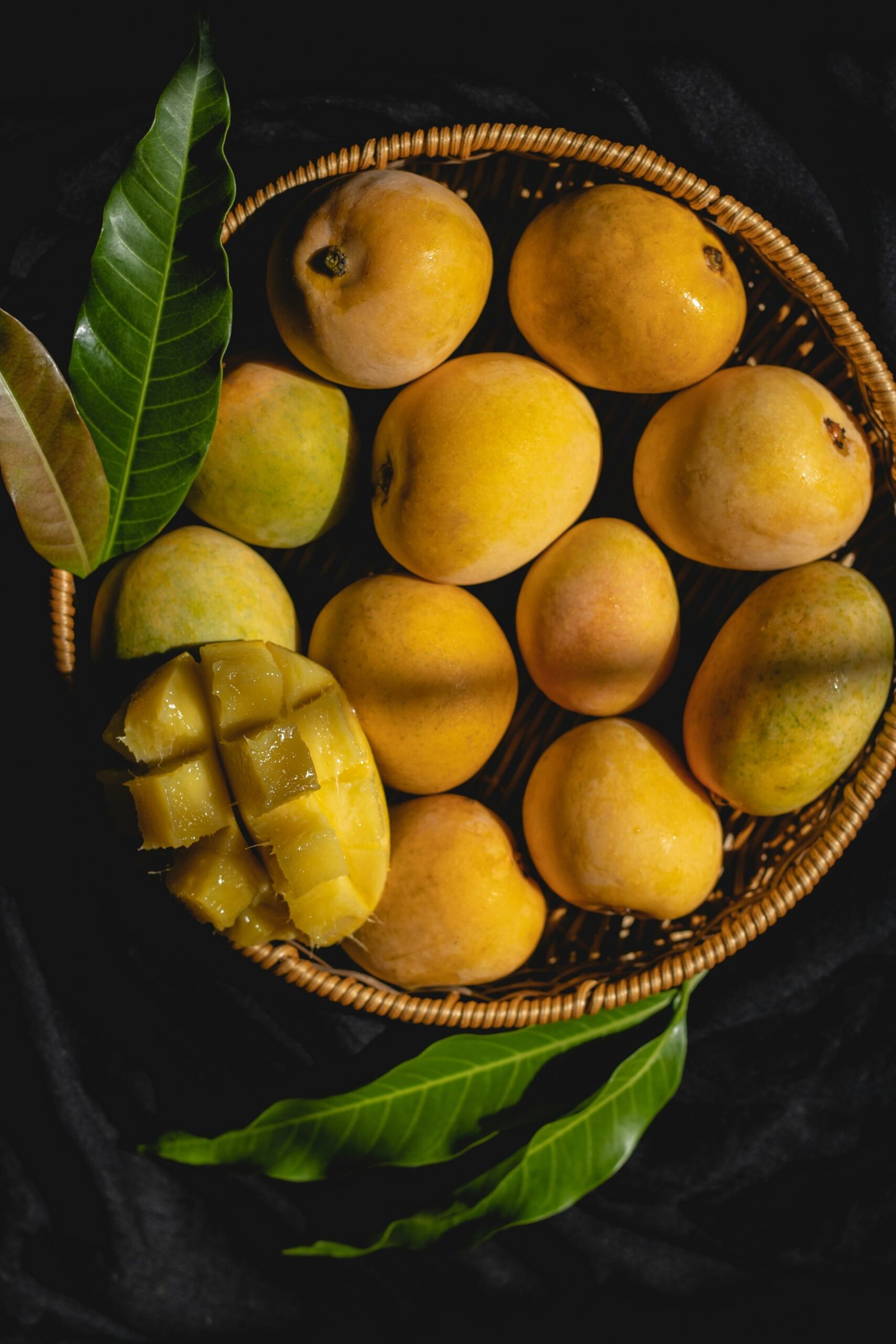
Every year, as March approaches and mango season opens across India, the same supply chain pressure activates. Consumers want Alphonso. Retailers want inventory. Traders want margin. And somewhere in this chain, the shortcut appears: raw mangoes harvested weeks before biological maturity, loaded into trucks, exposed to calcium carbide in sealed chambers for 48 hours, and delivered to market with yellow skin, a shelf life of three days, and none of the internal chemistry that defines what a genuinely ripened mango is. This is not a minor market irregularity. It is a systematic substitution of a chemical performance for a biological reality — and the difference between what it produces and what natural ripening produces is measurable, documented, and significant enough that FSSAI has explicitly banned the practice under the Food Safety and Standards Act.
The case for naturally ripened mangoes over carbide-treated ones is not a matter of preference or nostalgia. It is a matter of nutritional fact, food safety law, flavor chemistry, and the basic consumer right to receive what you paid for.
The Biology of Natural Ripening: What Is Actually Happening
Understanding why natural ripening produces a superior mango requires understanding what natural ripening actually does inside the fruit. A mango ripening on the tree — or harvested at the correct firm-ripe stage and allowed to complete its ripening at ambient temperature — undergoes a coordinated cascade of biochemical transformations triggered by its own endogenous ethylene production.
Starches convert to sugars through enzymatic action, producing the Brix levels that define sweetness. Organic acids — primarily citric acid, malic acid, and ascorbic acid — develop to their full concentrations, creating the sweetness-acid balance that makes a great Alphonso more than just sweet. Cell wall pectin degrades in a precisely controlled way, producing the smooth, fiber-free texture of a genuinely ripe Alphonso pulp. Volatile aromatic terpenoid compounds — including the myrcene and ocimene that produce the Alphonso’s characteristic fragrance — are synthesized in the outermost layers of the flesh. Minerals are retained and concentrated as moisture content develops naturally to its optimal percentage. All of this happens over 5 to 6 days in a natural process that has been optimized by millions of years of plant evolution.
Calcium carbide interrupts and bypasses this entire process. It does not replicate it.
The Nutritional Damage: What the Science Measures
A peer-reviewed study published in Scientific Reports (Nature Publishing Group) in January 2024 — arguably the most rigorous comparative analysis of naturally ripened versus calcium carbide-treated mangoes conducted to date — quantified the nutritional damage of carbide treatment with precision that removes all ambiguity.
The findings:
- Vitamin C (ascorbic acid): Naturally ripened mangoes contained 52.29 mg/g — versus 35.94 mg/g in carbide-treated mangoes. Carbide treatment reduced Vitamin C content by 31 percent
- Citric acid: 3.76 mg/g naturally vs 2.12 mg/g carbide-treated — a 44 percent reduction
- Malic acid: 1.37 mg/g naturally vs 0.63 mg/g carbide-treated — a 54 percent reduction
- Fiber content: Measurably higher in naturally ripened mangoes; calcium carbide application at 10 g/kg significantly reduced fiber, protein, and moisture content compared to natural ripening
- Minerals: Naturally ripened mangoes showed significantly higher levels of iron (0.45 mg/100 g), zinc (0.24 mg/100 g), and copper (0.17 mg/100 g) than carbide-treated fruit
- Shelf life: 6 days for naturally ripened mangoes vs 3 days for carbide-treated mangoes — less than half
These are not marginal differences. A carbide-treated mango delivers approximately a third less Vitamin C, half the malic acid, significantly reduced fiber, lower mineral density, and a shelf life so abbreviated that it spoils before many households have finished the box. The consumer paying a premium for Alphonso receives a nutritionally diminished product with a fraction of its natural life.
The Health Risk: What Carbide Leaves Behind
Beyond the nutritional depletion, calcium carbide introduces a direct health hazard that natural ripening never does. Industrial-grade calcium carbide — the form used in fruit ripening, not the laboratory-grade pure compound — contains arsenic and phosphorus as impurities. When calcium carbide contacts the moisture on the fruit’s surface, it releases acetylene gas — but it also deposits traces of arsenic and phosphorus hydride (phosphine) directly onto the peel and, through the peel, into the pulp.
FSSAI’s own documented warning states: “There are chances that calcium carbide may come in direct contact with fruits during application and leave residues of arsenic and phosphorus on fruits” — and identifies the consequences as “dizziness, frequent thirst, irritation, weakness, difficulty in swallowing, vomiting, and skin ulcers” from acute exposure. Published research extends this to chronic exposure risks: changes in hematological and biochemical profiles, liver and kidney dysfunction, immune system disruption, hormonal imbalance, and — most concerning — potential carcinogenic effects from sustained arsenic residue consumption.
These risks exist in a mango that looks ripe. The arsenic deposit is invisible. It does not change the fruit’s smell, appearance, or initial taste. The consumer has no way to know it is there without laboratory testing — which is precisely why the FSSAI ban exists and precisely why enforcement needs consumer demand to reinforce it.
The Flavor Destruction: Why Carbide Mangoes Taste Wrong
Every experienced mango eater knows that something is wrong with a carbide mango before they can articulate what it is. The yellow skin looks right. The softness feels approximately correct. But the taste is flat — a one-dimensional sweetness without aromatic depth, without the tangy acid resolution at the finish, without the fragrance that should fill the room before the fruit is cut. This is not imagination. It is the measurable consequence of carbide ripening’s fundamental mechanism.
Calcium carbide forces the mango’s skin to turn yellow by accelerating surface chemistry — but it does not initiate the internal biochemical cascade that converts starches to complex sugars, develops organic acids, synthesizes aromatic terpenoids, or completes the enzymatic conversion of cell wall pectin that produces smooth, fiber-free pulp. The result is a fruit that has been colored yellow from the outside without being ripened from the inside — a visual facsimile of a ripe mango with none of the internal reality. The peel changes color. The flavor never arrives.
Natural ripening produces the full sensory experience because it completes the full biological process. Carbide ripening produces only the appearance of completion — and any consumer who has eaten both knows the difference immediately.
The Shelf Life Argument: Speed vs. Quality
One of the commercial justifications offered for carbide ripening is speed — the ability to ripen fruit in 48 hours that would otherwise require 5 to 6 days. What this argument omits is the cost: a shelf life reduced to 3 days maximum, versus 6 days for naturally ripened fruit. A carbide-treated mango reaches soft before it reaches flavourful, and it begins to ferment before the household has had the opportunity to eat it properly. The speed advantage that benefits the trader translates directly into a quality and shelf life disadvantage for the consumer who paid for the fruit.
For a consumer who has ordered a box of Alphonso from a farm-direct brand like Kokan Samrat — mangoes harvested at correct firm-ripe maturity, dispatched the same day, and arriving in 24 to 48 hours — the natural 5 to 6 day ripening window is not a disadvantage. It is a feature: a week of the season’s best fruit, ripening perfectly one or two at a time, rather than a box of carbide-yellow mangoes that must all be eaten in three days or wasted.
The Conclusion That Cannot Be Qualified
Naturally ripened mangoes are measurably more nutritious, demonstrably safer, significantly more flavourful, and practically longer-lived than calcium carbide-treated ones. The science does not offer a middle position on this. The food safety law does not offer an exception. And the taste does not require a laboratory to confirm — it announces itself the moment a genuinely ripened Alphonso, pressed at the correct temperature, delivers its fragrance before you have even lifted it to your face.
The carbide mango offers speed. The naturally ripened mango offers everything else.