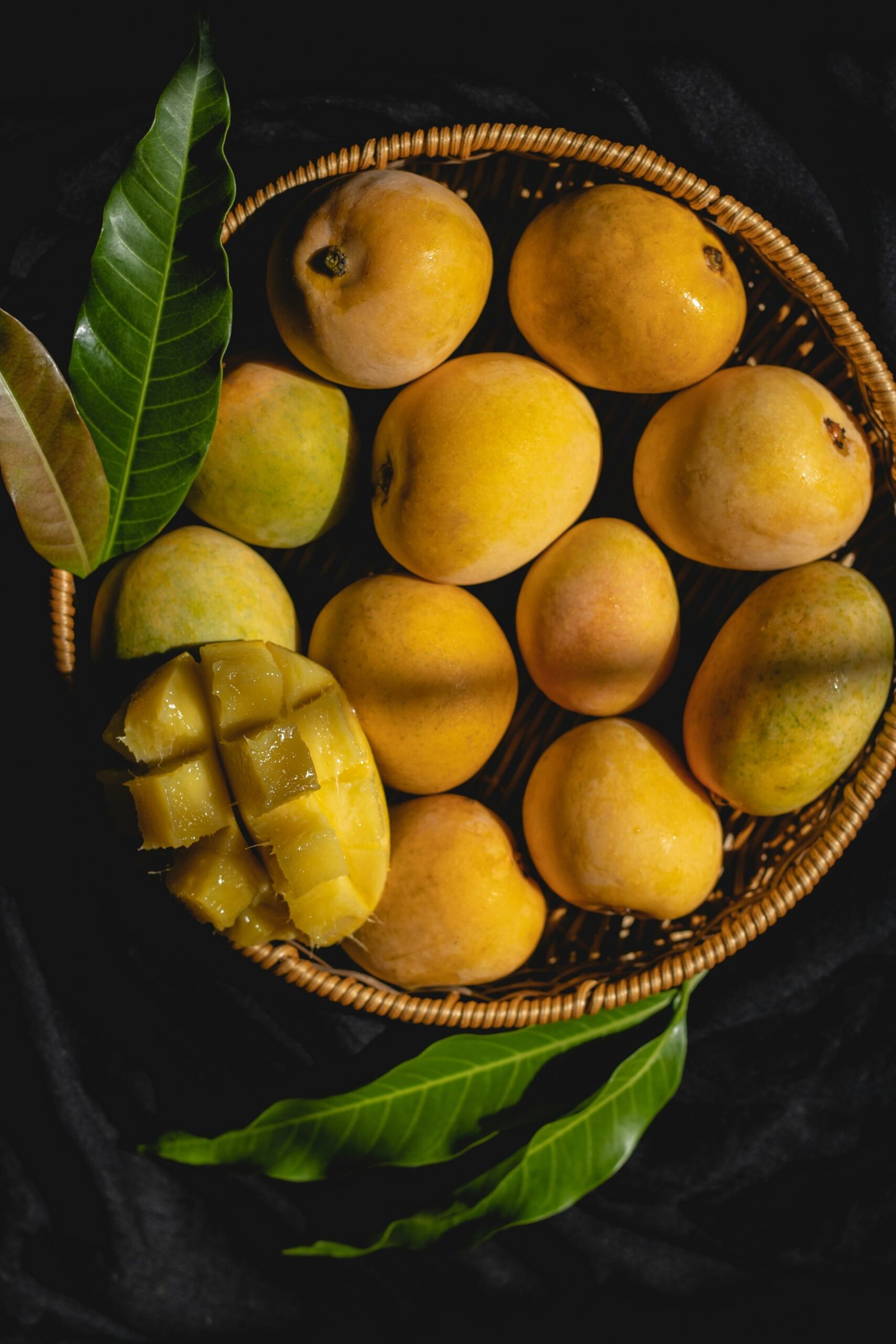
Not every mango makes a great juice. This sounds obvious until you consider how many people blend the first mango they find, produce a juice that is acceptable rather than extraordinary, and conclude that mango juice is simply not as good at home as it is in their memory. The truth is more specific: mango juice quality is determined almost entirely by variety selection — by the fiber content, juice yield, Brix level, and flavor complexity of the mango before it ever meets a blender. Choose the right variety and the juice requires nothing beyond the fruit itself. Choose the wrong one and no amount of sweetening, straining, or technique adjustment will produce what you are looking for.
This guide covers the six best mango varieties for juicing available in India — ranked and compared on the criteria that actually determine juice quality — along with the techniques that extract the maximum from each one.
The Four Criteria That Determine Juice Quality
Before the varieties, the framework: four measurable characteristics determine whether a mango produces exceptional juice or merely adequate juice.
Fiber content is the most immediately impactful. High-fiber varieties produce juice that is grainy, textured, and requires double straining to achieve smoothness. Low-fiber and fiber-free varieties blend into silky, smooth juice with minimal processing. For a premium juice experience, fiber-free is always the goal.
Juice yield — the percentage of the fruit’s total weight that becomes liquid pulp after blending — determines how many mangoes you need per glass. High-yield varieties are economically efficient for juicing; low-yield varieties produce denser pulp but less volume.
Brix level — the measure of dissolved sugar content in the pulp — determines natural sweetness. A variety with a Brix above 18 rarely needs added sugar in juice form; a variety below 14 will typically require supplementation.
Flavor complexity — the aromatic compound profile of the variety — determines whether the juice tastes one-dimensional (just sweet) or layered (sweet with acidity, fragrance, and aromatic depth).
With these four criteria established, here is how India’s best juicing varieties compare.
The Variety Guide: Six Best Mangoes for Juicing
1. Kesar (Gujarat) — The Juicing Champion
The Kesar is the single most recommended mango for juicing by nutritionists, food professionals, and the Indian beverage industry for a straightforward reason: it combines all four juicing criteria at a level that no other variety matches simultaneously. Its pulp is vibrant saffron-orange, intensely sweet with a Brix level consistently above 18, completely smooth with minimal fiber, and its flavor profile — distinctly floral, with a fragrance that persists in the finished juice — produces a drink that requires no added sugar, no straining, and no enhancement.
Best for: Pure mango juice, mango lassi, smoothie bases, cold-pressed mango applications. Season: May to July, with peak availability in June.
2. Imam Pasand (Andhra Pradesh / Telangana) — The Premium Juice Variety
The Imam Pasand is the specialist’s choice for premium juice — a variety whose fiber-free pulp and exceptionally high juice yield (individual fruits producing up to 800 grams of edible pulp) make it the most volume-efficient mango for juicing in India. Its flavor is complex and slightly citrusy, with a coconut-honey undertone that produces a juice with greater depth than the Kesar’s more straightforward sweetness.
The Imam Pasand’s skin is edible — its thinness requiring no peeling before blending — and its juice color is a deep amber-gold that makes the finished drink visually striking without any enhancement. Best for: Premium single-variety juice, high-volume juicing, and juice blends where a complex flavor base is needed. Season: May to June.
3. Banganapalli / Benishan (Andhra Pradesh) — The Everyday Juicing Standard
The Banganapalli is the most practically accessible juicing mango in India — widely available, consistently priced, fiberless in texture, and reliable in quality throughout its long mid-season window. Its flavor is mild and tropically sweet without the aromatic intensity of the Kesar or Alphonso, which makes it the ideal base variety for juice blends where additional flavors — ginger, lime, mint, turmeric — are incorporated alongside the mango.
Its pulp-to-seed ratio is among the highest of any Indian variety, making it economically efficient for bulk juicing. Best for: Everyday juice, juice blends with additional flavoring, mango-based drinks requiring a mild, clean sweet base. Season: April to July.
4. Dasheri (Uttar Pradesh) — The Aromatic North Indian Standard
The Dasheri is North India’s answer to the Kesar’s juicing dominance in the west — an Uttar Pradesh variety with high pulp content, relatively low fiber, and a distinctively aromatic sweetness with honey-like undertones that produce a light, fragrant juice with a Brix level typically in the 16 to 18 range. Its juice yield is high and its flavor profile is more delicate than the Kesar’s intensity — a quality that some juicers prefer precisely because the Dasheri juice integrates more naturally with other ingredients without overwhelming them.
Best for: Light aromatic mango juice, mango sharbat, and juice blends where the mango should support rather than dominate the flavor profile. Season: June to August.
5. Alphonso (Ratnagiri / Devgad, Maharashtra) — The Premium Fragrance Juice
The Alphonso is not traditionally classified as a juicing variety — and for bulk commercial juicing applications, it is too expensive and too briefly seasonal to be practical. But as a premium, small-batch, single-variety juice made at home during the Alphonso’s ten-week season, there is no equal. Its fiber-free pulp, extraordinarily high Brix (averaging 19 to 22 in peak-season Ratnagiri Hapus), and the complex aromatic profile that defines its eating experience translate directly into a juice whose fragrance and flavor depth no other Indian variety approaches.
The key technique difference for Alphonso juice: because the Alphonso’s aromatic volatile compounds are extremely sensitive to heat, never add hot water to the pulp, and if possible, juice at room temperature rather than from cold refrigerator storage. Best for: Premium single-variety juice, mango-based mocktails, aamras (a traditional thick juice preparation), and any application where maximum fragrance is the primary objective. Season: March to May.
6. Totapuri (Karnataka / Andhra Pradesh) — The Tangy Blending Variety
The Totapuri is the outlier in this list — the only variety here that is not primarily consumed fresh, and the one that serves a fundamentally different juicing purpose from the others. Its flavor is sweet with a significant tangy acidity (Brix of 14 to 16 with measurably higher acid content than the other varieties), its texture is firmer and denser, and its juice is more acidic and less sweet than any of the above.
This makes it poor as a standalone juice variety for most palates — but exceptional as a blending component. Adding 25 to 30 percent Totapuri pulp to a Kesar or Banganapalli juice adds structural acidity that balances the sweetness, extends the flavor on the palate, and prevents the finished drink from becoming cloying. The Indian commercial juice industry uses Totapuri extensively for exactly this reason — as an acidifying and flavor-extending component in blended mango products. Best for: Blending with sweeter varieties, tangy mango drinks, and applications where the juice needs acid structure rather than pure sweetness. Season: May to August.
The Variety Selection Guide at a Glance
| Variety | Fiber | Brix | Best Use | Season |
|---|---|---|---|---|
| Kesar | Very Low | 18–22 | Pure juice, lassi | May–July |
| Imam Pasand | Zero | 16–19 | Premium juice, blends | May–June |
| Banganapalli | Very Low | 15–18 | Everyday juice, blends | April–July |
| Dasheri | Low | 16–18 | Light aromatic juice | June–Aug |
| Alphonso | Zero | 19–22 | Premium fragrance juice | March–May |
| Totapuri | Moderate | 14–16 | Blending, acid structure | May–Aug |
Juicing Technique: What Makes the Difference
The variety is the most important variable, but three technique decisions also significantly impact the finished juice quality regardless of which variety you use.
Ripeness at blending: The optimal juicing mango is one day past peak eating ripeness — slightly softer than you would choose for fresh eating, with the Brix at its maximum and the aromatic compounds fully developed. Too early and the juice lacks sweetness and fragrance; too late and fermentation begins, introducing off-flavors.
Temperature: Blend at room temperature, not cold from the refrigerator. Cold suppresses the volatile aromatic compounds that give mango juice its characteristic fragrance — the most important sensory quality in the finished drink. Rest the mango at room temperature for 30 minutes before blending if it has been refrigerated.
Straining: For fiber-free varieties like Kesar, Imam Pasand, and Alphonso, straining is optional — the pulp is smooth enough to serve directly. For Dasheri and Banganapalli, a single pass through a fine-mesh sieve removes residual fiber threads and produces a noticeably cleaner, more elegant texture.
The Conclusion That Needs No Qualification
The best mango juice you will ever make begins with the right variety — and the right variety depends on what you want the juice to do. For pure, intense, fragrance-first premium juice in the March-to-May window, the Alphonso is the answer. For reliable, excellent everyday juice available for four months, the Kesar. For high-volume juicing with maximum yield, the Imam Pasand and Banganapalli. For juice with structural acidity and depth, blend in Totapuri. The mango does the work — your job is simply to choose the right one.