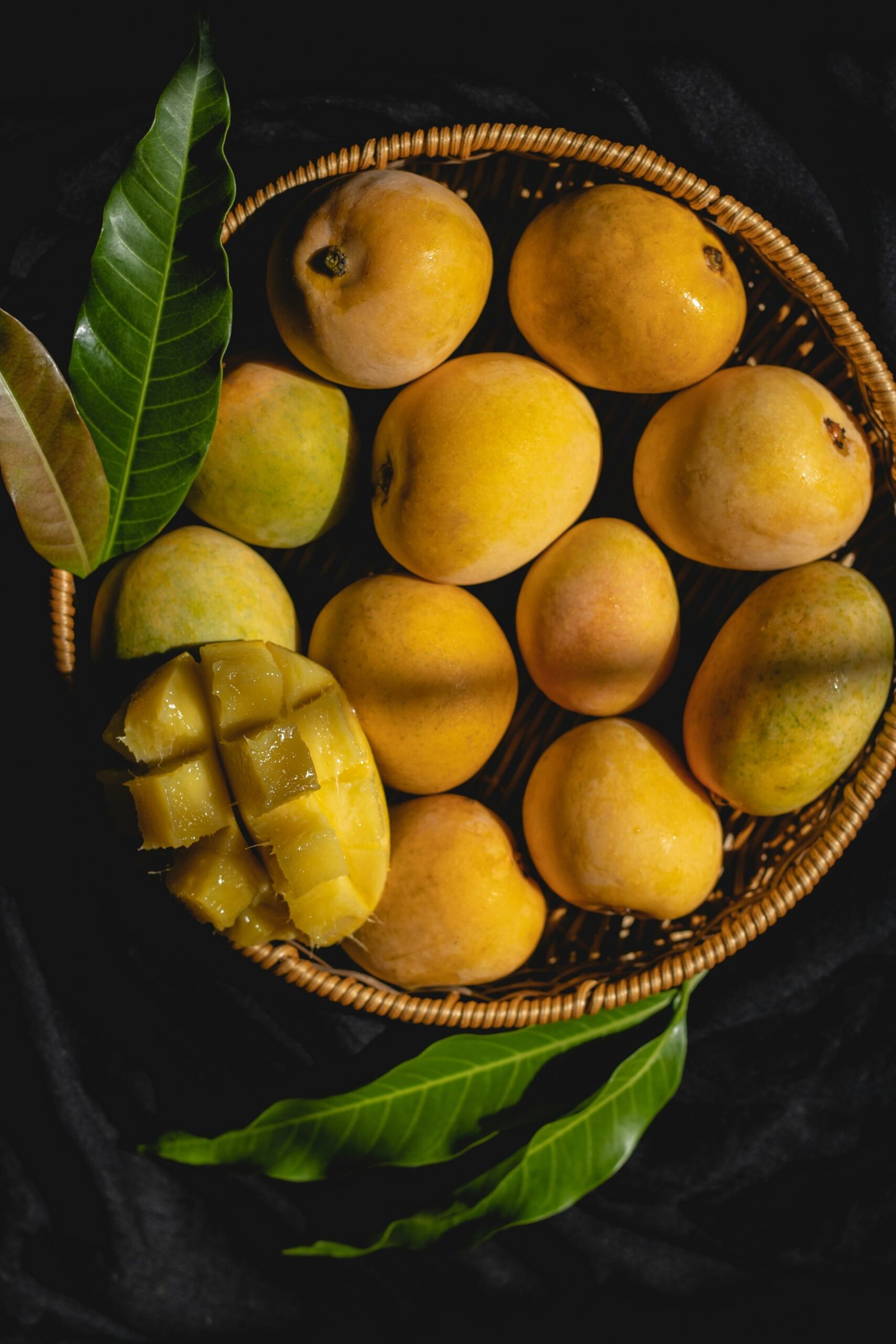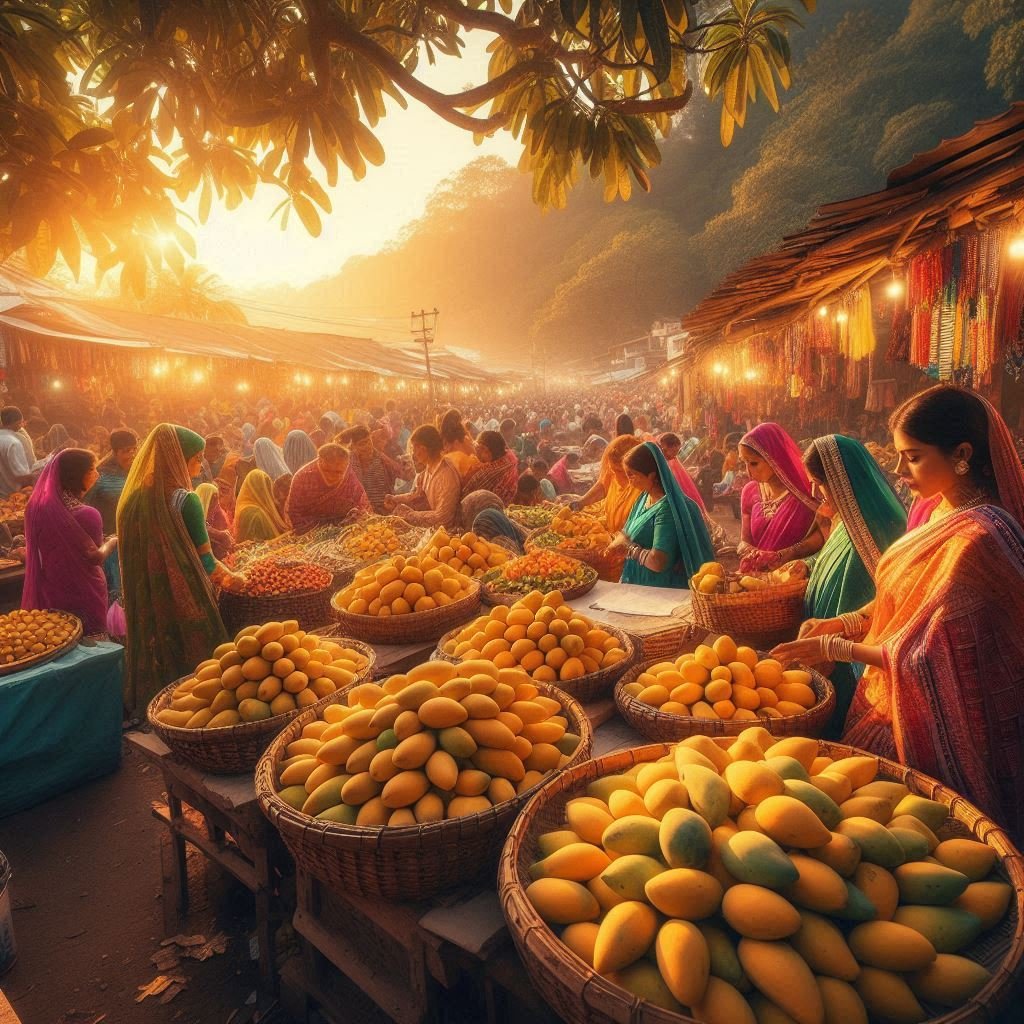
In India, a mango is never just a fruit. It is a prayer offered at a temple altar, a garland of leaves hung above a wedding doorway, a crate gifted to a respected elder, a flavor that defines an entire season of memory. For over 5,000 years, the mango has been woven so deeply into the spiritual, artistic, ceremonial, and social fabric of Indian life that separating the fruit from the culture is simply impossible. From Vedic scriptures to Mughal court poetry, from Onam feasts to Ugadi new year rituals, the mango does not merely appear in Indian culture — it constitutes it. This is the story of how one fruit became a civilization’s most enduring symbol.
Ancient Roots: Where the Mango’s Indian Story Begins
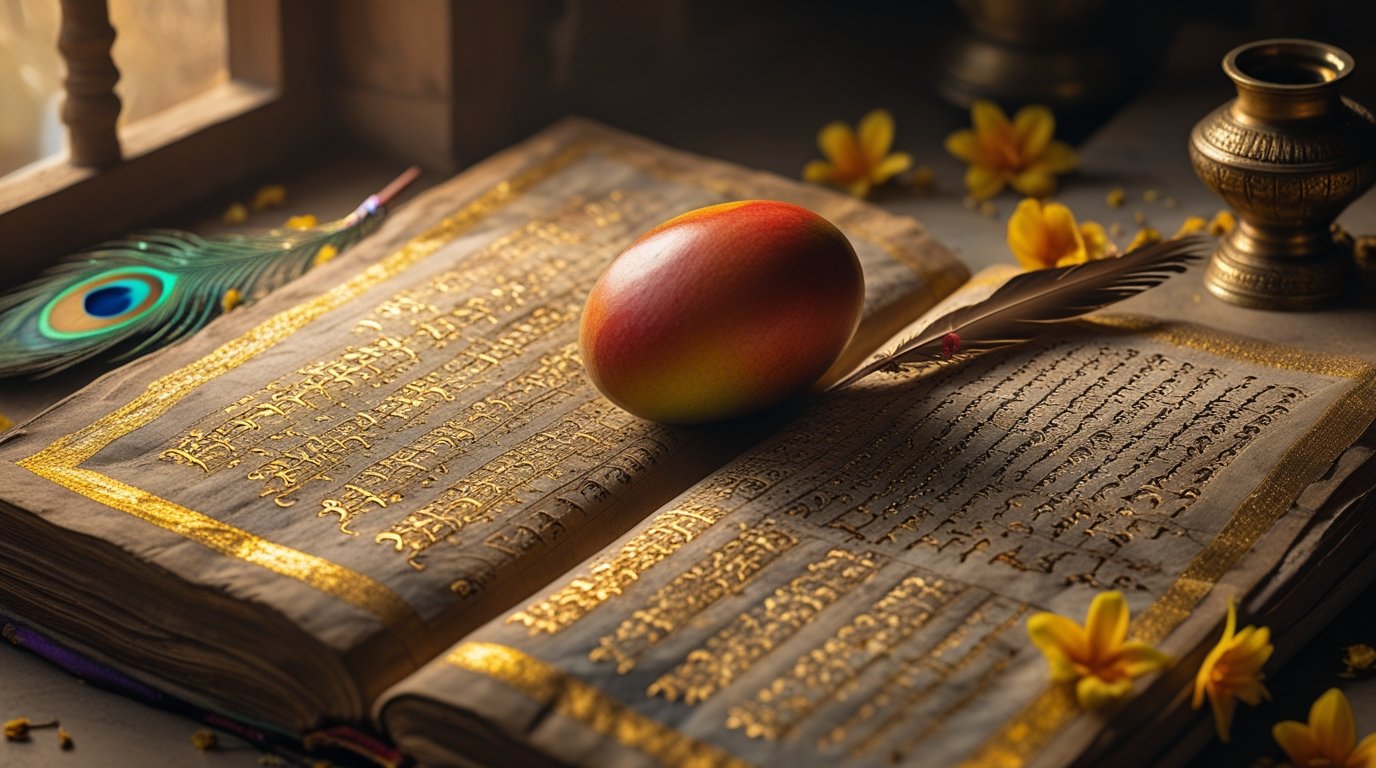
The mango’s documented presence in Indian culture stretches back to approximately 2000 BCE, when references to the Sanskrit word Amra — mango — first appeared in the Vedas and Puranas, India’s oldest sacred texts. These were not casual mentions. The mango tree was described as a source of divine sustenance, associated with gods, used in sacred ceremonies, and positioned as a symbol of life, prosperity, and happiness — not just a food crop.
Ancient Buddhist texts carry equally powerful mango references. Gautama Buddha is recorded to have meditated and rested under the shade of a mango tree, and in one celebrated story, a monk’s offering of a ripe mango to the Buddha became the catalyst for a teaching on impermanence and the transient beauty of all living things. The mango thus entered both Hinduism and Buddhism not as a peripheral symbol but as a core spiritual metaphor — bridging the material and the divine in a single fruit.
By the time of Emperor Ashoka in the 3rd century BCE, mango groves were being planted alongside roads across the Maurya Empire as acts of public welfare — shade, food, and spiritual merit all embodied in a single tree.
Hindu Mythology: The Mango as Divine Symbol
In Hinduism, the mango holds a sacred identity that is remarkable in its consistency across regions, texts, and traditions. Lord Ganesha, the beloved remover of obstacles, is frequently depicted holding a ripe mango — representing the attainment of perfection, fulfillment, and supreme knowledge. The fruit is not merely decorative in these iconographic representations — it is the symbol of the devotee’s highest aspiration made manifest.
The most beloved mythological tale featuring the mango involves the divine siblings Ganesha and Kartikeya, both sons of Lord Shiva and Parvati. When the gods offered a golden mango — representing supreme wisdom — and proposed a contest to award it to the son who first circumambulated the entire world, Kartikeya set off on his magnificent peacock to travel the globe. Ganesha, with his characteristic wisdom, simply circumambulated his parents, declaring them to be his entire world. The mango — and the wisdom it represented — was awarded to Ganesha. This story is retold across generations as a lesson in devotion, intelligence, and the understanding that true wisdom begins at home.
Kamadeva, the Hindu god of love, carries a bow strung with mango blossoms and is believed to shoot arrows tipped in mango flower oil — making the mango tree’s flowering a symbol of desire, romance, and the awakening of spring throughout classical Sanskrit literature. Poets from Kalidasa onwards have used the mango’s flowering panicles as a literary metaphor for romantic longing and seasonal renewal.
Mango Leaves: The Auspicious Threshold of Every Ceremony
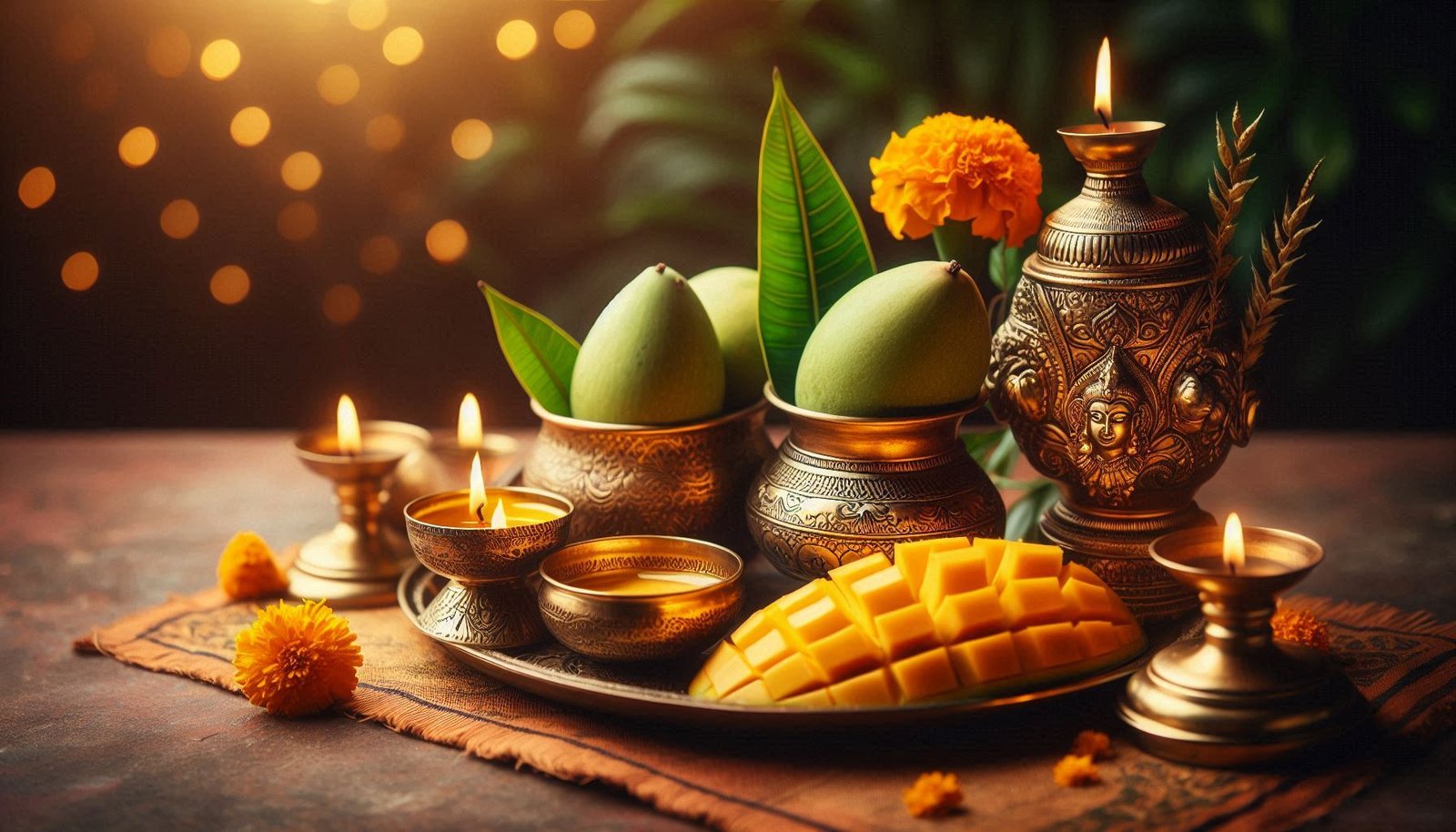
No aspect of the mango’s ceremonial role is more universally present across India than the ritual use of its leaves. Strings of fresh mango leaves — called torans — are hung above the entrance doors and gateways of homes during virtually every significant occasion: weddings, house warmings (Griha Pravesh), Diwali, Navratri, Dussehra, naming ceremonies, and thread ceremonies.
The spiritual logic behind this tradition is profound. Mango leaves are considered associated with Goddess Lakshmi, the deity of wealth and prosperity, and are believed to attract positive energy while warding off negative forces from entering the home. Their deep green color — symbolic of growth, life, and nature’s abundance — and their distinctive shape create a visual language of welcome and blessing at the threshold.
In the Kalash — the sacred water pot placed at the center of most Hindu rituals — five mango leaves are traditionally arranged around the rim, with a coconut placed on top. In this configuration, the mango leaves represent the limbs of the divine, and their presence in the ritual vessel is understood to invite the actual presence of deities into the ceremony. Without mango leaves, many traditional priests consider the Kalash incomplete.
Mangoes Across India’s Festival Calendar
The mango’s presence runs like a golden thread through India’s remarkable festival calendar — adapting its role from region to region while maintaining its consistent identity as a symbol of abundance, new beginnings, and sacred offering.
Ugadi — the Telugu and Kannada New Year celebrated in March or April — places the mango at the absolute center of its culinary and spiritual traditions. Ugadi Pachadi, the quintessential dish of this festival, combines raw mango, jaggery, neem flowers, tamarind, salt, and chili — with each ingredient representing one of life’s six emotional experiences: joy, sorrow, anger, fear, disgust, and surprise. The inclusion of raw mango in this philosophically rich preparation signals that life, like the mango, contains both sweetness and sharpness, and that all experiences must be embraced together. Raw mangoes hung above doorways and offered in temple poojas throughout Ugadi reinforce the fruit’s identity as a herald of the new year, the new harvest, and new possibilities.
Ganesh Chaturthi, celebrated with extraordinary fervor across Maharashtra, regularly features fresh mangoes as part of the naivedyam — the food offering placed before Lord Ganesha. Given the mango’s direct mythological connection to Ganesha as a symbol of perfection, this offering carries a devotional specificity that goes far beyond generic food ritual.
Ram Navami — celebrated in spring — sees mango-based drinks and raw mango preparations offered as prasad in temples across North India, connecting the mango’s peak seasonal arrival with the celebration of Lord Rama’s birth.
Vat Savitri Puja, observed by married women in Bihar, Jharkhand, and parts of Maharashtra, incorporates the Bijju variety of mango as a specific ceremonial offering — a regional tradition that illustrates how deeply the mango’s cultural meaning has been customized and localized across India’s extraordinary diversity.
The Art and Architecture of the Mango: Paisley’s True Origin
The mango’s cultural influence extends far beyond food and ritual into the realm of art, architecture, and textile design. The iconic paisley pattern — one of the most globally recognized decorative motifs in history — is widely believed to have been directly inspired by the shape of a mango, captured in the fluid, teardrop-curved form that Indian weavers and craftspeople have used for centuries on silk sarees, shawls, temple carvings, and decorative architecture.
From the intricate mango motifs carved into the stone pillars of ancient temples to the mango-shaped gold pendants of traditional bridal jewelry across South India, the fruit’s visual form has been a persistent aesthetic presence in Indian craftsmanship — a reminder that in India, beauty and meaning have always been inseparable.
Gifting Mangoes: A Social Language of Love and Respect
In Indian social culture, the act of gifting mangoes carries a meaning and emotional weight that no other seasonal fruit in India commands. Presenting a crate of premium Alphonso mangoes to a respected elder, a host, a teacher, or a newly married couple is simultaneously an act of generosity, an expression of affection, and an invocation of blessings — rooted in the same cultural understanding of the mango as a symbol of abundance and divine favor that stretches back millennia.
This gifting tradition has evolved into modern India’s summer social economy, with premium mango gift boxes — often featuring GI-certified Ratnagiri Alphonso packaged in artisanal wooden crates — being exchanged at corporate offices, festival gatherings, and family celebrations as a gesture that communicates both thoughtfulness and cultural fluency.
An Unbroken Thread Across 5,000 Years
India’s relationship with the mango is one of the most extraordinary examples of a fruit becoming a civilization’s most enduring symbol. Across every religion practiced on this soil, every language spoken across its states, every festival celebrated through its seasons, and every art form expressed through its cultures — the mango appears with consistent, irreplaceable meaning.
It is not merely that Indians love mangoes. It is that the mango has been chosen, across five thousand years of continuous civilization, to carry the weight of humanity’s most fundamental aspirations — love, prosperity, knowledge, devotion, and the sweet complexity of life itself. That is not a fruit. That is a legacy.