History’s most powerful institutions have always understood that food is not merely sustenance — it is a language of prestige, a diplomatic instrument, and a cultural declaration. Nowhere is this truth more elegantly illustrated than in the relationship between the Peshwas of the Maratha Empire and the Alphonso mango. In the 18th century, the most powerful political court in India did not merely consume the Konkan’s finest fruit — it actively cultivated, protected, promoted, and weaponized it. The story of how the Peshwa courts transformed a Portuguese-introduced mango variety into the most celebrated fruit in the subcontinent is one of the most fascinating chapters in Indian culinary and political history — and it deserves to be told in full.
Who Were the Peshwas? Understanding the Power Behind the Patronage
To fully appreciate the Peshwas’ role in the Alphonso’s ascent, you must first understand the scale of their authority. The Peshwas were the prime ministers — and, effectively, the ruling power — of the Maratha Empire during its peak in the 18th century. Based in Pune (Poona), they administered a confederacy that, at its greatest extent, stretched from the Konkan coast in the west to Bengal in the east, and from the Deccan plateau in the south to the foothills of the Himalayas in the north.
The Peshwas were not merely soldiers and administrators. They were patrons of art, literature, architecture, and horticulture — rulers who understood that the sophistication of their court was inseparable from the sophistication of what grew in their orchards and appeared on their tables. It was in this context of imperial refinement that the Alphonso mango — already established in the Konkan’s Portuguese-influenced orchards — became a fruit whose cultivation the Peshwas would pursue with the same strategic intensity they brought to military campaigns.
The Peshwa-Portuguese Tussle: When a Fruit Became a Political Flashpoint
By the mid-18th century, the Alphonso mango had become so commercially and diplomatically valuable along the Konkan coast that it was no longer merely an agricultural product — it had become a geopolitical asset. The Portuguese, who had introduced grafting and established the Alphonso’s cultivation in Goa and the Konkan littoral, understood its extraordinary value and sought to control its supply.
The Peshwas, whose expanding empire included significant portions of the Konkan, had developed their own mango ambitions — and the tension between these two powers over the Alphonso became a documented historical friction. In 1792, the Portuguese ambassador to Pune, Vithalrao Valaulikar, wrote directly to the Governor of Goa advising that strict restrictions be placed on mango imports from Portuguese Goan territory into Maratha-controlled Maharashtra — an extraordinary act of protectionism motivated entirely by the desire to maintain the rarity, prestige value, and commercial leverage of Goan Alphonso mangoes as a diplomatic instrument vis-à-vis the Maratha court.
The Peshwas responded with characteristic strategic brilliance — not by negotiation, but by action. Rather than remaining dependent on Portuguese Goa for their Alphonso supply, they directed the mass procurement of Alphonso mango grafts from Goa and their systematic plantation across the Konkan territories under Maratha control. The Portuguese had attempted to control supply; the Peshwas chose to create their own.
Bajirao Peshwa II and the Million-Tree Vision
No single act better illustrates the Peshwas’ extraordinary commitment to mango cultivation than the documented actions of Bajirao Peshwa II — the last ruling Peshwa before the British takeover. British-era records confirm that Bajirao Peshwa II planted large numbers of mango trees in the neighbourhood of Poona, specifically directing the employment of long caravans to bring mango seeds and grafts from Goa for systematic plantation across the Konkan and surrounding territories.
Even more dramatically, historical accounts associated with Raghunath Peshwa record the planting of 10 million mango trees — an act described as a deliberate declaration of Maratha supremacy through horticultural ambition that no other political entity in India at the time could match. This was not an agricultural initiative in the conventional sense — it was an imperial statement. In a civilization where the mango had already been established for millennia as a symbol of prosperity, abundance, and royal favor, planting 10 million trees was a claim of territorial ownership over the fruit’s very identity.
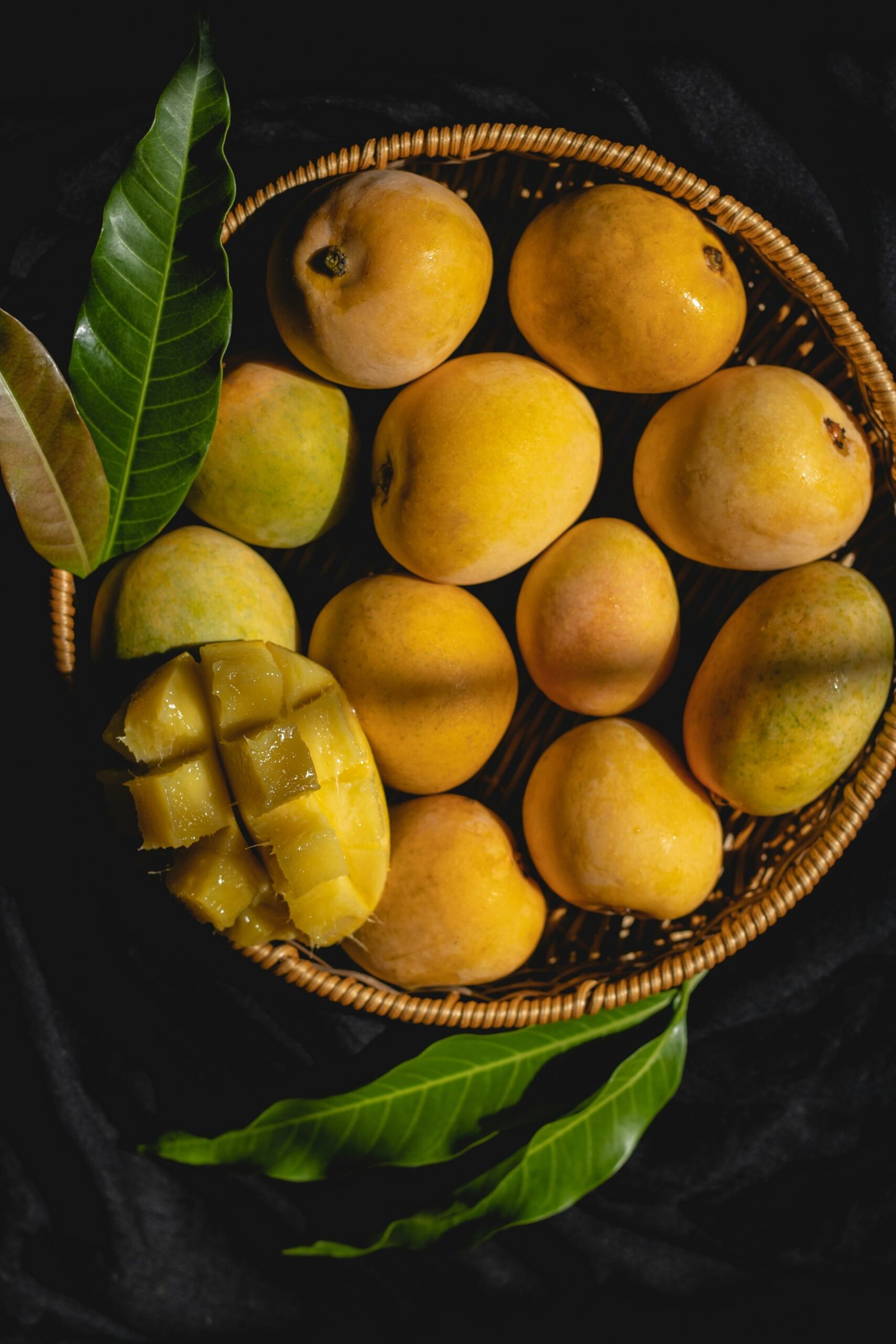
These trees were planted across the Konkan’s laterite hillsides — in Ratnagiri, Devgad, Sindhudurg, and the coastal districts that the Maratha Empire controlled. And critically, the hybrid offspring of these Portuguese-Goan Alphonso grafts planted by the Peshwas across Konkan territory are the direct ancestors of the Ratnagiri Hapus trees that stand in orchards today. When you eat a Ratnagiri Alphonso in 2026, you are eating the culmination of a deliberate Peshwa agricultural campaign carried out nearly three centuries ago.
The Alphonso as Diplomatic Currency: Gifted to Empires, Offered to Courts
The Peshwa court’s relationship with the Alphonso went far beyond cultivation — they were among the first Indian political powers to formally recognize and deploy the mango as diplomatic currency.
All the major Deccan kingdoms valued crates of Alphonso mangoes as a form of seasonal tribute — but the Maratha court’s appetite for the fruit was singular in its intensity. During the height of Peshwa power, Alphonso mangoes from the Konkan were gifted to Mughal emperors in Delhi — a gesture that carried enormous cultural weight, given the Mughal court’s own deep love of mangoes, documented most famously in the accounts of Emperor Akbar’s legendary mango orchard at Darbhanga and Babur’s celebrated homesickness for Central Asian fruits that Indian mangoes eventually soothed.
The act of gifting premium Alphonso mangoes — carefully packed, transported at significant logistical expense, presented as the finest product of the Konkan’s most productive season — communicated something that no diplomatic letter or treaty could express with the same immediacy: I possess the best this land produces, and I share it with you as an equal among equals. This use of the mango as a language of prestige between courts established the Alphonso’s extraordinary cultural capital — a capital that persists to this day in the tradition of gifting premium mango boxes as the ultimate seasonal gesture of respect and generosity in Maharashtra.
How the Peshwas Gave the Alphonso Its Konkan Identity
Perhaps the Peshwa courts’ most enduring contribution to the Alphonso’s story is one that is rarely discussed: they are the reason the fruit is associated with the Konkan rather than with Goa or Portugal. The Portuguese introduced the variety and the grafting technique. But it was the Peshwas’ systematic plantation of millions of Alphonso grafts across Ratnagiri, Devgad, and Sindhudurg — in the precise laterite soil and coastal microclimate that produces the finest possible expression of the variety — that permanently rooted the Alphonso’s identity in Maratha-controlled Konkan territory.
It was also the Peshwas’ mass cultivation effort that gave birth to the name Hapus — the Marathi-speaking Konkan farmers’ phonetic adaptation of “Alphonso,” passed through the filters of Portuguese pronunciation, Konkani oral tradition, and Marathi phonology into the name that every Maharashtrian household uses today with complete unconscious ownership. Afonso became Alphonso became Hapoos became Hapus — a name so thoroughly Maharashtrian that its European origin surprises almost everyone who hears it for the first time.
The Peshwa Courts: Accidental Custodians of a Global Legacy
The Peshwas did not set out to create the world’s most celebrated mango. They set out to express their empire’s power, supply their court with the finest seasonal produce, deprive their Portuguese rivals of agricultural leverage, and decorate the Konkan landscape with a fruit that announced Maratha cultural authority from every hillside. That these political and cultural motivations produced an agricultural legacy of global significance is one of history’s most satisfying ironies.
When the British arrived in Pune after defeating the last Peshwa in 1818, they found large plantations of the Alphonso variety at Kirkee (Khadki) and throughout the Pune region — the living remnants of Peshwa horticultural ambition that even British administrators found worth studying and preserving. By 1911, the Governor of Bombay was sending Alphonso mangoes as gifts to dignitaries across India and abroad — continuing a diplomatic tradition established not by the Portuguese, but by the Peshwa court of Pune.
The Alphonso’s journey from a Portuguese-introduced variety to India’s most globally recognized fruit passed through a decisive chapter of Maratha imperial patronage — and the Peshwas deserve their place in that story as the rulers who understood, perhaps more clearly than anyone before or since, that a great fruit is also a form of cultural sovereignty.
The Fruit That Outlasted the Empire
Empires rise and fall. Diplomatic letters fade. Treaties are broken and rewritten. But the mango trees that the Peshwas planted on Konkan’s laterite hillsides are still producing fruit. The Hapus variety their mass cultivation campaigns established has gone on to earn a Geographical Indication tag from the Indian government, achieve export revenues of USD 60 million annually, and grace the tables of fine dining restaurants from Mumbai to Melbourne.
The Peshwa courts did not survive the 19th century. The legacy they planted in Konkan’s red soil is still being harvested in the 21st — and will be for centuries to come. That is the true measure of their role in the Alphonso’s extraordinary story.