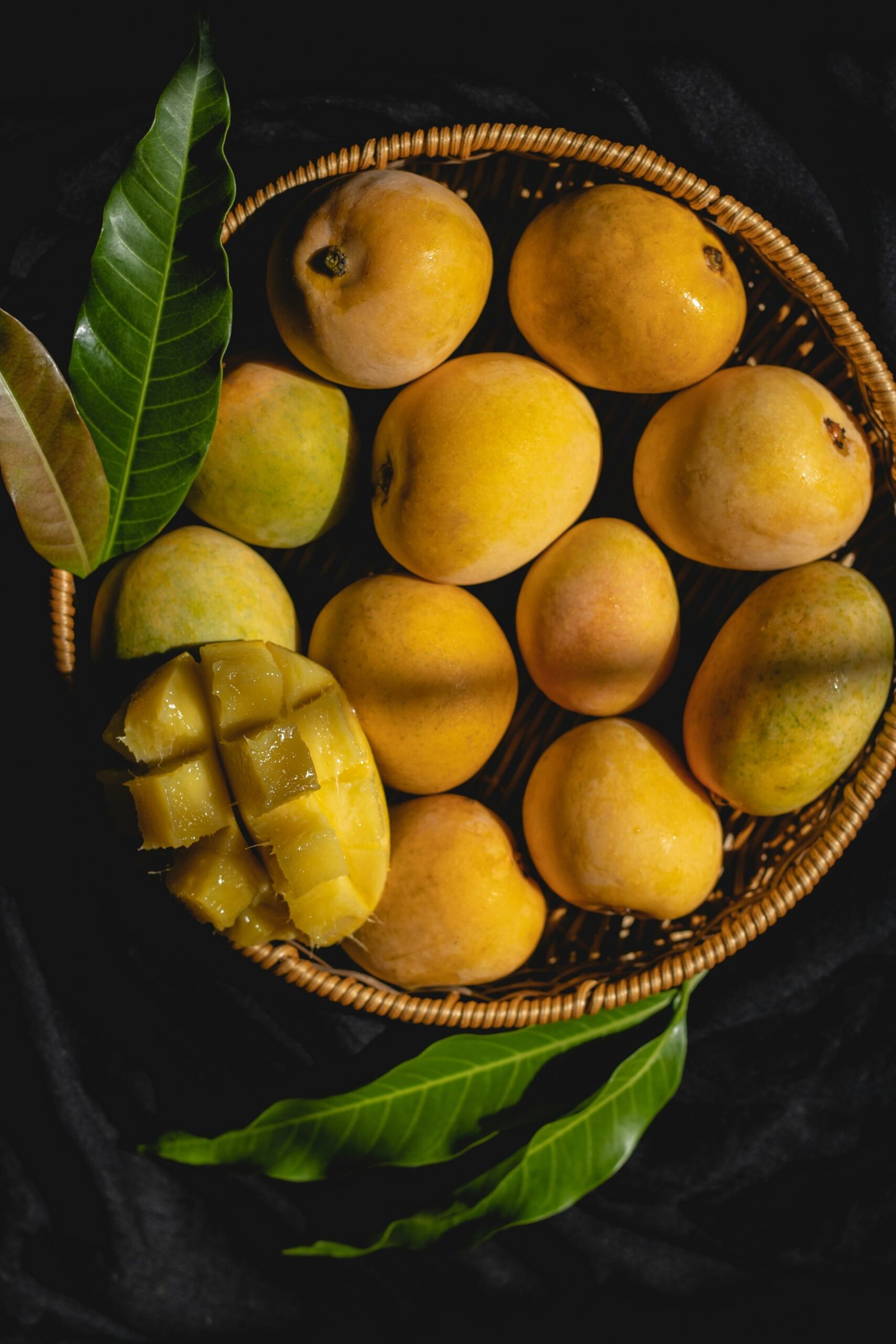
Walk through any village in the Konkan — in Ratnagiri, Sindhudurg, or the coastal districts of Maharashtra — and you will notice something that no signpost announces but that every resident understands instinctively: certain mango trees are not merely trees. They are presences. They are planted with intention, tended with reverence, marked with sacred red thread, consulted before ceremonies, and mourned when they fall. They are, in the most literal sense that a non-religious person might accept, sacred. The story of how mango trees acquired this extraordinary spiritual status in Konkan villages is a story that weaves together Vedic tradition, ecological wisdom, community identity, and the very particular relationship between this coast and the fruit that defines it.
Before Religion: The Ecological Logic of Sacred Status
The designation of any tree as sacred in Indian village culture has always been, at its foundation, a form of ecological intelligence wearing spiritual clothing. When communities lack regulatory frameworks, legal systems, or scientific institutions to protect the resources their survival depends upon, they embed protection within religion. The sacred cannot be casually cut down. The sacred cannot be sold to a timber merchant. The sacred must be tended, maintained, and inherited.
The mango tree in the Konkan earned its sacred status, in part, because it was simply too valuable to risk losing — and making it sacred was the most reliable mechanism available to traditional communities for ensuring its protection across generations. Groves of mango trees were considered sacred throughout the Konkan’s documented folk tradition precisely because they afforded shelter, food, and ecological stability that entire village economies depended upon. The spiritual designation was not separate from the practical value — it was the practical value, encoded in a language that every member of the community, regardless of literacy or education, understood and respected.
The Purnakumbha: When a Mango Branch Holds a God
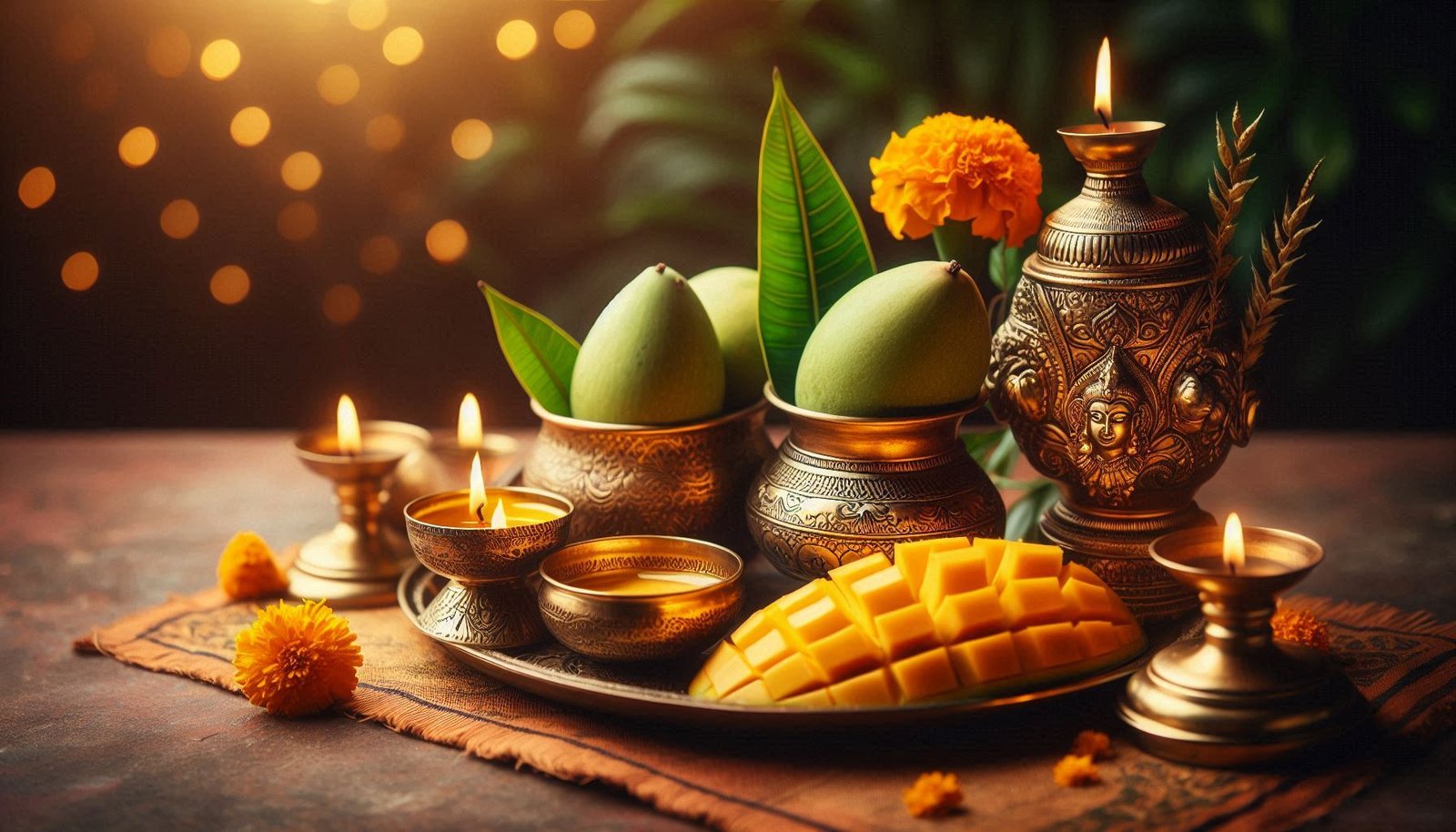
One of the most universal and ancient of all Hindu ritual objects is the Purnakumbha — the sacred pitcher that is ceremonially present at virtually every significant occasion in Hindu religious life: housewarmings, weddings, naming ceremonies, temple consecrations, and public festivals. The Purnakumbha’s construction follows a precise formula that has remained unchanged for millennia: a clay or copper pot filled with water is placed on white rice or paddy; a branch of mango is inserted into the mouth of the pot; and a coconut adorned with sandalwood paste, vermilion, and flowers is balanced upon the mango branch.
This entire construction is not decorative — it is functional in the deepest ritual sense. The Purnakumbha is the deity. When a priest invokes a god or goddess to be present at a ceremony, it is the Purnakumbha that serves as the divine vessel — and the mango branch is the antenna through which the divine presence is conducted from the spiritual realm into the physical pot. Without the mango branch, the Purnakumbha is incomplete. Without the Purnakumbha, most major Hindu ceremonies cannot commence.
For Konkan villages, where every life event from birth to death is framed by these ceremonies, this means that the mango tree’s presence is not merely culturally important — it is ritually indispensable. A village without access to mango branches cannot properly perform its most essential spiritual functions. This dependency, embedded across thousands of years of continuous ritual practice, is perhaps the deepest root of the mango tree’s sacred status.
The Munjya and the Midnight Tree: Sacred Fear as Conservation Strategy
In Konkan folklore, the mango tree acquires its sacred status not only through positive ritual association but through something equally powerful: fear. The most widely known supernatural entity of Konkan village culture is the Munjya — the restless spirit of a young Brahmin boy who died after his thread ceremony (munja) but before his marriage, leaving him in a state of incomplete transition between boyhood and manhood.
In traditional Konkan belief, the Munjya inhabits mango trees — particularly large, old, solitary mango trees — and is most active after sunset, when he is known to harass, mislead, and frighten those who linger beneath the tree after dark. The practical consequence of this belief is a behavioral rule that has served Konkan communities remarkably well as an inadvertent conservation strategy: no one disturbs a mango tree at night. No late-night harvesting, no after-dark pruning, no under-tree gathering that might damage root systems or disturb nesting birds and insects that perform essential pollination services.
The fear of the Munjya is simultaneously a belief system and a protection protocol — one that traditional Konkan communities developed over centuries to safeguard their mango trees from the specific category of casual, unplanned damage that typically occurs in the unsupervised hours of darkness. It is ecological wisdom wearing a ghost story.
The Sacred Marriage of Trees: Mango as Agni, Feminine and Fertile
In some parts of rural Maharashtra and the broader Konkan region, the mango tree participates in one of the most extraordinary of all Indian folk ritual practices: the marriage of trees. In this ritual, which is observed as a fertility ceremony performed on behalf of women who have not yet conceived, the mango tree is paired with another tree — typically a mahua or banana — in a formal wedding ceremony complete with chanting, offerings, circumambulation, and ritual binding.
The mango tree in these ceremonies represents the agni principle — the feminine, generative, warmth-giving force — while its partner represents the masculine or soma principle. The symbolic marriage enacts the complementary union of these cosmic forces, petitioning the divine for the fertility its female participants seek. The mango’s association with fertility in this context is not arbitrary — it is rooted in the tree’s extraordinary capacity to produce fruit for 100 years or more, its dense flowering in spring (a universal cultural symbol of new life and reproductive abundance), and its role as a provider of nourishment and shade across multiple human generations.
Planting a Mango Tree as a Religious Act
Perhaps the most remarkable indicator of the mango tree’s sacred status in Indian village culture is the belief that planting a mango tree is itself a religious act — one that generates spiritual merit for the planter. Hindu tradition holds that the rainwater falling from a mango tree’s leaves is converted into honey received as nourishment by the spirits of the planter’s ancestors — meaning that planting a mango tree is simultaneously an act of ecological generosity toward the living and a gift of sustenance to the dead.
In the Konkan, this belief expressed itself in a deeply practical way: every new home built in a traditional village was expected to plant a mango tree in its compound or on its boundary. Every village farm was understood to be under the guardianship of specific nature spirits whose benevolence was maintained through the preservation and respectful management of mango trees and groves within the farm’s boundaries. To cut down a healthy mango tree without cause was not just wasteful — it was transgressive, a violation of the spiritual contract between the human community and the natural forces that protected it.
Mango Wood and the Final Journey: Sacred to the Very End
The mango tree’s sacred role in Konkan life does not end with the living. Mango wood is considered among the most sacred materials for cremation in Hindu ritual tradition — particularly in Kerala and coastal Maharashtra, where communities have traditionally used mango wood for funeral pyres. The belief connects to the mango tree’s identity as a bridge between the living and the ancestral dead: just as planting a mango tree nourishes the spirits of one’s ancestors, using mango wood at cremation is understood to assist the departing soul’s transition — burning in sacred wood that carries the accumulated blessings of generations of spiritual use.
This means the mango tree accompanies a person from their first breath — the mango branch in the Purnakumbha at their naming ceremony — to their last — the mango wood at their cremation. Few trees in any culture have been assigned a role so total, so continuous, and so intimate across the entire arc of human life.
Sacred Because It Was Always There
The mango tree became sacred in Konkan villages because it was always there — through every ceremony, every season, every generation. It sheltered, fed, and spiritually anchored communities across centuries of change. The sacred status was not invented by priests or imposed by scripture — it arose organically from the lived, accumulated recognition that this tree was not replaceable, not dispensable, and not merely agricultural. It was, in the deepest sense of the word, a member of the family.
In an age when mango orchards are being cleared for development and traditional groves are disappearing under the pressure of modernization, the ancient Konkan understanding that a mango tree is sacred is not superstition — it is the most sophisticated form of conservation logic ever devised. And it is a wisdom that the Konkan’s villages are still trying, quietly and daily, to preserve.