Long before refrigerated cargo planes flew Alphonso mangoes to London and Dubai, before APEDA export certifications and phytosanitary irradiation centers, before GI tags and air freight corridors — Ratnagiri’s mangoes moved by sea. The story of how this coastal Maharashtra town used its ancient ports to ship its most celebrated agricultural treasure across the Arabian Sea, up and down the Western coast of India, and eventually to the wider world is one of the most underappreciated chapters in Indian maritime and agricultural history. It is a story of wooden dhows, colonial trade routes, British-era gazetteers, and the extraordinary durability of a fruit whose journey from orchard to ocean began centuries ago.
Ratnagiri: Born Maritime, Built for Trade
To understand the maritime history of mango exports from Ratnagiri, you must first understand what kind of place Ratnagiri has always been. The name itself — Ratna (jewel) + Giri (hill) — is a topographic description of a coastline where rocky promontories, river estuaries, and natural harbors created one of the most naturally trade-favorable geographies on India’s western coast. Historically, Ratnagiri was not merely a fishing port — it was an important centre of maritime trade and activity that connected the Deccan plateau’s agricultural interior with the coastal commerce of the Arabian Sea.
The region’s trade network was ancient and extensive. By the 17th century, the ports of the Ratnagiri coast — including Vijaydurg, Jaigad, Rajapur, Malvan, and the port of Ratnagiri town itself — were active nodes in a coastal trading system that linked Bombay to the north, Malabar to the south, and the Persian Gulf and Red Sea to the west. Ships loaded at Vengurla — one of the Ratnagiri district’s most important historic ports — were noted in British records as calling points for vessels traveling between Batavia (Jakarta), Japan, Ceylon, and the Persian Gulf. This was not a regional backwater. It was a functioning node of the pre-modern global economy.
The Early Trade: Mangoes on Wooden Dhows
The first formal documentation of mangoes as an export commodity from Ratnagiri’s ports appears in colonial-era Maharashtra Gazetteers — the meticulous administrative records compiled by British officers who surveyed and documented the economic life of every district under their administration. These records reveal that mangoes were a consistently listed export commodity at multiple Ratnagiri-district ports from at least the mid-19th century onwards.
The Maharashtra Gazetteer’s port records for the Ratnagiri district explicitly list mangoes as a chief export commodity from multiple ports — including the port of Ratnagiri town itself, as well as the satellite ports at Vijaydurg, Jaigad, and Rajapur. At Vijaydurg — the port that guarded the famous Maratha sea fort of the same name — mangoes were listed alongside jungle wood, hemp, bamboos, and coconuts as primary exports, with the destination being Bombay (Mumbai).
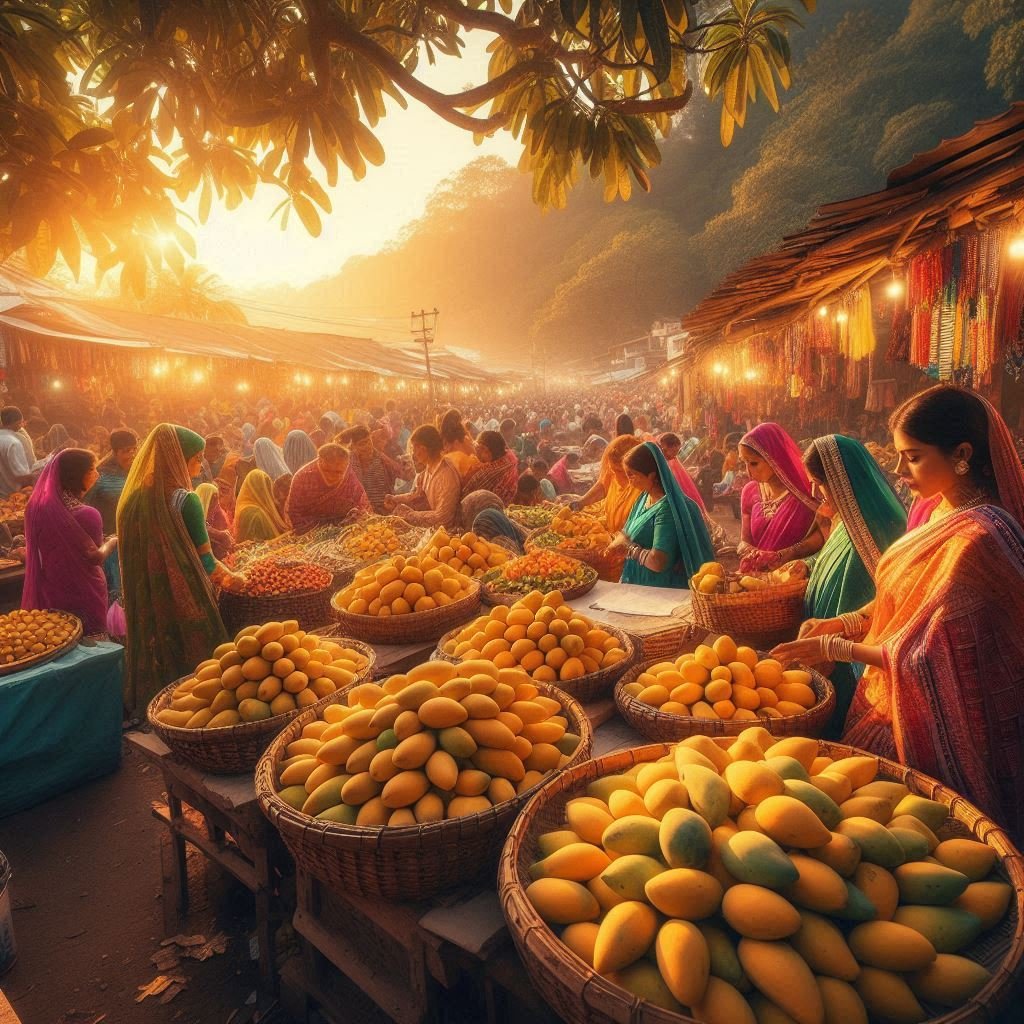
This Bombay connection was the beating heart of early Ratnagiri mango trade. The coastal steamers and wooden dhows that plied the route between Ratnagiri’s ports and Bombay’s harbor carried fresh Alphonso mangoes northward to the city’s markets — where the Parsi, Gujarati, and Marwari merchant communities had already developed a sophisticated appetite for Konkan’s finest fruit and were willing to pay significant premiums for it. The mango season transformed Ratnagiri’s ports into temporary hubs of intense loading and dispatch activity, with the short harvest window creating urgent logistical demands that shaped the entire port economy for six to eight weeks every year.
The British Gaze: Colonial Records That Immortalized the Mango Trade
The British colonial administration’s systematic documentation of Ratnagiri’s trade provides one of the most valuable historical windows into the early mango export economy. The Gazetteer entries for multiple Ratnagiri ports list mangoes alongside commodities like salted fish, cashew kernels, bamboos, and coir rope — positioning the fruit firmly within the formal commercial export infrastructure of the 19th-century Konkan economy rather than as a casual seasonal surplus.
What is particularly striking in these records is the consistency of the mango’s appearance across port after port — at Ratnagiri, at Jaigad, at Vijaydurg, at Malvan. This was not a single port’s specialty but a district-wide export culture that had developed across the entire Konkan coastline — each port serving as a loading point for the mangoes grown in its agricultural hinterland, channeling the Konkan’s most prized seasonal produce into the coastal shipping network with the same organized efficiency that the region applied to its other primary exports.
The British understood the economic significance of what they were documenting. By the late 19th century, Ratnagiri’s Alphonso mango had developed a reputation that extended well beyond the Konkan — it was known, prized, and specifically requested in Bombay, Poona, and the princely states of the Deccan. The colonial documentation of this reputation in official gazetteer records was simultaneously a historical record and a commercial endorsement that helped institutionalize the Alphonso’s premium status in the Indian market.
Afonso’s Design: The Fruit Built for the Sea
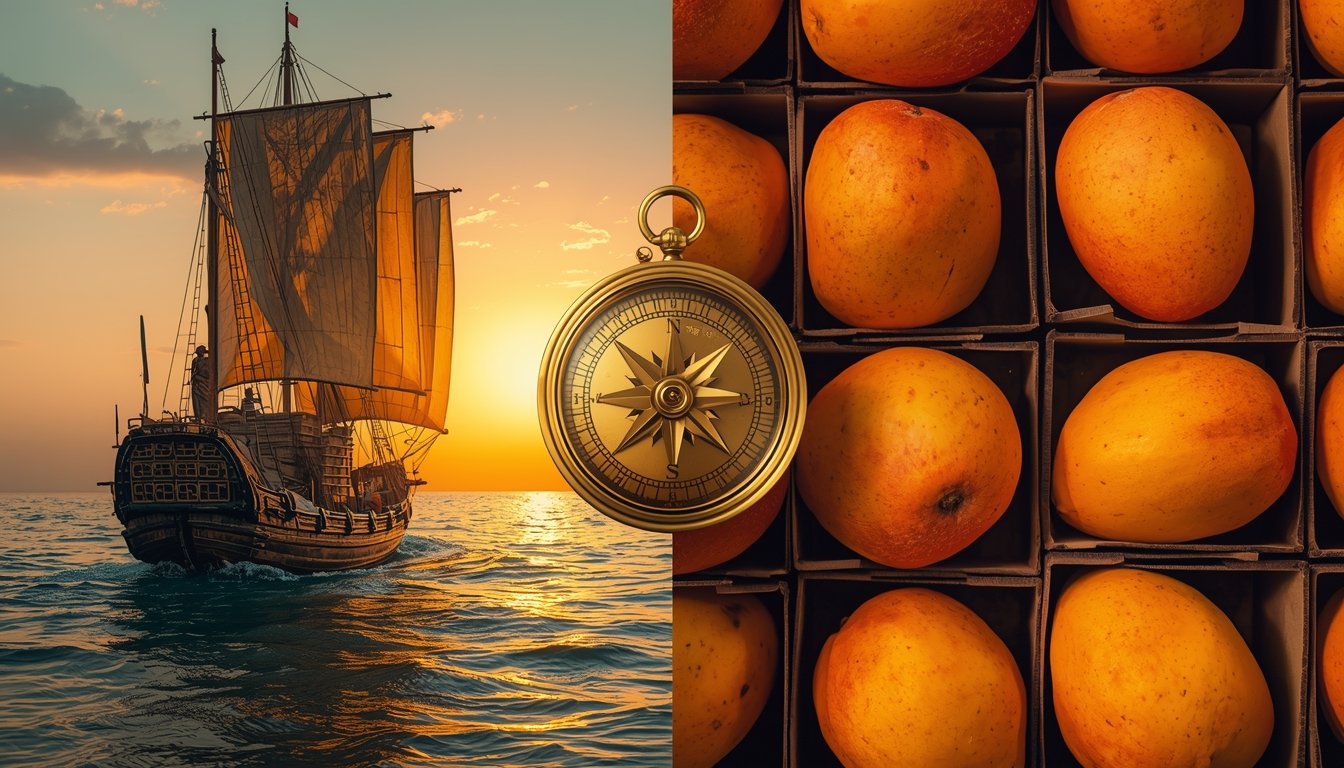
One of the most remarkable aspects of the Alphonso mango’s history is the extent to which its original development was shaped by maritime considerations. When Portuguese botanists and Jesuit missionaries refined the Alphonso variety through systematic grafting in the 16th century, one of their primary objectives was developing a mango with qualities that would survive the long sea voyages required to bring produce from Goa to Portugal.
The Alphonso’s firmer, fleshy pulp and relatively thick skin — characteristics that distinguish it from many more fragile Indian mango varieties — were specifically selected because they enabled the fruit to withstand the physical demands of maritime transport: the vibration of wooden hulls, the humidity of sea air, the temperature fluctuations of an ocean crossing, and the multi-week transit times of pre-refrigeration era shipping. The King of Mangoes was, quite literally, designed for the sea — an early example of what modern food logistics engineers would call supply chain-driven product development.
This maritime design heritage explains why the Alphonso, despite being one of the most delicate of India’s premium mango varieties in sensory terms, has proven itself one of the most commercially exportable. Its structural integrity — the same quality that makes its pulp so satisfyingly dense and its texture so buttery without being mushy — was an engineered characteristic, developed by people who understood that the fruit’s value depended on its ability to travel.
The 1989 US Ban and the Port’s Modern Challenge
The maritime history of Ratnagiri mango exports took a painful turn in 1989 when the United States banned Indian mango imports over phytosanitary concerns — specifically fears about the mango seed weevil and other pests that US agricultural authorities considered unacceptable risks to their domestic fruit industry. The ban lasted nearly two decades, effectively closing the world’s most commercially valuable agricultural market to Ratnagiri’s primary export crop.
The ban’s resolution in 2007 — achieved through bilateral negotiations, the development of USDA-approved vapor heat treatment and irradiation facilities, and sustained diplomatic engagement — marked a watershed moment in the modern maritime history of Ratnagiri mango exports. The reopening of the US market transformed Ratnagiri’s export economics: air freight corridors through Mumbai’s CSMIA airport became the primary channel for the premium export trade, with annual Alphonso export revenues from Ratnagiri reaching approximately ₹1,200 crore (USD 145 million) per year at their peak.
Yet the limitation of this air-freight-dependent model is precisely what makes the district’s ancient port infrastructure so strategically relevant today. Research and development bodies have consistently identified port development at Ratnagiri and Nachane as a critical priority for reducing the cost and environmental impact of mango exports — enabling the district to export the Alphonso directly by sea to the Gulf, UK, and European markets rather than routing everything through Mumbai’s congested airport. The port that once loaded wooden dhows with fresh mangoes for the Bombay coast trade could, with investment, become the departure point for refrigerated container ships carrying Ratnagiri Alphonso to the world.
From Dhow to Aircraft Cargo Hold: The Unbroken Thread
The maritime history of mango exports from Ratnagiri is ultimately a story about the extraordinary durability of a commercial relationship between a place and its fruit. From the unnamed 19th-century dhow captains who loaded fresh Alphonsos at Vijaydurg and sailed north to Bombay, to the modern logistics managers who coordinate air freight manifests from CSMIA — every person in this chain has been part of the same ancient project: getting Ratnagiri’s finest seasonal treasure to the people who want it most, in the best possible condition, in the shortest possible time.
The sea route that carried those first mangoes northward in wooden hulls is still there. The same Arabian Sea that the Portuguese navigated when they brought their grafting techniques to the Konkan is still there. And the mango — the fruit that was designed for sea travel five centuries ago, that built Ratnagiri’s trade reputation across colonial-era Gazetteer records, and that now generates hundreds of crores in annual export revenue — is still there, still growing on the same laterite hillsides, still being harvested by hands that carry generations of accumulated knowledge.
The ocean and the orchard have always belonged to each other here. That relationship is Ratnagiri’s most enduring maritime history.