There are skills in this world that cannot be learned from a textbook. They live in hands, not pages — transmitted not through instruction manuals but through seasons spent watching, touching, failing, and refining. The ancient grafting techniques practiced by the mango farmers of the Konkan coast belong to this category of knowledge: a multi-generational, tactile, living art that has been shaping the world’s finest mangoes for centuries — and that is now, quietly and dangerously, at risk of disappearing. This is the story of what it means to graft a mango tree, why the Konkan’s particular methods are unique in the world, and why the survival of this ancient craft matters far more than most people realize.
What Grafting Is — and Why It Changed Everything
Before you can appreciate the art, you need to understand the science. Grafting is the horticultural technique of joining a scion — a cutting taken from a superior, proven mango tree — to a rootstock — a young seedling chosen for its vigorous root development and structural strength. When the cambium layers of scion and rootstock are aligned and bound correctly, the two plant tissues fuse into a single living organism that combines the root vigor of the rootstock with the fruit-bearing genetics of the scion.
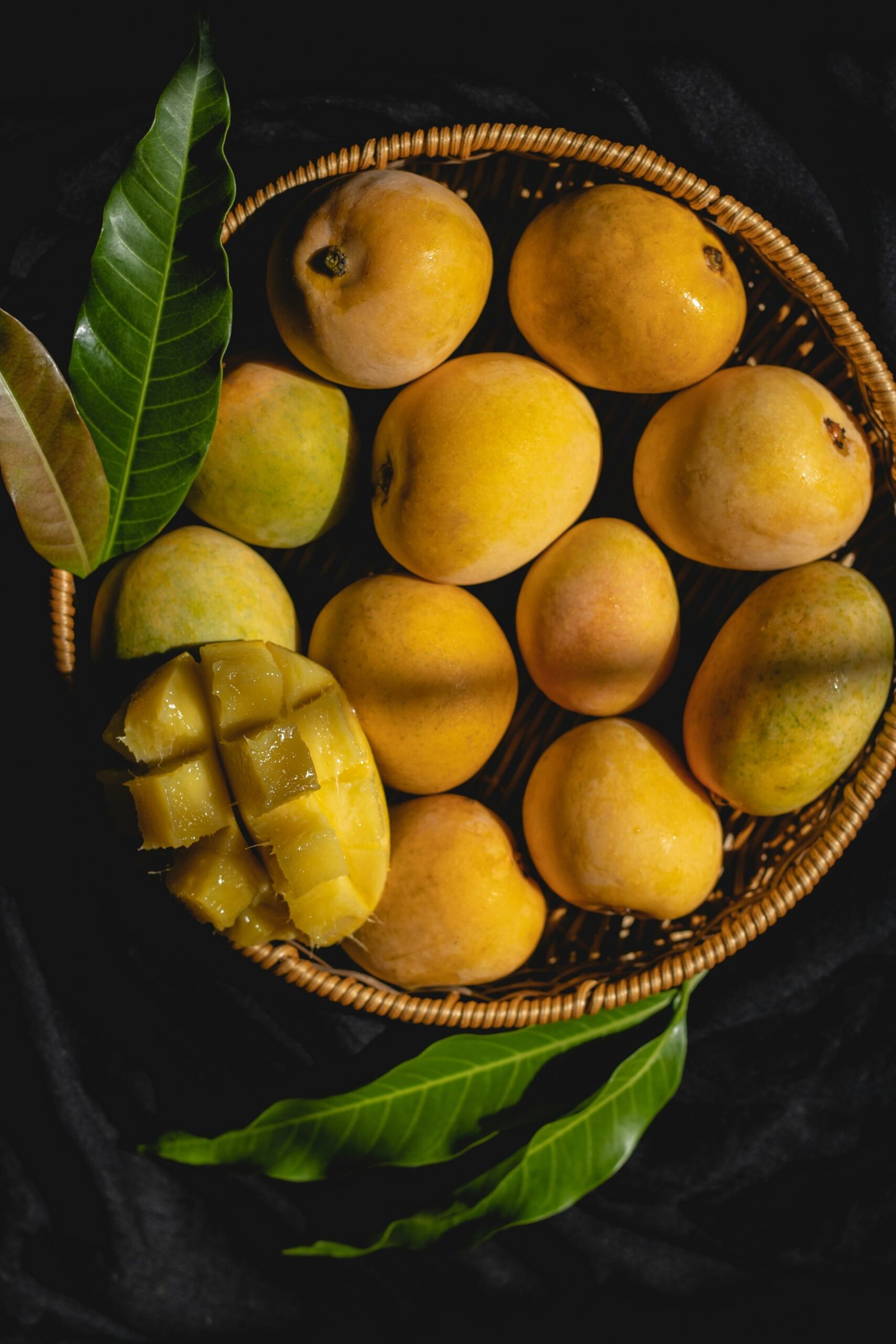
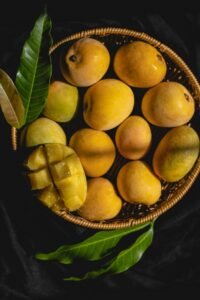
The result is a tree that produces fruit genetically identical to the superior parent — not an approximation, not a random offspring, but a perfect biological clone. Every Alphonso tree in Ratnagiri that produces the saffron-gold, aromatic, buttery Hapus mango you know is a grafted tree. It carries, in its very DNA, the direct inheritance of centuries of selection — a chain of human horticultural choices stretching back to the earliest grafting experiments on the Konkan coast.
Before grafting arrived, mango farmers grew entirely from seed — a method that produced wildly unpredictable results, required 8 to 15 years to first fruit, and guaranteed nothing about quality. Grafting compressed this timeline to 3 to 4 years and guaranteed that every tree would perform exactly as the chosen parent tree had performed. This was not just an agricultural improvement — it was a transformation of what farming could promise.
The Origin of Grafting in India: Ancient Knowledge Meets Portuguese Innovation
The historical record of grafting in India is fascinatingly layered. Vegetative propagation methods in mango were practiced in India since ancient times, with references appearing in Sanskrit literature that predate the Portuguese arrival by centuries. Indian farmers clearly understood some form of asexual propagation — the principle of replicating a superior tree through cuttings or layering — long before European contact.
But the specific, systematic technique of inarching — the most sophisticated and reliable of all traditional mango grafting methods — was formally introduced to India by Jesuit missionaries accompanying the Portuguese colonial administration in Goa in the 15th century. The missionaries brought a methodological precision to the practice that indigenous Indian techniques had not yet formalized at scale — and the combination of their European grafting methodology with India’s deep botanical knowledge of the mango produced a revolution in cultivation that rapidly spread along the Konkan coast.
The most important mango cultivars in India today — Alphonso, Dashehari, Langra — are all selections made during the Mughal period of the 15th and 16th centuries and have been propagated exclusively by vegetative (grafting) methods ever since. Every Alphonso tree is a grafted tree. Without grafting, the Alphonso as a stable, reproducible variety simply would not exist.
Inarching: The King of Konkan Grafting Techniques
Of all the grafting methods used in mango cultivation across India, inarching — also known as approach grafting — holds a special and ancient status in the Konkan’s horticultural tradition. Unlike most other grafting techniques, inarching does not sever the scion from its parent plant until after the graft union is fully formed.
The process works like this: a young seedling rootstock is brought alongside the target parent mango tree (or its branch). A matching tongue-shaped cut is made on both the rootstock stem and the scion branch — both surfaces are pressed together so their cambium layers align precisely, then bound tightly with polythene tape or natural binding material. The scion remains attached to and nourished by its parent tree throughout the entire union formation period — typically 45 to 60 days — which means that if the graft fails, the scion does not die. It is simply released and the process can be attempted again.
This built-in safety net makes inarching the most forgiving and reliable of all mango grafting techniques — a quality that traditional Konkan farmers recognized and valued long before the scientific explanation was available. The technique was described by British-era botanists as “claimed to be the most reliable and economical method of mango propagation,” and its particular suitability for the coastal and humid conditions of the Konkan region has been documented across generations of horticultural research.
The skilled inarching practitioner of the Konkan coast could read a mango tree’s readiness through tactile and visual cues that no instrument could replace — the precise diameter of the rootstock at the ideal grafting height, the exact developmental stage of the scion shoot, the correct angle of the tongue cut relative to the wood grain, the right tension of the binding that allowed vascular union without compression injury. This knowledge lived entirely in experienced hands and trained eyes — and it took years of apprenticeship beside a master grafter to acquire it.
Stone Grafting and Epicotyl Grafting: The Konkan’s Regional Genius
Alongside inarching, the Konkan region developed its own uniquely adapted grafting technique that represents a genuine regional innovation: stone grafting, also known as epicotyl grafting.
Epicotyl grafting uses the soft, rapidly growing seedling shoot that emerges from a freshly germinated mango stone — the epicotyl — as the rootstock. The technique involves germinating fresh mango seeds, allowing the shoot to emerge to a height of approximately 10–15 cm, then slicing through the tender seedling stem and inserting the prepared scion wood into the cut. Because the germinating seedling is at its most vigorous — its cellular tissues actively dividing and full of moisture — the graft union forms with extraordinary speed and reliability.
Stone grafting is uniquely suited to the Konkan region because the humid coastal climate, with its warm temperatures and consistent moisture levels during the July-October grafting season, provides exactly the environmental conditions this technique requires. Research confirms that the Konkan’s coastal and humid conditions produce significantly higher success rates with epicotyl grafting than drier interior regions achieve — a direct expression of how deeply this technique was shaped by and adapted to its geographical home.
The Konkan’s traditional stone grafting practitioners could complete 50 to 100 grafts per day with success rates exceeding 80% — performance figures that modern nurseries using contemporary equipment have only recently been able to consistently surpass. This productivity, achieved with nothing more than a sharp blade, fresh seed, and decades of hand-skill, represents the pinnacle of the ancient grafting art.
The Tools of the Ancient Grafter: Minimalism as Mastery
What makes the ancient grafting tradition of the Konkan coast so remarkable — and so endangered — is the radical minimalism of its toolset. A traditional Konkan mango grafter required three things: a clean, sharp blade; natural binding material (strips of tender coconut sheath, banana fiber, or later, locally sourced polythene strips); and knowledge accumulated across a lifetime of practice.
No laboratory equipment. No rooting hormones. No growth regulators. No temperature-controlled nursery environment. The entire practice was executed in the open orchard, under the shade of existing mango trees, in the precise seasonal window of the monsoon months — when the ambient humidity was high enough to prevent desiccation of the graft union during the critical first weeks of healing.
The binding material was chosen with care: it needed to hold the graft surfaces in firm contact without restricting the gradual swelling of vascular tissue as the union formed. Too tight, and the binding choked the union; too loose, and the surfaces separated. The tension was calibrated entirely by hand — by the practiced feel of a craftsperson who had tied thousands of grafts and knew, through accumulated sensation rather than measurement, exactly what was correct.
A Knowledge Under Threat: The Urgency of Preservation
The ancient grafting knowledge of the Konkan coast is endangered. As commercial nurseries increasingly deploy standardized veneer grafting protocols with high-volume production targets, the slower, more demanding, more knowledge-intensive techniques of inarching and epicotyl grafting are being practiced by a shrinking generation of master grafters. The youngest person in many Konkan villages who carries full fluency in traditional grafting methods is over 60 years old.
When this generation is gone, the knowledge goes with them — unless it is documented, taught, and valued with the same urgency we apply to endangered languages or vanishing performing arts. Community-led initiatives in villages like Kannapuram in Kerala, where local farmers collectively grafted over 200 indigenous mango varieties to prevent their extinction, demonstrate that revival is possible when communities choose to prioritize this knowledge.
The Konkan’s ancient mango grafting tradition is not merely agricultural heritage. It is the living foundation of the GI-certified Alphonso industry — the technique that makes the Ratnagiri Hapus possible. Losing it does not just mean losing a craft. It means losing the biological insurance policy that has preserved India’s finest mango variety through centuries of climate variability, disease pressure, and economic turbulence.
The Art That Makes the King Possible
The ancient mango grafting techniques of the Konkan coast are a reminder that behind every great fruit is a great craft — and behind every great craft is a human being who devoted years of their life to mastering it. The Ratnagiri Alphonso’s extraordinary quality is inseparable from the hands of the grafters who have been replicating, selecting, and refining its genetic line for over five centuries.
The mango does not make itself. It is made — by soil, by climate, by season, and by the knowledge of people who have spent generations learning to translate nature’s potential into a fruit worthy of a king. Preserving that knowledge is not nostalgia — it is survival.