
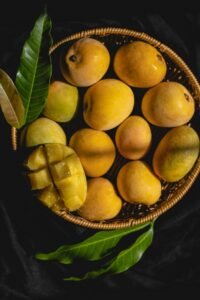
What Makes Ratnagiri Mangoes India’s Undisputed Champions? The Science Behind the Sweetness
Discover why Ratnagiri Alphonso mangoes reign supreme in India. From unique terrain to superior flavor, texture, and aroma—the science behind perfection


Discover why Ratnagiri Alphonso mangoes reign supreme in India. From unique terrain to superior flavor, texture, and aroma—the science behind perfection

Long before refrigerated trucks, export-quality packaging, and modern ports, the Konkan coastline was already a thriving hub of mango exchange. Its reputation wasn’t built overnight—it grew through centuries of ancient trade routes that carried the fragrance of Konkan mangoes far beyond the Western Ghats. To understand the region’s deep connection with mangoes, we must travel back in time to the bustling world of old Konkan, where traders, sailors, and farmers shaped a legacy that still influences the mango industry today.

If India is the land of mangoes, then the Konkan region is its royal throne. Stretching like a narrow ribbon between the Arabian Sea and the towering Western Ghats, this coastal strip has earned its place as India’s mango capital—a title that carries history, science, culture, and generations of hard-earned expertise
Behind every Ratnagiri Alphonso mango is a craft older than the British Empire — the ancient art of grafting. From the Jesuit missionaries who introduced inarching to the Konkan coast in the 15th century to today’s aging master grafters who carry this tactile knowledge in their hands, this is the art that makes the King of Fruits possible.
Kokan Samrat is more than a name — it is a declaration. Born from 17 years of agricultural science, rooted in Ratnagiri’s legendary laterite soil, and carried forward by a brand built on chemical-free authenticity, this is the story of a mango, a movement, and a legacy that genuinely earned its imperial title.
Storing a mango correctly is the difference between experiencing perfection and watching it rot. From never refrigerating an unripe Alphonso to flash-freezing cubes that last six months, and from 2025’s ozonated water breakthrough extending shelf life to 28 days — this guide gives you the science to protect every single mango you buy.
A mango doesn’t just ripen — it executes a precise biochemical program orchestrated by ethylene, the most powerful ripening hormone in nature. From starch converting to sugar, to cell walls softening and aromatic volatiles building, every stage is science at work. Know the process, and you’ll never buy a fake mango again.
Mango season is short, precious, and entirely unforgiving to the unprepared. From knowing which variety to buy in March versus June, to freezing mango cubes for monsoon smoothies and crafting a slow-matured achar that lasts all year — every tip in this guide helps you live the season fully and fearlessly.
A mango doesn’t just grow — it endures. From the first cool October breeze that triggers flowering to the saffron-golden Alphonso harvested five months later, every stage of the mango’s life cycle is a delicate balance of climate, biology, and care that no shortcut or technology can replicate.
Indian mangoes are no longer just a seasonal indulgence — they are a global market force. With exports reaching USD 48.53 million in FY 2022–23 and demand surging across London, New York, and the Gulf, the Alphonso and Kesar are rewriting the rules of international premium fruit trade.
At Kokan Samrat, we bring you hand-picked, naturally ripened organic mangoes from the heart of Ratnagiri—grown sustainably, harvested with care, and delivered with unmatched freshness.