

Cultural Significance of Mangoes in India: Traditions & Sacred Rituals
Discover how mangoes transcend taste in India—from sacred Hindu rituals and wedding traditions to Mughal courts and folk art. Explore 4,000 years of cultural heritage

Discover how mangoes transcend taste in India—from sacred Hindu rituals and wedding traditions to Mughal courts and folk art. Explore 4,000 years of cultural heritage
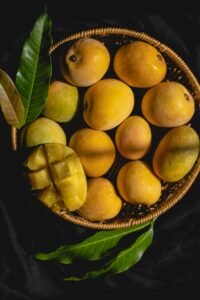
The secret behind the Ratnagiri Alphonso’s irreplaceable flavor isn’t tradition, climate, or craftsmanship alone — it’s soil chemistry. With a pH of 4.5–6.5, 94% phosphorus-fixing capacity, 84% sand fraction for unmatched drainage, and organic carbon averaging 1.74%, Ratnagiri’s laterite is not just different from other soils — it is scientifically proven to be the mango world’s most extraordinary growing medium.
Long before refrigerated cargo planes, Ratnagiri’s Alphonso mangoes traveled the Arabian Sea in wooden dhows. Colonial-era Gazetteers recorded mangoes as a chief export from Vijaydurg, Jaigad, and Ratnagiri port — destinations: Bombay, and beyond. This is the story of the world’s most celebrated mango, and the coastline that shipped it first.
The journey of a Ratnagiri Alphonso mango from tree to table is far more than logistics — it is a science. From reading maturity indices in a canopy to hand-picking every fruit with a 3-cm stalk, to irradiating exports for the US market, every step is precision-engineered perfection.
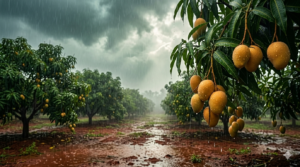
In Ratnagiri, the monsoon doesn’t just water the trees — it writes the destiny of every Alphonso mango. From flooding roots to triggering fungal disease or enabling a perfect harvest, the balance of rainfall defines the sweetness, aroma, and legacy of India’s most celebrated fruit. Nature here is the true farmer.
The economics of Alphonso mango farming run far deeper than a seasonal harvest. From a seven-year investment before the first fruit to climate risks that can erase an entire crop overnight, the true cost of growing a premium Hapus is extraordinary. Kokan Samrat shares honest insights into the financial realities behind every perfect mango.
Pests are among the most devastating threats to mango production in India, causing up to 30% annual yield loss. From mango hoppers destroying flowering panicles to fruit flies ruining ripening harvests, the damage is real and costly. Discover the key mango pests and the integrated management strategies that actually protect your crop.
The right companion plants can transform your mango orchard into a thriving, self-sustaining ecosystem. From neem and marigold that repel pests and attract pollinators, to turmeric and legumes that protect soil health and fix nitrogen naturally — discover the best companion plants for mango trees and grow smarter this season.
Walking through an active Ratnagiri orchard in April, when the Alphonso harvest is at its peak, is a multi-sensory experience that no description fully prepares you for. The fragrance arrives before the fruit is visible. The laterite soil is red against the golden canopy. And the mango eaten directly from the tree redefines the word fresh permanently.

The mango and the monsoon share one of nature’s most precisely calibrated relationships. The mango tree needs the monsoon’s arrival in June, its retreat by September, and its complete absence through winter to flower, set fruit, and ripen. When the monsoon breaks this rhythm, the mango season — and millions of farmers — pay the price.
At Kokan Samrat, we bring you hand-picked, naturally ripened organic mangoes from the heart of Ratnagiri—grown sustainably, harvested with care, and delivered with unmatched freshness.