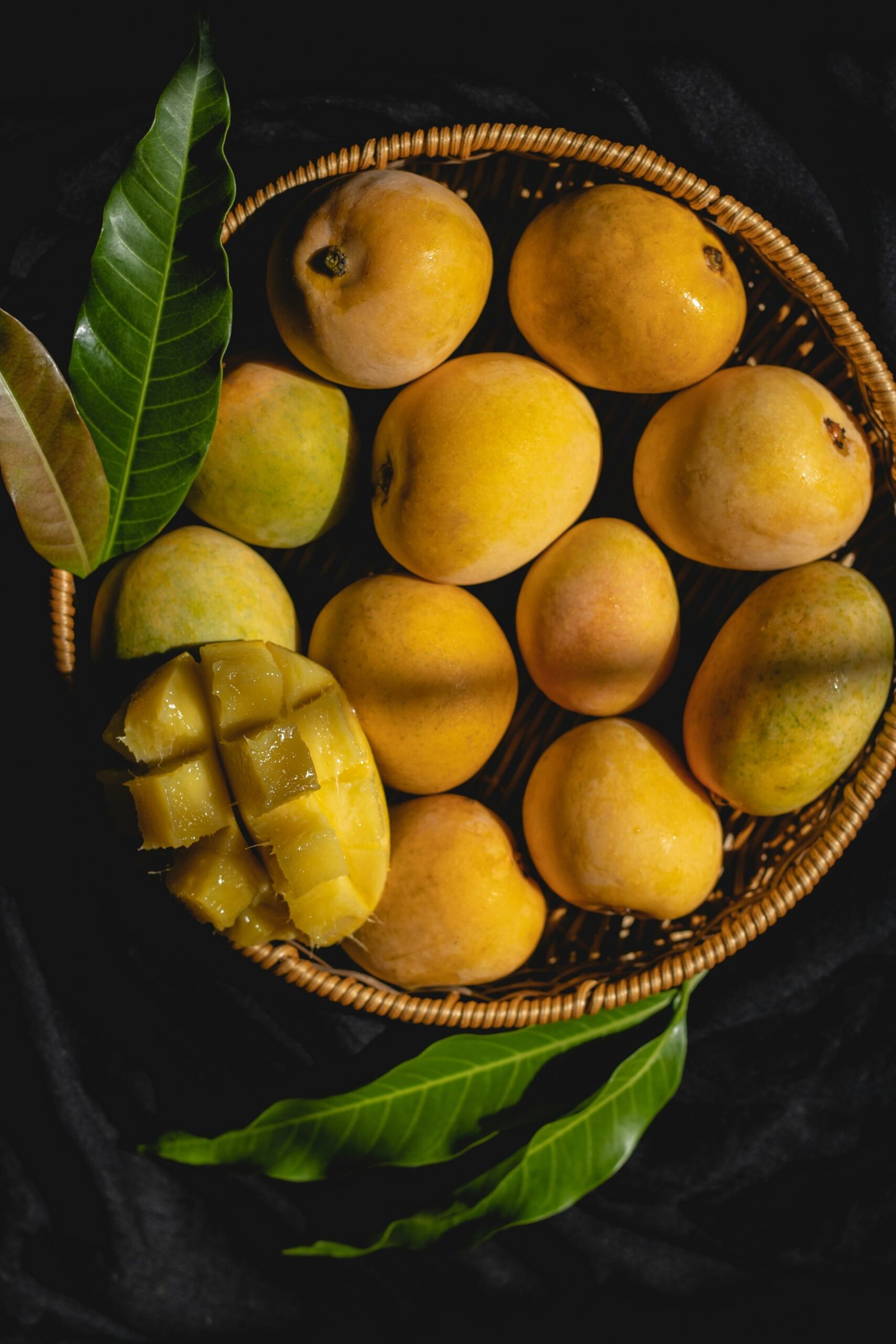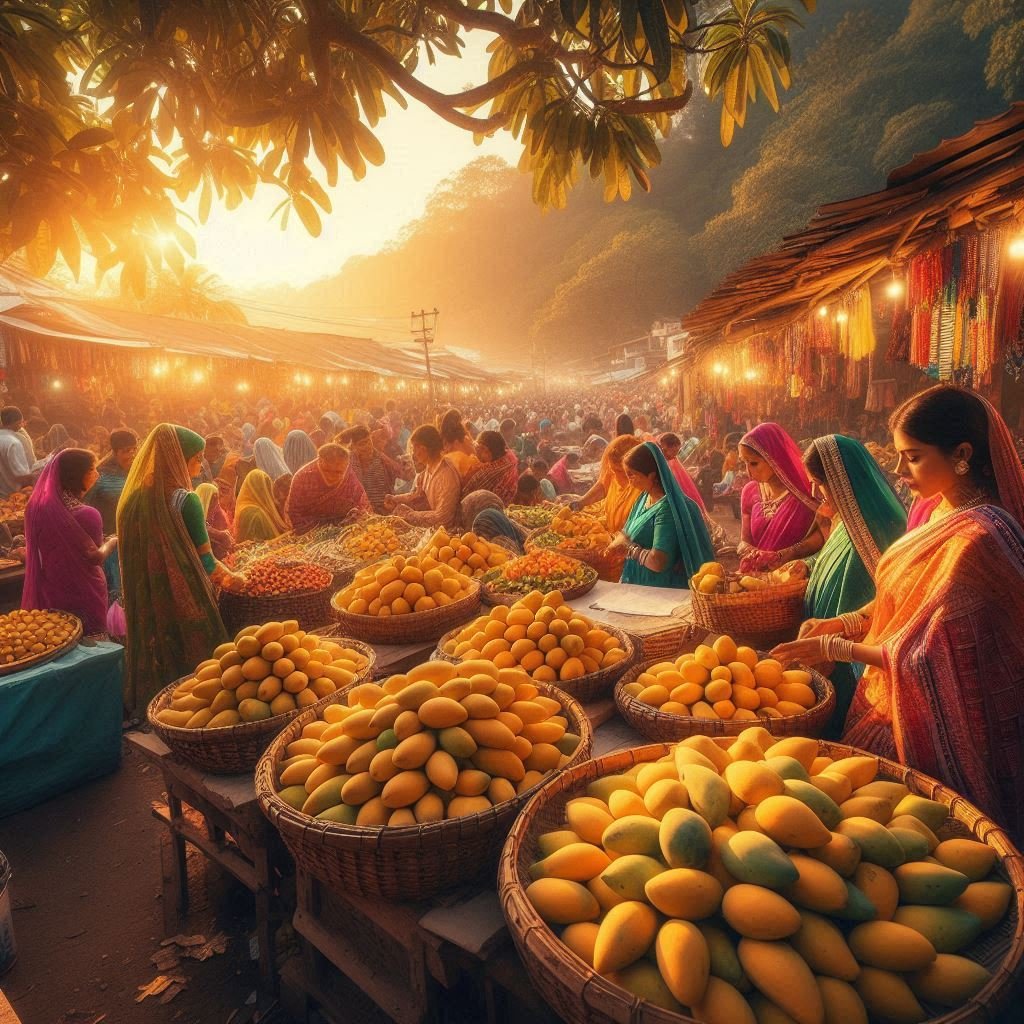
There is a particular kind of knowledge that lives in a Konkani home during mango season — not written down anywhere, not taught in any school, and not found in any agricultural manual. It is the knowledge of how to manage thirty to forty kilograms of Alphonso mangoes arriving at the doorstep over the course of a week, at varying stages of ripeness, in the middle of a coastal Maharashtra summer, without a commercial cold chain, without chemical treatment, and without losing a single fruit to premature spoilage or over-ripening. Konkani households have been solving this problem for generations, and the solutions they arrived at — using straw, rice, newspaper, terracotta, shade, and the mango’s own biology — are more effective, more flavour-preserving, and more scientifically sound than most modern alternatives.
Understanding What the Mango Needs
Before any storage method makes sense, you need to understand what the mango is doing after it leaves the tree. An Alphonso harvested at the correct stage — firm-ripe, with its internal starch beginning to convert to sugar — is a living biological system producing ethylene gas as it continues to ripen. Ethylene is the natural hormone that triggers colour change, softening, and the development of the fruit’s aromatic compounds. Everything the traditional Konkani storage methods do is built around managing this ethylene — slowing it when you want to extend shelf life, concentrating it when you want to accelerate ripening, and dispersing it when you want individual fruits to ripen independently rather than all at once.
This is the science that Konkani grandmothers understood intuitively long before the word ethylene existed in any language they spoke. Their methods are not superstition or habit — they are empirically validated responses to the fruit’s actual biology.
The Hay and Straw Method: The Oldest and Most Effective
The most traditional Konkani mango storage method — still used by farmers and households across Ratnagiri and Sindhudurg today — involves layering mangoes in dry rice straw or hay. A wooden crate or large flat basket is lined with a generous bed of dry straw, individual mangoes are placed on top with space between each fruit, and a final layer of straw covers them loosely. The crate is kept in a cool, shaded, well-ventilated space — a covered veranda, a storeroom with cross-ventilation, or a cellar where the temperature remains relatively stable.
The straw serves three simultaneous functions. It cushions the fruit, preventing the pressure bruising that accelerates spoilage at contact points. It moderates temperature around each individual mango, insulating it from sudden heat spikes during the hottest part of the day. And it manages moisture — absorbing condensation that would otherwise settle on the fruit skin and create the damp microenvironment where fungal spoilage begins. Alphonso mangoes stored in dry straw in a cool, shaded room ripen evenly and slowly — reaching optimal eating condition over 4 to 6 days for firm-ripe fruit — with a flavour depth that refrigerated storage never achieves, because the cold-chain suppresses the aromatic terpenoid development that continues during natural ripening.
The Rice Burial Method: The Home Household Technique
In Konkani households that receive mangoes in smaller quantities — a dozen to two dozen at a time — the rice burial method has been the standard home storage approach for generations. A large vessel, traditionally a deep terracotta pot or a wide-mouthed brass container, is half-filled with uncooked dry rice. Individual mangoes are gently pressed into the rice — completely submerged, not touching each other — and covered with more rice until only the stems are just visible.
The rice maintains a steady, slightly insulated temperature around each fruit, dampens the rate of ethylene accumulation around the mango (slowing ripening to a controlled pace), and absorbs any surface moisture that might otherwise encourage mold. Mangoes stored in rice ripen in 3 to 4 days for semi-ripe fruit and 5 to 7 days for firm-green fruit — emerging with uniform ripeness throughout the flesh that the hay method, which allows slightly faster ripening, does not always produce. The rice burial method is specifically suited to the Alphonso’s need for slow, internally consistent ripening — because rushed ripening on this variety produces a fruit that is soft on the outside and still slightly starchy near the seed.
The Newspaper Wrap Method: Control for Individual Fruits
When a Konkani household wants to ripen mangoes one or two at a time — managing a box so that the fruits reach eating condition on different days rather than all simultaneously — newspaper wrapping is the traditional solution. Each mango is wrapped individually in two to three layers of newspaper and placed stem-side down in a single layer in a shallow basket or flat-bottomed crate, stored in a corner away from direct sunlight.
The newspaper concentrates each mango’s own ethylene production around itself — creating a mild, self-generated ripening environment — while the paper’s slight porosity allows excess moisture to escape, preventing the condensation that would occur in plastic wrapping. By controlling how tightly the newspaper is wrapped and how warm the storage corner is, a Konkani household can stagger the ripening of an entire box across ten to fourteen days — eating at the season’s peak every single day rather than facing a rush of over-ripe fruit on day five.
The Terracotta Storage Vessel: Managing Ripe Mangoes
Once the Alphonso has reached full ripeness — fragrant, yielding to gentle pressure, uniformly golden — the challenge shifts from ripening management to holding the fruit at peak condition for as many hours as possible before it begins to decline. The traditional Konkani solution for this brief but critical window is the terracotta storage vessel.
Unglazed terracotta — the same material used for water cooling vessels across the subcontinent — maintains a slightly lower internal temperature than the ambient air through evaporative cooling. Ripe mangoes placed in a shallow, unglazed terracotta tray and set in a shaded, ventilated spot are held at a temperature 3 to 5 degrees below the room temperature — slowing the enzymatic processes that convert peak ripeness into over-ripeness. This does not extend the fruit’s life by days, but by carefully managed hours — the difference between aamras pressed at the perfect moment and aamras pressed a half-day too late, when the pulp has begun to ferment slightly at the warmest interior points.
What Never to Do: The Plastic Rule
Every traditional Konkani storage method shares one absolute prohibition: no plastic, ever. Plastic bags and sealed plastic containers trap moisture against the mango’s skin — creating the humid microenvironment that mold requires to establish itself within hours. Plastic also traps ethylene at such high concentrations that it accelerates ripening past the optimal window before you are ready for it, producing a soft, over-ripe fruit rather than the firm-ripe Alphonso at its best. The traditional use of straw, rice, newspaper, and terracotta — all breathable, all moisture-managing, none sealed — is not coincidence or tradition for tradition’s sake. It is the correct solution to the mango’s biological requirements, arrived at centuries before the science existed to explain why.
Knowing When to Refrigerate — and When Not To
The one modern intervention that Konkani households have selectively adopted is refrigeration — but the traditional knowledge governs when it is applied as precisely as any other method. An unripe or semi-ripe Alphonso should never enter the refrigerator — the cold completely inhibits ethylene production, stopping ripening permanently and producing a fruit that will never develop its full flavour, fragrance, or correct texture regardless of how long it is subsequently kept at room temperature. A fully ripe Alphonso — pressed, fragrant, uniformly soft — can be refrigerated for 2 to 3 days to hold it at peak condition before pressing, but should be brought back to room temperature for 30 minutes before eating, since the cold suppresses the volatile aromatic compounds that make the Alphonso what it is.
This is the knowledge of the Konkani mango season — not a list of rules, but an integrated understanding of the fruit’s biology, the household’s needs, and the materials that the land itself provides to manage the most generous and most fleeting gift of the Konkan summer.