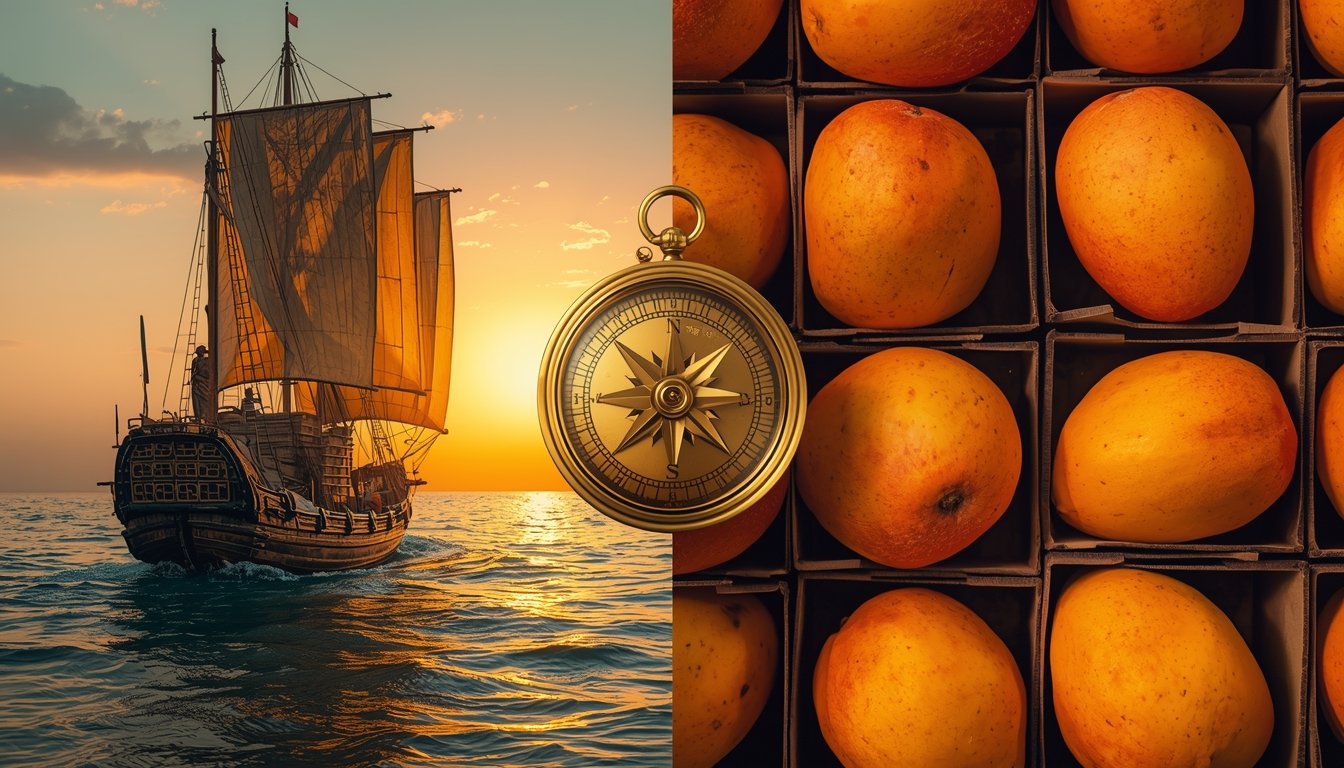
Some of history’s most enduring legacies arrive not through conquest alone but through something far more subtle — a seed planted, a technique shared, a fruit transformed. When Afonso de Albuquerque, the Portuguese general and viceroy of India, set his sights on Goa in 1510, he was thinking about maritime trade routes, imperial dominance, and the wealth of spice commerce. He could not have imagined that his most lasting contribution to India — and to the world — would not be political but agricultural: the introduction of a horticultural technique that would permanently alter the Konkan’s farming landscape and give birth to a fruit that 500 years later is still celebrated as the King of Mangoes. This is the story of how the Portuguese changed mango farming in Konkan forever.
India Before the Portuguese: A Land Already in Love with the Mango
To understand what the Portuguese changed, you must first understand what they found. When Portuguese ships arrived on the Konkan coast in the early 16th century, they encountered a civilization that had been cultivating and celebrating the mango for over 4,000 years. The Vedas referenced it, the Buddhists revered it, Kalidasa poeticized it, and Konkan farmers had been growing hundreds of indigenous varieties across the laterite hillsides of Maharashtra and Goa for generations before any European set foot on the coast.
The mangoes these farmers grew were extraordinary in their diversity — fibrous, sweet-tart, juicy varieties consumed with unself-conscious abandon: juice running down chins, pulp sucked from the seed, hands sticky with tropical richness. This was how the mango was meant to be eaten — and for most Indians, it still is. But for the Portuguese, accustomed to the precise table manners of European dining culture and the neatly sliced fruits of Mediterranean courts, this was not how a premium fruit should present itself.
They wanted something different — a mango that could be cut cleanly, served elegantly, and eaten with silverware. That aesthetic ambition, as much as any agricultural science, is what set the next chapter in motion.
Afonso de Albuquerque: The Man Who Named a Fruit Without Knowing It
Afonso de Albuquerque (1453–1515 CE) was not a botanist. He was a soldier, a strategist, and a ruthless imperial architect who seized Goa from the Bijapur Sultanate in 1510 CE and established the Portuguese maritime empire across Asia — from Hormuz in Oman to the Straits of Malacca. The Portuguese crown conferred on him the title of Duke of Goa in recognition of his role in building one of history’s most ambitious colonial networks.
But Albuquerque was also a man of refined tastes and genuine curiosity about the natural world of the lands he colonized. His administrators and accompanying Jesuit missionaries took a particular interest in Goa’s extraordinary botanical wealth — including the native mango varieties that grew in abundance along the Konkan coast. Some historical accounts suggest that Albuquerque himself directed the collection of mango grafts from Southeast Asia — possibly from Malaysia and other Portuguese-controlled territories — to be introduced and cultivated in Goa’s fertile red soil.
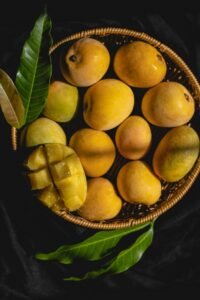
Whether the initiative was his directly or emerged from his administration, the result was the same: the Portuguese presence in Goa became the catalyst for a horticultural revolution that the Konkan’s mango farmers are still benefiting from five centuries later. The fruit that emerged from this revolution was eventually named Alphonso — a Latinized Portuguese rendering of “Afonso” — in his honor. In Maharashtra, it became Hapus; in Gujarat, Hafus; in Karnataka, Aphoos — the same royal mango wearing different regional names.
The Jesuit Missionaries and the Science of Grafting
The technical engine of the Portuguese transformation of Konkan mango farming was a technique that the Jesuit missionaries who accompanied the colonial administration introduced with meticulous care: grafting.
Before grafting arrived in the Konkan, mango cultivation was entirely seed-based — and this was a fundamental limitation. Mango trees grown from seed are genetically unpredictable. Even seeds from the most exceptional mango tree will produce offspring of wildly varying quality, size, flavor, and tree form — sometimes inferior to the parent, sometimes entirely different in character. A farmer who grew a mango tree from seed could wait 8 to 15 years for it to bear fruit, only to discover the quality was mediocre. Scale, consistency, and reliability were impossible under this system.
Grafting changed everything. The technique involves taking a scion — a cutting from a superior, proven mango tree — and joining it to a rootstock plant that provides vigorous root growth and structural stability. The resulting grafted tree inherits the exact genetic characteristics of the superior parent scion: the same flavor, the same color, the same aroma, the same texture — guaranteed and replicated with perfect fidelity across every tree in the orchard. The grafted tree also bears fruit far sooner — within 3 to 4 years of planting, compared to a decade or more for seedling trees.
The Jesuit missionaries applied this technique systematically to Goa’s mango orchards, selecting the finest native varieties, crossing them with introduced grafts from their Portuguese territories in Southeast Asia, and cultivating trees that produced mangoes of a consistency and quality that had never been achieved before on the Konkan coast. The Alphonso that emerged from this process was their masterwork — a fruit so far superior to anything previously available that the Portuguese themselves recognized it as something genuinely extraordinary.
From Goa to Ratnagiri: How the Konkan Became the Alphonso’s True Home
The Alphonso’s story might have remained a Goan footnote had it not been for the Konkan coast’s extraordinary natural advantages — and the movement of the variety northward into what is today Maharashtra.
As Portuguese influence extended along the Konkan littoral, the Alphonso mango variety was planted across the coastal districts of Ratnagiri, Devgad, Sindhudurg, and Alibag — and something remarkable happened. The same variety that grew well in Goa reached heights of flavor in Ratnagiri’s specific microclimate that even Goa could not replicate. The deep laterite-red soil of Ratnagiri’s hillsides — naturally well-draining, rich in iron and minerals, with a pH profile perfectly suited to mango cultivation — combined with the precise temperature modulation of the Arabian Sea coastal breeze to produce an Alphonso of incomparable quality.
The Portuguese had brought the technique and the tree. The Konkan’s geography did the rest. Over generations, the Konkan farmers of Ratnagiri and Devgad became the world’s most skilled Alphonso cultivators — refining harvesting timing, developing post-harvest handling knowledge, identifying the best micro-plots within their orchards, and passing this accumulated expertise from parent to child across centuries of continuous cultivation.
It was this combination — Portuguese horticultural science meeting Konkan geography and the depth of generational Indian agricultural wisdom — that produced the fruit that the world now knows as the most celebrated mango in existence.
The Peshwa Diplomacy: When a Mango Became a Political Currency
One of the most revealing indicators of the Alphonso’s extraordinary status during the colonial era is how it was used politically. Historical accounts document that the Peshwas — the prime ministers of the Maratha Empire who controlled much of western India during the 18th century — engaged in direct diplomatic negotiations with the Portuguese over rights to the Konkan’s finest mango orchards and varieties.
Alphonso mangoes became a form of diplomatic currency — gifted to Mughal emperors, offered to visiting dignitaries, and traded as luxury goods that symbolized the wealth and cultural sophistication of whoever possessed them. This diplomatic use of the Alphonso established a gifting tradition that persists to this day — where a crate of premium Ratnagiri Alphonso mangoes carries the same cultural weight as any luxury imported product, conveying prestige, respect, and genuine care in a single seasonal gesture.
A Legacy That Lives in Every Orchard
When Albuquerque’s ships first anchored off the Konkan coast in the 16th century, they carried more than soldiers and trade goods. They carried a horticultural idea — the idea that a fruit’s potential could be locked, multiplied, and perfected through the science of grafting — that permanently transformed what the Konkan coast could grow and give to the world.
Today, every GI-certified Ratnagiri Alphonso mango tree standing in an orchard in Ratnagiri or Devgad is a direct genetic descendant of the grafting tradition introduced by Jesuit missionaries under the Portuguese colonial administration. The technique that arrived from Europe 500 years ago is the same technique used by Konkan farmers today — refined, localized, and passed down through generations with the same care and precision with which the fruit itself is cultivated.
The Portuguese came to Konkan seeking trade routes and imperial glory. What they left behind was something far more enduring: the science that made the King of Mangoes possible. And the Konkan, in receiving that gift, made it something the Portuguese themselves could never have imagined — a fruit so rooted in its adopted land that today, no one anywhere in the world associates the Alphonso with Portugal. They associate it with Ratnagiri. They call it Hapus. And they consider it entirely, irrevocably their own.
That is the fullest measure of a legacy: not who planted the seed, but whose soil made it extraordinary.