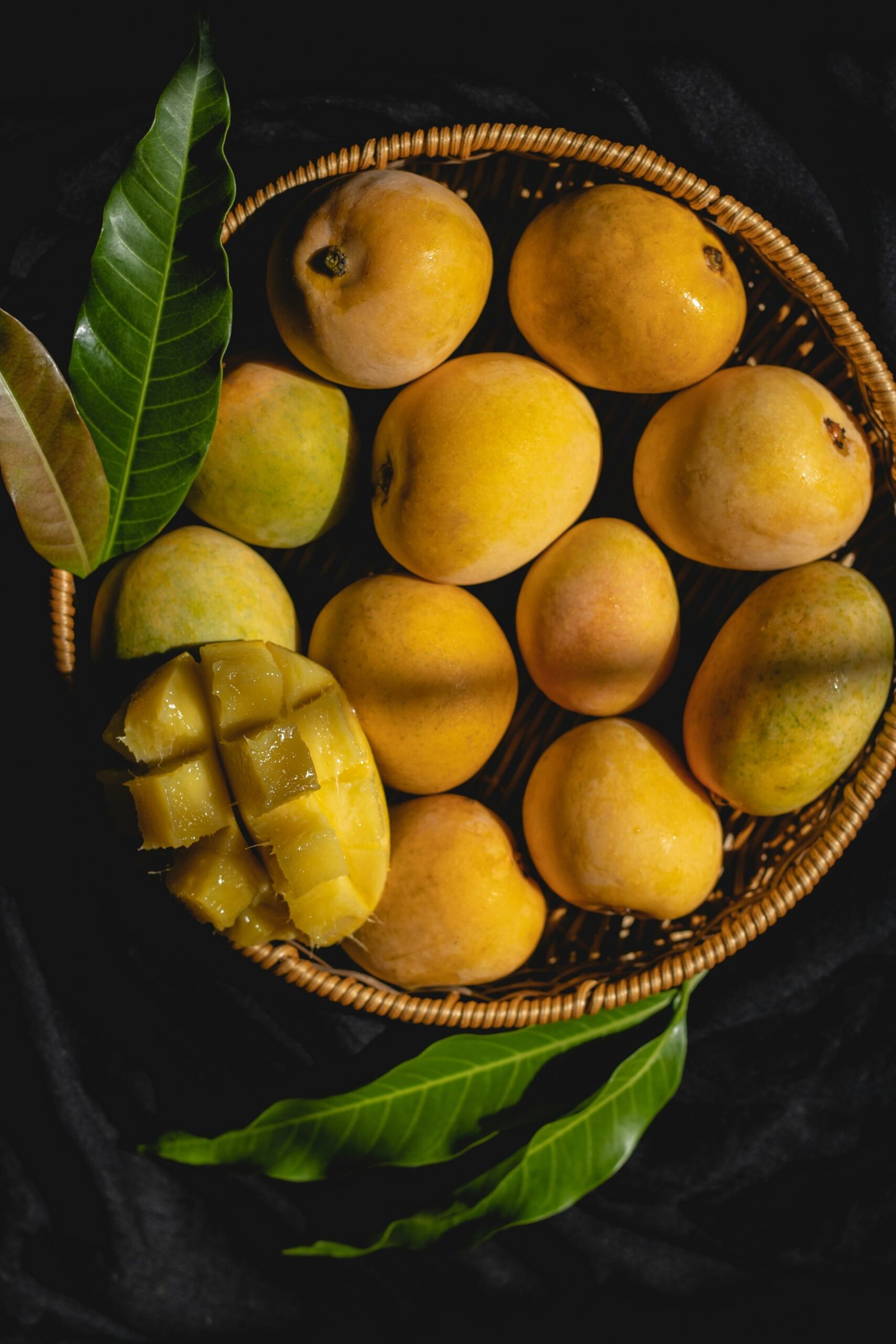
Mango ice cream is wonderful. But mango sorbet is something else entirely — a preparation that strips away everything except the fruit itself, concentrating its fragrance, its sweetness, and its natural acidity into a form that is simultaneously frozen and intensely alive in flavor. Where ice cream adds dairy fat and cream to the equation, sorbet’s only ingredients are the mango, a measured amount of sweetener, and a little acid. The result, when you make it with a genuine Konkan Alphonso, is the purest cold expression of the world’s best mango: the entire sensory character of the fruit in a scoop that melts clean on the tongue, leaving no dairy residue and no flavor competition — only the Alphonso in its most concentrated, most essential form.
It requires no ice cream maker. It requires no churning machine, no specialist equipment, and no technique beyond a blender and a freezer. What it does require is the right mango, the right sugar ratio, and the understanding of three science-based principles that separate a silky, scoopable sorbet from a frozen block of mango ice.
The Science First: Why Texture Is Everything
The most common reason homemade sorbet fails is not the recipe — it is an insufficiently understood relationship between sugar concentration and freezing point. Sugar does not simply sweeten sorbet. It physically depresses the freezing point of the mixture, which determines whether the final frozen product is hard and crystalline or soft, scoopable, and smooth. Too little sugar and the sorbet freezes rock-hard, shattering rather than scooping and releasing flat, muted flavor. Too much sugar and the sorbet never freezes properly, remaining soft and unstable at serving temperature.
The correct sugar ratio for a mango sorbet that scoops cleanly is 25 to 30 percent of the total weight of the mango flesh. For 500 grams of Alphonso pulp — roughly three medium ripe mangoes — this means 125 to 150 grams of sugar. Use this ratio as your anchor regardless of which variation you make, and the texture will always be correct.
The second principle is acid. A tablespoon of fresh lime or lemon juice added to the sorbet mixture does three things simultaneously: it brightens the mango’s flavor by amplifying its natural acidity, it prevents the oxidation that dulls the sorbet’s color from golden-amber to dull tan during freezing, and it provides a slight flavor counterweight to the sugar that prevents the finished sorbet from tasting cloying.
The third principle is smoothness. The Alphonso is a fiber-free variety — its pulp blends cleanly without straining for most uses — but for a sorbet of maximum silkiness, passing the blended mixture through a fine sieve before freezing removes any remaining fiber fragments and produces a texture that is noticeably more luxurious than an unfiltered version.
The Master Recipe: Alphonso Mango Sorbet
This recipe produces approximately 600 ml of finished sorbet — enough for four generous servings — and requires no specialist equipment beyond a blender and a freezer-safe container with a tight-fitting lid.
Ingredients:
- 3 medium ripe Alphonso mangoes (approximately 500 grams of peeled pulp)
- 125 grams caster sugar (or 100 grams if mangoes are very sweet)
- 100 ml water
- 1.5 tablespoons fresh lime juice
- Pinch of fine sea salt
Method:
Step 1 — Make the simple syrup. Combine the sugar and water in a small saucepan over medium heat, stirring until the sugar dissolves completely — approximately 3 to 4 minutes. Remove from heat and allow to cool completely to room temperature before use. Do not rush this step: adding warm syrup to the mango pulp will partially cook the fruit’s aromatic compounds and dull the finished sorbet’s fragrance.
Step 2 — Blend the mango. Peel and cube the mangoes, then blend until completely smooth — at least 2 full minutes at high speed. Add the cooled syrup, lime juice, and salt, and blend for a further 30 seconds until fully incorporated.
Step 3 — Strain. Pour the blended mixture through a fine-mesh sieve into a clean bowl, using the back of a spoon to press all the pulp through. Discard the minimal fiber that remains in the sieve. Taste at this stage: the mixture should be noticeably sweeter than you expect from the finished sorbet, since freezing suppresses the perception of sweetness. If it tastes correctly sweet now, it will taste muted when frozen. Adjust lime juice if needed.
Step 4 — Freeze and re-blend. Pour the strained mixture into a flat, wide freezer-safe container and cover tightly. Freeze for 3 hours until the edges have set and the center is slushy. Transfer to the blender and blend for 90 seconds until smooth and aerated. Return to the container and freeze for a further 2 to 3 hours until fully set.
Step 5 — Serve correctly. Remove the sorbet from the freezer 8 to 10 minutes before serving and leave at room temperature — this brief tempering period softens the texture from firm-frozen to perfectly scoopable and allows the volatile aromatic compounds (suppressed by extreme cold) to become active again, restoring the full Alphonso fragrance. Serve in chilled bowls, garnished with a few thin strips of fresh mango, a mint leaf, or a light scatter of crushed pistachios.
Four Variations Worth Making
The master recipe is extraordinary on its own — but the Alphonso sorbet base is also a platform for combinations that expand its flavor range considerably without complicating the process:
Mango-Coconut Sorbet: Replace 50 ml of the water in the simple syrup with full-fat coconut milk. The coconut adds a subtle tropical roundness that complements the Alphonso’s fragrance without competing with it — and the coconut fat provides additional anti-crystallization properties that make the texture even smoother.
Mango-Lime-Chilli Sorbet: Add a quarter teaspoon of fine Kashmiri chilli powder and an extra half tablespoon of lime juice to the blended mixture before straining. The warmth of the chilli activates slowly — arriving after the mango’s sweetness has registered and creating a pleasant building heat that makes each subsequent spoonful more interesting than the last.
Mango-Ginger Sorbet: Add 15 grams of fresh ginger, peeled and grated, to the blending step. Ginger’s sharpness cuts through the Alphonso’s sweetness with a precision that brightens the entire profile — particularly effective in early-season mangoes that are slightly less ripe and need the acid-heat contribution that ginger provides.
Mango-Basil Sorbet: Add 8 to 10 large fresh basil leaves to the blender at the mango puree stage. The basil’s anise-like aromatic compounds marry with the Alphonso’s terpenoid fragrance in a way that is entirely unexpected and completely right — an adult sorbet variation that works as both a dessert and a palate cleanser between courses.
Storing and Serving Notes
Properly made mango sorbet, stored in a tightly sealed container with a sheet of parchment pressed directly against its surface (to prevent freezer burn and ice crystal formation), keeps well for up to two weeks. After two weeks, ice crystal growth progresses enough to affect texture — the sorbet is still safe to eat but no longer at its best.
For a simpler same-day version when you want something cold in thirty minutes: freeze cubed Alphonso mango for four hours, then blend the frozen cubes directly with the lime juice and a tablespoon of honey, no syrup required. The frozen fruit’s own water content, combined with the honey’s fructose, produces a soft-serve consistency immediately on blending — serve directly from the blender before it melts. It is not as refined as the master recipe’s twice-frozen, blended version, but it is faster, and on a Konkan summer afternoon, the fastest path to cold Alphonso is rarely the wrong choice.
The mango sorbet is, at its heart, the simplest possible answer to one of the most basic questions of summer: how do you make the best fruit in the world even more refreshing? You freeze it, very carefully, and let it speak for itself.