There is a stretch of India’s western coast — running from the base of the Sahyadri range down to the Arabian Sea across approximately 720 kilometres of laterite hillsides, dense forest, seasonal rivers, and salt-laden coastal air — that has produced one of the most distinctive and least understood food cultures on the subcontinent. The Konkan belt: a thin strip of land between Maharashtra, Goa, and Karnataka that is too narrow to be an empire, too specific to be a generalization, and too flavourful to be ignored. Its culinary history is not a single story. It is a layering of indigenous knowledge, maritime trade, colonial interruption, seasonal necessity, and the extraordinary diversity of fruit that this particular combination of soil, climate, and geography produces — and has always produced — in extraordinary abundance.
A Kitchen Shaped by Geography
Before it was shaped by any external influence, Konkan cuisine was shaped by the land itself. The coastal laterite plateau — red, mineral-rich, well-drained, and dramatically different in character from the black cotton soil of the Deccan interior — produces specific crops in specific quantities and resists others entirely. Rice has always been the staple grain, grown in the valley floors between the laterite ridges. Fish has always been the primary protein, drawn from a coastline that drops steeply into some of the most productive fishing waters on the western Indian coast.
But it is the fruits that are the most remarkable product of this specific geography. The combination of the Sahyadri’s elevation, the Arabian Sea’s moisture, and the laterite soil’s mineral composition creates growing conditions for fruit that are genuinely without equivalent on the subcontinent. Mango, cashew, jackfruit, kokum, coconut, betel nut — these are not simply crops in Konkan. They are the architecture of the cuisine. They provide sweetness, acidity, fat, thickening, preservation, and flavor in a kitchen where each one serves multiple culinary functions simultaneously.
The Fruit That Defines Konkan Identity
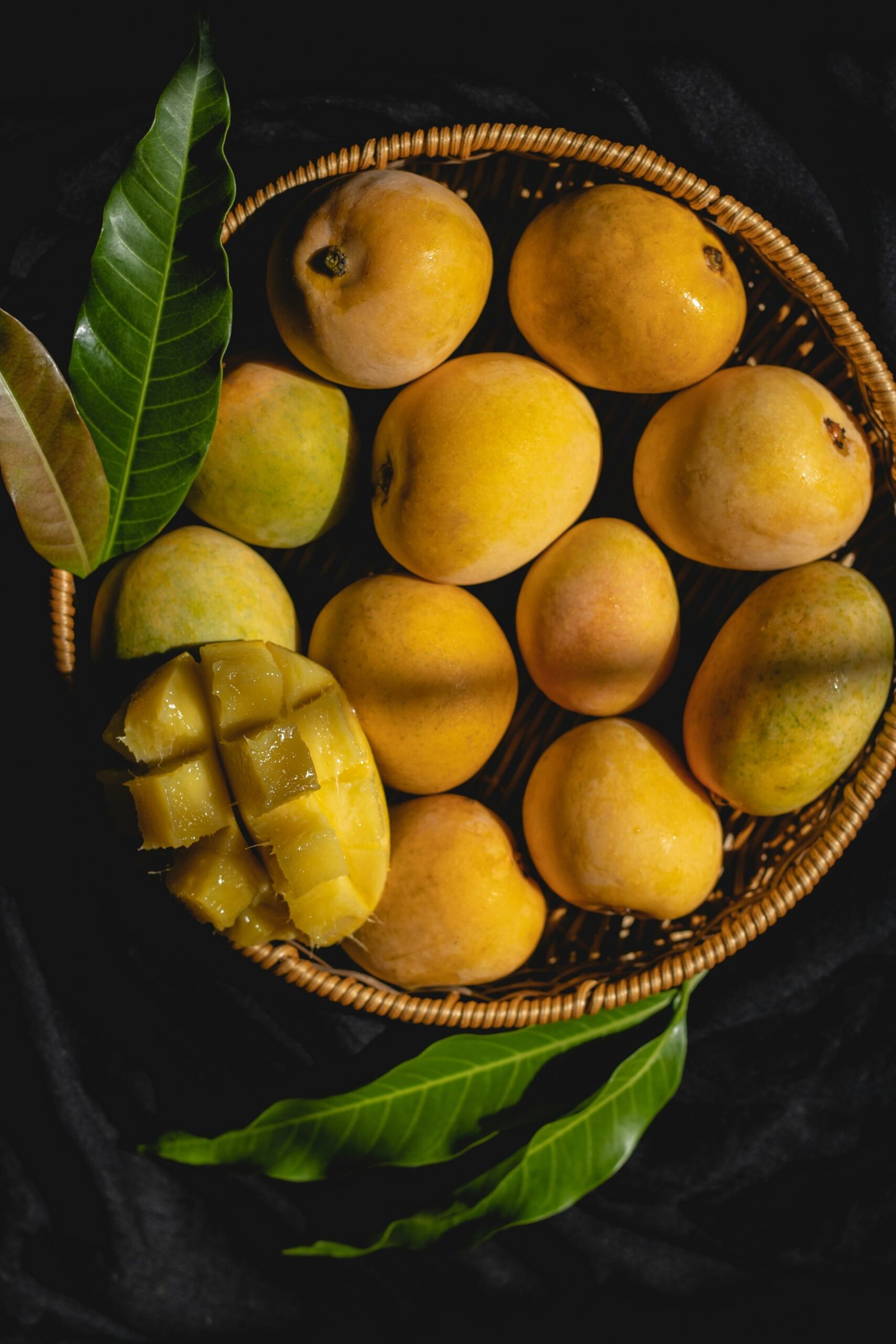
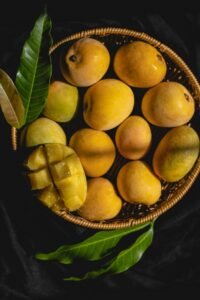
Of all the fruits that shape Konkan cuisine, the Alphonso mango occupies a position that no other fruit in any other regional cuisine in India quite matches. The relationship between Konkan’s people and their mango is not merely agricultural or culinary — it is definitional. The Alphonso mango is what Konkan tastes like, in the same way that the Parmigiano-Reggiano cheese is what Emilia-Romagna tastes like or the Champagne wine is what the Marne valley tastes like — a product so deeply specific to its place of origin that it cannot be understood in separation from it.
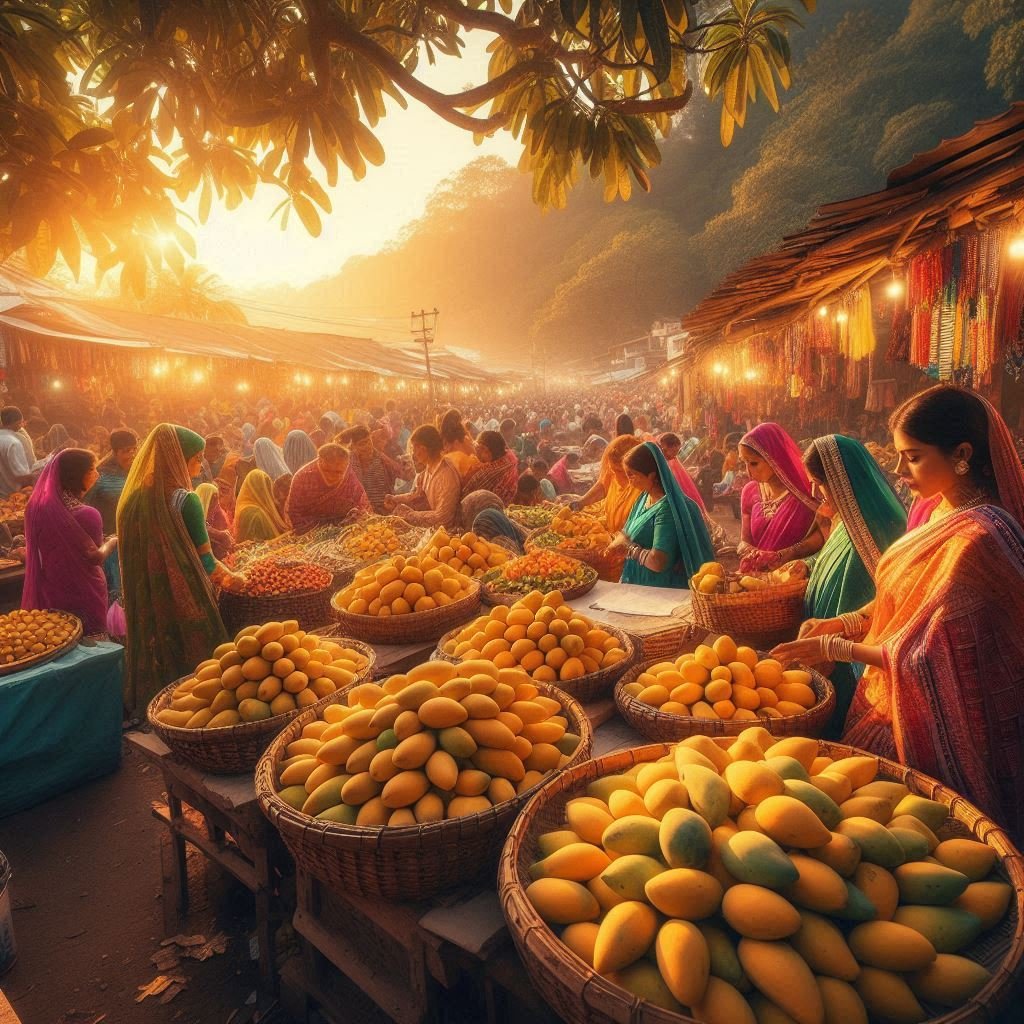
The mango’s influence extends across every dimension of the Konkan summer kitchen: as fresh aamras, as raw kairi in curry and pickle, as dried aamba poli, as the flavoring agent in sol kadhi’s coconut-mango combination, and as the anchor of the most celebratory meals the region produces. For ten to twelve weeks each year, the entire culinary logic of a Konkan household reorganizes itself around what the mango tree is doing — a seasonal gravitational force that no other single ingredient in any other Indian regional kitchen quite replicates.
Kokum: The Souring Agent That Is Konkan Itself
No ingredient better illustrates the role of fruit in Konkan culinary history than kokum — Garcinia indica — a small, deep-purple fruit native to the Western Ghats whose dried skin has functioned as the primary souring agent in Konkan cuisine for centuries. Kokum is irreplaceable in sol kadhi — the cooling pink digestif drink made with coconut milk and dried kokum that is the standard accompaniment to every Konkan meal — and appears throughout the Malvani and Saraswat Brahmin culinary traditions as the acid that tamarind fulfills in Tamil cooking and that dried mango fulfills in Punjabi cuisine.
What makes kokum remarkable in the context of Konkan culinary history is how completely it resisted displacement. When the Portuguese arrived in the sixteenth century and introduced new acidic fruits and souring agents — including the tamarind trade that intensified, the tomato that would eventually arrive from the Americas — kokum held its ground in Konkan kitchens precisely because no introduced acid produced the same specific flavor: fruity, tannic, gently sweet, with a cooling physiological effect that was particularly valued in a coastal climate. Kokum’s persistence in Konkan cooking is the persistence of indigenous knowledge against four centuries of external influence.
The Portuguese Transformation
The Portuguese arrived on the Konkan coast in the early sixteenth century, establishing Goa as the commercial and administrative hub of their Indian Ocean empire — and their presence transformed Konkan cuisine in ways that were simultaneously profound and incomplete. The crops they introduced through the Columbian Exchange — cashew, chilli, potato, tomato, and the papaya — did not simply add new ingredients to the Konkan kitchen. They restructured it.
Cashew, in particular, became fundamental to the Konkan economy and diet in ways that went beyond food: feni, the cashew-apple distilled spirit unique to Goa and coastal Karnataka, and the cashew nut trade that still defines parts of Sindhudurg’s rural economy are both directly traceable to Portuguese botanical introduction. The Byadgi chilli — now inseparable from Malvani masala and from the Konkan pickle tradition — is itself a Portuguese-era introduction that adapted so thoroughly to Konkan growing conditions that it is now considered a native crop.
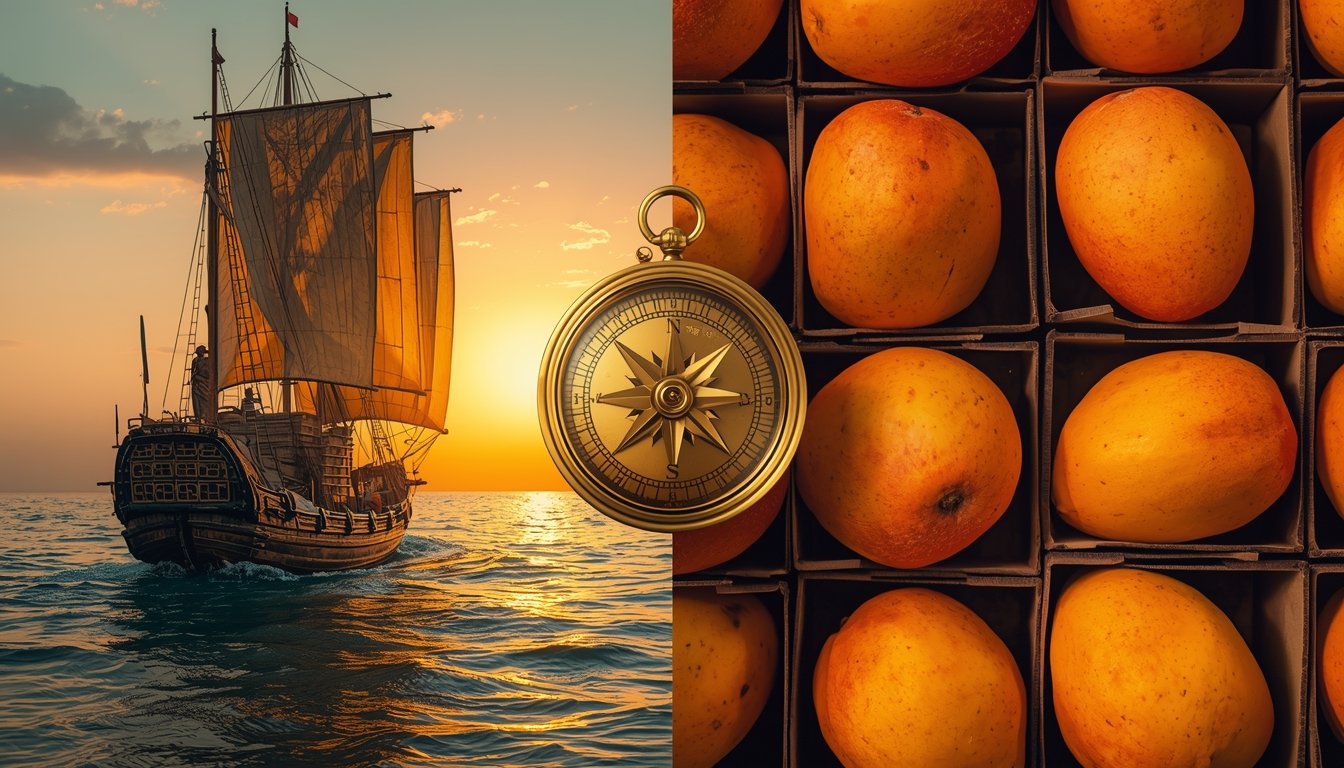
The Alphonso mango itself carries Portuguese fingerprints. The name Alphonso derives from Afonso de Albuquerque — the Portuguese general and colonial governor who is credited with introducing grafting techniques that produced the variety’s characteristic quality — and the Alphonso’s extraordinary aromatic profile is the product of centuries of careful propagation that Portuguese horticultural knowledge helped to initiate. The colonizer’s botanical legacy and the indigenous soil’s chemistry produced, together, a fruit that belongs entirely to neither and completely to both.
The Layered Pantry: Fruits as Preservation Architects
A crucial and underexamined dimension of fruits’ role in Konkan culinary history is their function as preservation agents in a pre-refrigeration kitchen operating in a tropical climate. Kokum dried and stored preserved the monsoon’s acidity for use through the dry summer months. Raw mango pickled in brine with asafoetida and chilli — the karmbi nonche tradition — extended the sourness of the kairi season across the entire year. Jackfruit seeds, dried and stored, provided a starchy protein source through the lean months between harvests.
This preservation architecture — built entirely from fruit, requiring no technology beyond salt, sun, and ceramic storage — is the product of generations of accumulated knowledge developed by Konkan communities who understood their seasonal abundance and its limits with a precision that no agricultural textbook has fully codified. The dried kokum at the back of the Konkan pantry is not simply a flavoring agent. It is centuries of observational intelligence about how the coast’s fruit can be stretched across the year.
A Living History at the Table
What distinguishes Konkan culinary history from the culinary history of most Indian regions is that it remains largely unbroken. The Malvani masala ground fresh for today’s fish curry uses the same Byadgi chilli and tirphal combinations that the same community used generations ago. The sol kadhi served at a Konkan restaurant in Mumbai in 2026 carries kokum dried on rooftops in Ratnagiri the same way it was dried a century before. And the aamras pressed by hand in a Konkan kitchen during the Alphonso season — thick, warm, fragrant, requiring no recipe — is the same gesture of seasonal gratitude that Konkan families have made every March and April for as long as the Alphonso tree has stood on laterite soil.
The fruit does not simply flavor Konkan cuisine. It is the thread that runs unbroken through its history — from the indigenous knowledge of the coast’s earliest communities through the Portuguese colonial encounter, the monsoon-preservation imperative, and the living mango orchard tradition that brands like Kokan Samrat continue to tend today. Pull that thread, and the whole history comes with it.