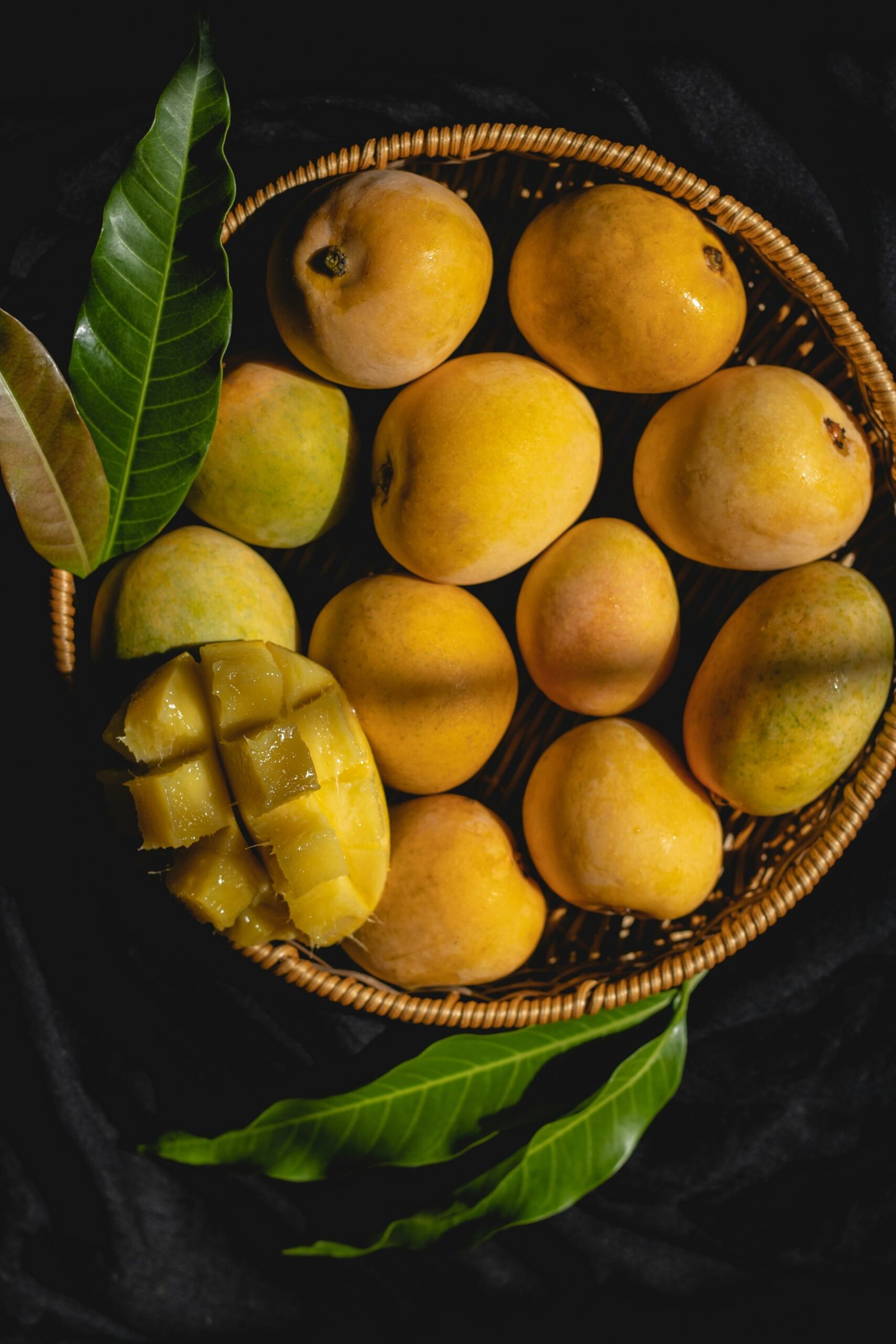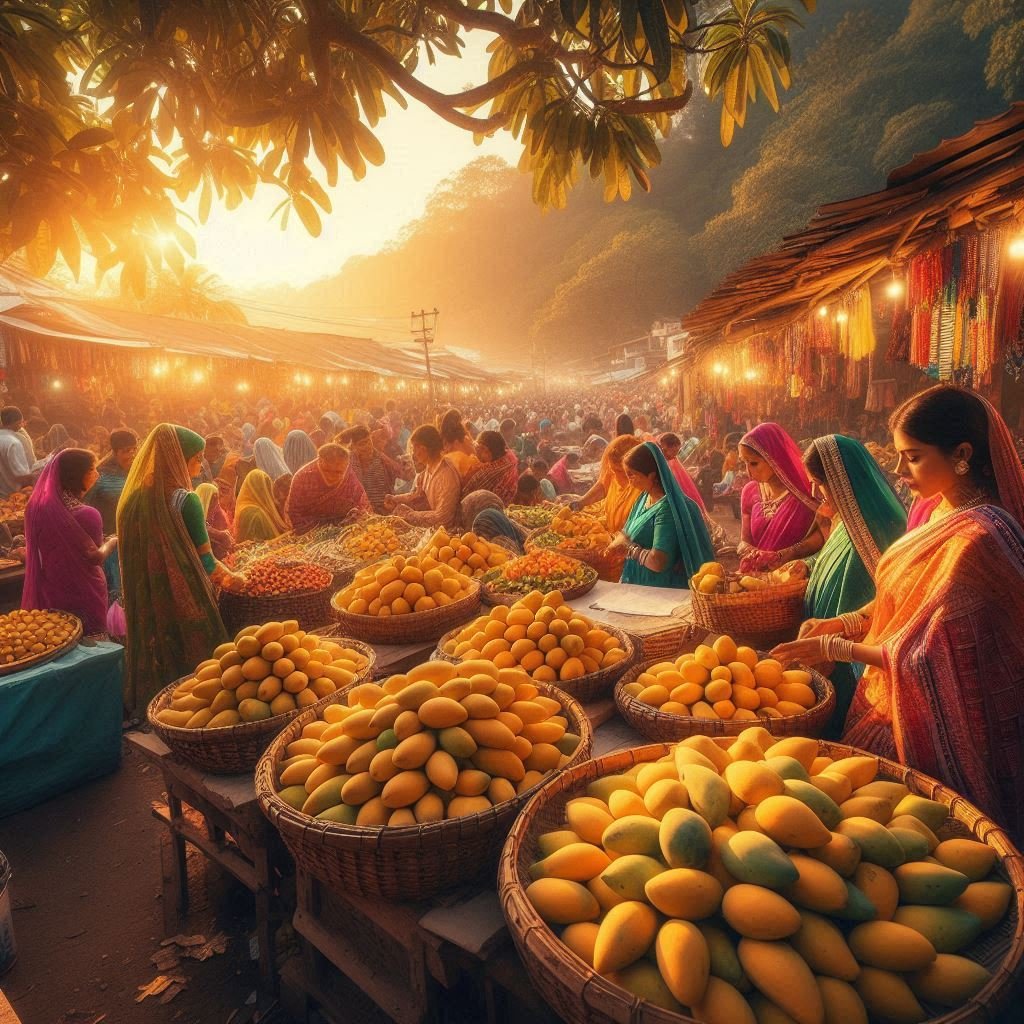
There are landscapes in India that cannot be understood without first understanding the history that shaped them. The mango orchards of the Western Ghats — spreading across the laterite hillsides of Ratnagiri, Sindhudurg, Devgad, and the broader Konkan coast — are such a landscape. They look, to the untrained eye, like a natural feature of the terrain: ancient, inevitable, as if the mango trees always belonged to these red-soiled slopes. But the extraordinary extent of mango cultivation across the Western Ghats’ Konkan face is not a natural phenomenon. It is a colonial-era legacy — shaped by Portuguese grafting science, Peshwa patronage, British botanical ambition, and the extraordinary ingenuity of Konkan farmers who turned the harshest terrain on the subcontinent into the world’s most celebrated mango landscape.
The Western Ghats: Nature’s Wall, Farmer’s Fortress
The Western Ghats — designated a UNESCO World Heritage Site and recognized as one of the world’s eight most important biodiversity hotspots — form a continuous escarpment that runs for 1,600 kilometers along India’s western coast, from Gujarat in the north to Kerala in the south. This mountain range does far more than create a dramatic skyline. It functions as a climate-making machine — intercepting the southwest monsoon winds from the Arabian Sea and forcing them to rise, cool, and discharge their moisture across the Konkan slopes before passing on to the drier Deccan plateau to the east.
The result of this orographic effect is a narrow coastal strip — between 50 and 80 kilometers wide — that receives annual rainfall of 2,000 to 3,500 mm, concentrated in the monsoon months of June through September. The slopes that receive this rainfall are underlain by laterite rock — the iron and aluminum-rich red stone that weathers into the characteristic rust-red soil of the Konkan, a substrate with excellent drainage, good mineral content, and a pH profile that the Alphonso mango has evolved, over centuries of cultivation, to exploit with extraordinary efficiency.
The Western Ghats are, in essence, the reason the Alphonso mango achieves its particular quality in this region and nowhere else. They create the rainfall, shelter the orchards from extreme weather, moderate temperatures through the critical flowering period, and deliver the coastal humidity that enhances the fruit’s texture and sweetness. The mountain range is not merely a backdrop to the mango story — it is an active ecological participant in the fruit’s production.
Before the Orchards: A Terrain That Resisted Cultivation
The landscape that today is covered in productive Alphonso orchards was, historically, one of the most agriculturally challenging terrains on the Indian subcontinent. The Konkan’s laterite hillsides — locally called katals — are dominated by exposed hard rock surfaces that support almost no natural topsoil. Monsoon rains of extraordinary intensity pour across these surfaces for four months every year, stripping away any organic material that accumulates and leaving behind barren, rocky slopes that conventional agriculture found essentially useless.
The pre-colonial landscape of the Western Ghats’ Konkan face was primarily forest and scrub jungle — not agricultural land. The communities that lived on these slopes practiced shifting cultivation on the narrow fertile valleys between rock outcrops, grew subsistence food crops in the few pockets of deeper soil, and relied on forest products for supplementary nutrition. The idea of transforming these laterite hillsides into productive orchards capable of feeding communities and generating export income would have seemed, to any conventional agricultural planner of the era, simply impossible.
What made the transformation possible was a combination of a highly specific tree — the grafted Alphonso mango — and a highly specific farming innovation developed by Konkan farmers over generations of trial, failure, and accumulated wisdom.
The Rock-Blasting Innovation: Konkan’s Agricultural Miracle
The story of how Alphonso orchards colonized the Western Ghats’ laterite hillsides is one of the most remarkable agricultural innovation stories in Indian history — and it remains almost entirely unknown outside the region. Konkan farmers, working on bare laterite rock surfaces, developed a technique of blasting the hard rock and creating man-made soil pockets — essentially engineering planting holes in solid stone — that allowed mango grafts to be planted in terrain where no conventional agricultural logic suggested they could survive.
Farmers uprooted existing scrub vegetation from rock crevices, blasted the laterite surface to create bowl-shaped excavations, and filled these with soil carried from valley floors or surrounding areas. Mango grafts were planted in these engineered soil pockets, where they survived the harsh rocky environment through intensive early-stage management — regular earthing, protective structures against monsoon runoff, and careful irrigation through the critical first three years before the roots penetrated deep enough into rock crevices to access the moisture reserves below.
After approximately three years, the mango roots had penetrated so deeply into the laterite rock’s natural fracture network that artificial irrigation was no longer required. The tree had effectively become self-sustaining — drawing on the same moisture that the monsoon had charged into the rock’s internal water table months earlier. The result was a mango tree growing on what had been considered barren wasteland, producing fruit of extraordinary quality because the laterite rock’s mineral profile — rich in iron, aluminum, and trace elements — provided a nutritional environment that created the specific flavor chemistry of the Ratnagiri Alphonso.
Today, Ratnagiri, Sindhudurg, and Raigad districts together dedicate over 130,000 hectares to Alphonso cultivation — virtually all of it on laterite hillsides that would have been considered unproductive wasteland two centuries ago. This transformation from barren rock to goldmine was not engineered by colonial authorities. It was achieved by Konkan farming families, one rock-blasted planting hole at a time.
The Colonial Botanical Gardens: Science Meets Ambition
The British colonial administration’s contribution to the expansion of mango orchards across the Western Ghats was not primarily practical farming — it was botanical science and deliberate variety collection. Between 1750 and 1800 AD, British and French colonial botanical gardens played a leading role in mango variety introduction and documentation — establishing systematic scientific frameworks for understanding and classifying the extraordinary diversity of mango cultivars growing across the Indian subcontinent.
The Royal Botanic Garden at Calcutta, founded in 1787, became the primary institutional center for this work — collecting mango varieties from across India’s regions, including the Alphonso from the Western Ghats’ Konkan face, and creating documented horticultural records that positioned Indian mango varieties within the global botanical knowledge network of the British Empire.
The colonial botanical gardens also served a more explicitly commercial function: they were variety banks from which the British Empire exported mango cultivation to its other tropical territories. By the 1830s, mango cultivars from India were arriving in Florida; by the 1880s, cultivation was established in California and the Caribbean. The Western Ghats’ Alphonso variety was part of this global botanical movement — its characteristics documented, analyzed, and transmitted through the colonial scientific network as part of the Empire’s systematic exploitation of India’s agricultural wealth.
Colonial Deforestation and Its Shadow Over the Orchards
The colonial era’s relationship with the Western Ghats was not exclusively one of agricultural development — it was also one of significant ecological destruction that created the very conditions that accelerated mango orchard expansion into marginal lands. British colonial forestry, operating under the deeply mistaken belief that the Western Ghats’ natural grasslands were “degraded” forests rather than ancient, biologically rich ecosystems, proceeded to fell native vegetation at scale for timber, firewood, and plantation establishment across the Ghats.
From the 1820s onward, the introduction of eucalyptus, acacia, and other exotic species onto Western Ghats grasslands — combined with the establishment of tea, coffee, and cinchona plantations across forest land — permanently altered the region’s ecology, disrupting natural water cycles, destroying native biodiversity, and generating the deforested hillside conditions that Konkan farmers then converted into mango orchards through their rock-blasting innovation. The colonial deforestation that devastated the Ghats’ ecology inadvertently expanded the available land base for Alphonso cultivation — a bitterly ironic environmental legacy in which ecological destruction and agricultural triumph occupied the same landscape simultaneously.
The Orchards Today: A Living Colonial Inheritance
The mango orchards of the Western Ghats are, in the most literal sense, a living colonial inheritance — biological structures that have been continuously growing, fruiting, and evolving since the Portuguese introduced systematic grafting to the Konkan coast in the 16th century and the Peshwas expanded plantation across the region in the 18th. The Konkan region currently maintains over 1.8 lakh hectares dedicated to Alphonso cultivation — a figure that represents five centuries of accumulated horticultural investment, inscribed permanently into the region’s laterite hillsides.
Within this vast orchard landscape, individual trees of documented antiquity still produce fruit. In Mazagaon — the Mumbai neighborhood once famous for its extraordinary mango varieties documented by colonial-era botanist James Forbes — a remarkable ecological memory persists in the form of old trees and oral traditions that remember when this urban landscape was defined by its orchards. In Satara and other districts of Maharashtra’s Western Ghats belt, revival efforts are underway to recover rare mango varieties that flourished during the colonial era and have since nearly vanished — the Cawasji Patel mango, once so celebrated that the British called it the “Bombay Mango” and priced it above Ratnagiri’s Alphonso in 1833–34, is being actively restored through grafting programs that use century-old trees as scion sources.
A Landscape That Owes Itself to History
The mango orchards of the Western Ghats are not simply agricultural installations — they are historical documents written in wood and leaf, encoding five centuries of cultural encounter, ecological transformation, and human ingenuity across one of the world’s most extraordinary landscapes. Every laterite-rooted Alphonso tree on a Ratnagiri hillside carries within it the accumulated legacy of Portuguese grafters, Jesuit missionaries, Peshwa patronage campaigns, British botanical documentation, and the quiet, extraordinary determination of Konkan farming families who looked at bare rock and chose to plant paradise.
That legacy is still producing fruit. And it deserves to be understood as the remarkable historical achievement it truly is.