Here’s the final, revised 10/10 blog article:
Mango Varieties: Alphonso vs. Kesar — What’s the Difference? A Definitive Guide for True Mango Lovers
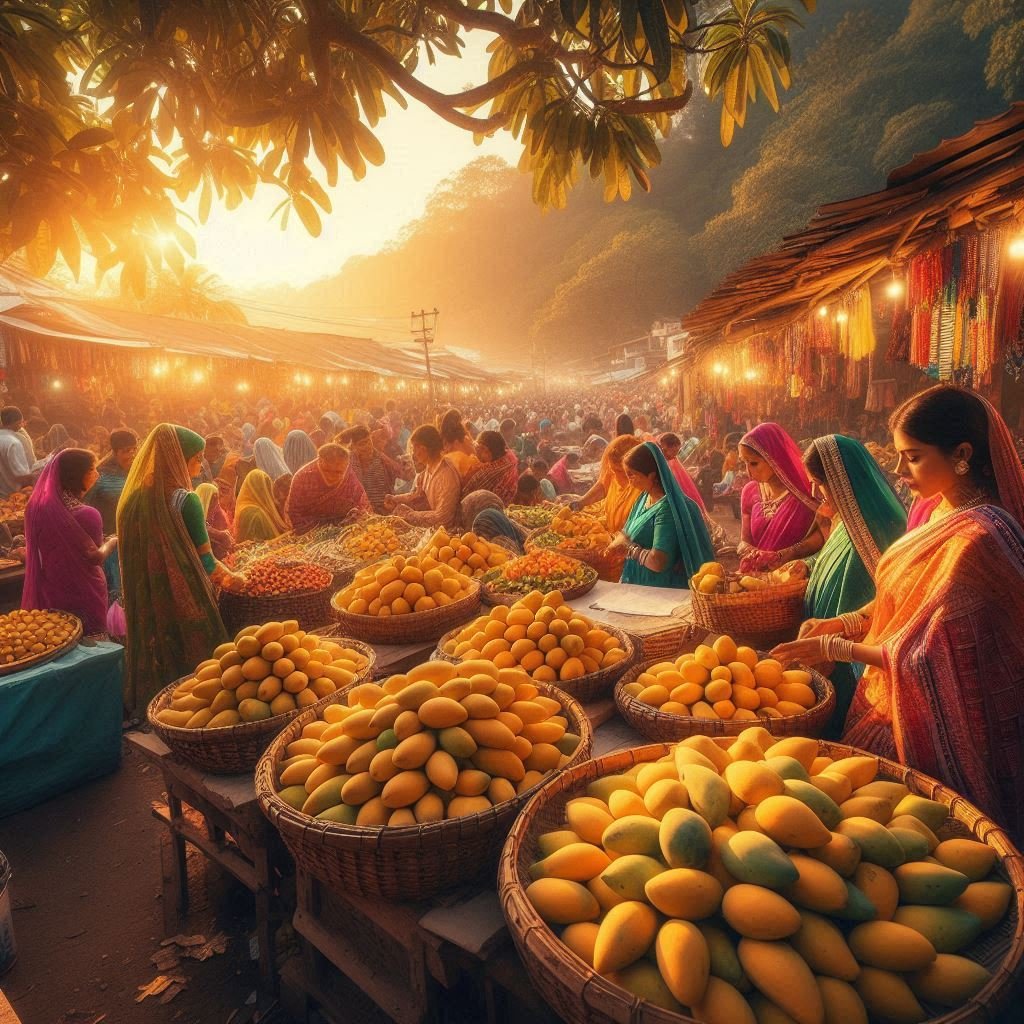
If you’ve ever stood in a mango market debating between a box of Alphonso and a crate of Kesar, you already understand the delicious dilemma at the heart of this article. Both varieties command fierce loyalty among their admirers. Both are celebrated as among the finest mangoes in the world. Both originate from India’s most mango-passionate growing regions. Yet they are strikingly different fruits — in origin, appearance, flavour, texture, culinary use, and cultural identity. This definitive guide settles the Alphonso vs. Kesar debate not by declaring a winner, but by helping you understand exactly what makes each variety extraordinary on its own terms.
Origins: Where Each Variety Comes From
Alphonso — The Pride of Konkan
The Alphonso mango, locally known as Hapus, originated in the coastal Konkan region of Maharashtra and was named after Afonso de Albuquerque — the Portuguese naval general whose influence shaped Goa’s colonial history and, indirectly, Indian horticulture. The finest Alphonso mangoes are grown in the laterite-rich, sea-breeze-cooled districts of Ratnagiri and Devgad, where the unique combination of soil, microclimate, and traditional farming knowledge produces fruit of unparalleled quality. Ratnagiri Alphonso and Devgad Alphonso have both received Geographical Indication (GI) tags — legal recognition that their superior quality is inseparable from their specific place of origin.
Kesar — The Queen of Saurashtra
Kesar mango takes its name from the Hindi word for saffron — a direct reference to its brilliantly orange, saffron-coloured pulp that is as visually striking as it is flavourful. Originating in the Gir region of Gujarat’s Saurashtra peninsula, Kesar is primarily grown around Junagadh and Amreli districts, where the semi-arid climate, black cotton soil, and proximity to the Gir forest create growing conditions entirely distinct from Konkan’s coastal landscape. Kesar also holds a GI tag, protecting the authenticity of Gir Kesar as a geographically specific product.
Appearance: Reading the Fruit Before You Taste It
The visual differences between Alphonso and Kesar are immediately apparent to an experienced eye.
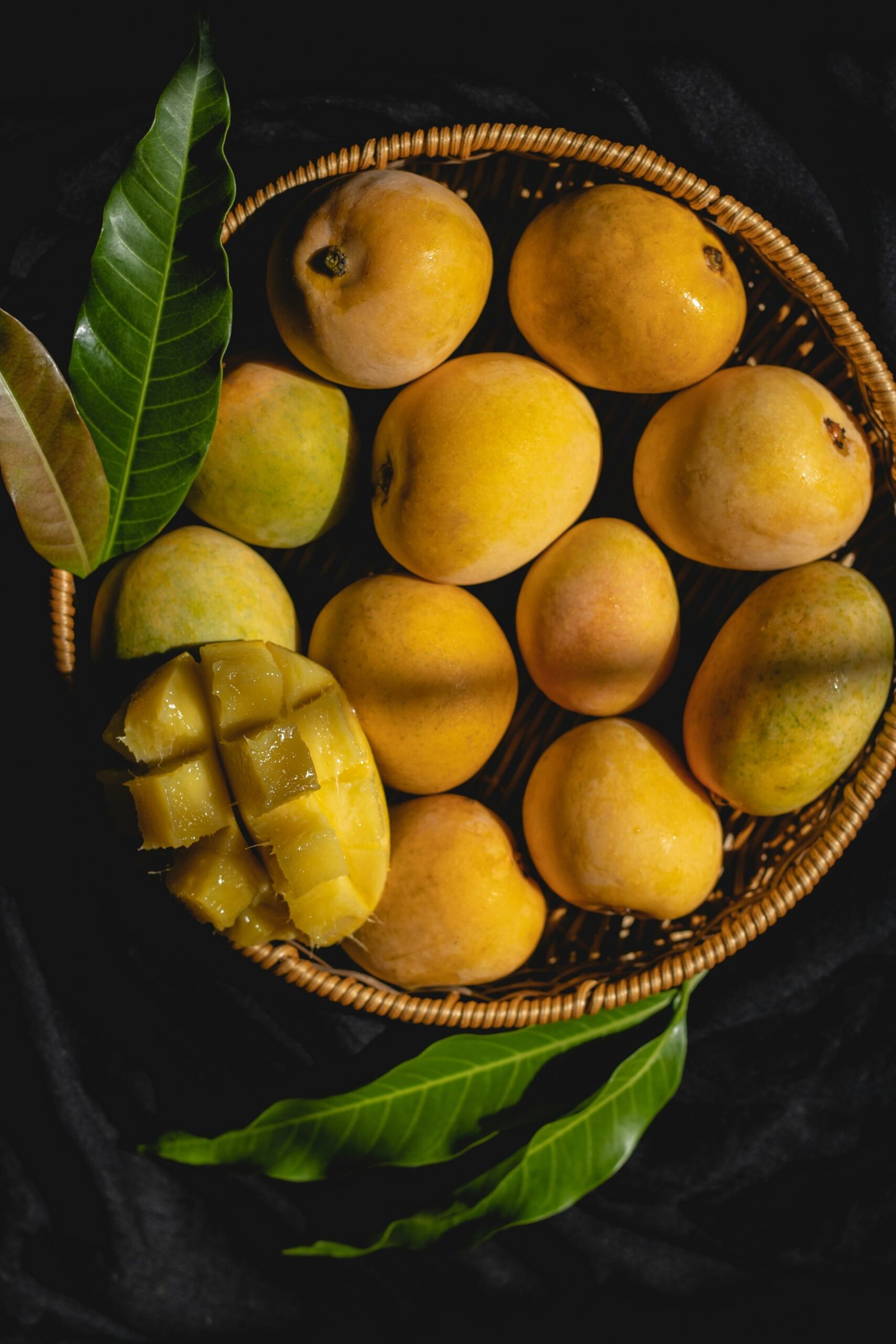
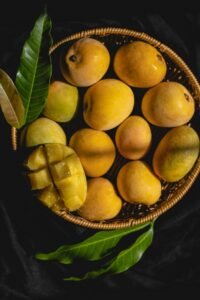
Alphonso ripens to a distinctive golden-yellow skin with occasional green tinges that persist even at full ripeness — particularly on orchard-harvested fruit. Its shape is typically oval to oblong, with a characteristic beak-like tip and a slightly flattened profile. The skin is thin, smooth, and carries a natural waxy sheen. At peak ripeness, the stem end of a genuine Alphonso emanates a fragrance so intense that experienced buyers smell boxes rather than inspect them visually.
Kesar presents a rounder, more compact shape with skin that turns a deeper golden-orange at ripeness — sometimes with a reddish blush where the fruit has received direct sunlight. Its skin is slightly thicker than Alphonso’s, and while fragrant, Kesar’s aroma is distinctly different — sweeter and less complex than the layered, floral perfume of a Ratnagiri Alphonso.
Flavour and Texture: The Most Personal Comparison
This is where the Alphonso vs. Kesar conversation becomes genuinely subjective — and genuinely passionate.
Alphonso Flavour Profile
Alphonso is widely regarded as the most complex-tasting mango in the world. Its flavour carries multiple simultaneous notes — a rich, honeyed sweetness layered with subtle floral tones, a faint saffron-like warmth, and a delicate acidity that provides balance without sharpness. The pulp is extraordinarily smooth, virtually fibre-free, and melts on the tongue with a creaminess that no other variety fully replicates. It is a mango that rewards slow, attentive eating — each bite revealing new dimensions of flavour.
Kesar Flavour Profile
Kesar delivers a more straightforwardly sweet, intensely fruity experience. Its flavour is bold, rich, and generously sweet — less complex than Alphonso but more immediately impactful. The pulp is deep orange, smooth, and slightly firmer in texture than Alphonso — making it exceptionally well-suited to culinary applications where colour and sweetness intensity matter most. Many dessert chefs and food manufacturers actually prefer Kesar pulp for its vibrant colour and consistent sweetness profile.
Culinary Uses: Which Variety Works Best Where
| Application | Alphonso | Kesar |
|---|---|---|
| Fresh eating | Outstanding — best experienced pure | Excellent — bold, sweet, satisfying |
| Aamras | The gold standard — unmatched | Widely used — vibrant colour, rich sweetness |
| Mango lassi | Exceptional fragrance and flavour | Excellent colour and sweetness |
| Desserts and baking | Superior complexity | Superior colour and consistency |
| Mango pulp for export | Premium segment | High volume commercial segment |
| Mango pickle | Less common | Widely used |
| Ice cream and kulfi | Complex, aromatic profile | Rich colour, intense sweetness |
Both varieties make outstanding aamras — Maharashtra’s iconic mango pulp preparation — but each delivers a distinctly different experience. Alphonso aamras is considered the premium, nuanced version; Kesar aamras is richer in colour and more straightforwardly sweet.
Season and Availability
Alphonso has a shorter, more precious season — typically mid-March through May — with peak quality concentrated in April. Its limited geographic origin and brief availability are core to its premium positioning and price.
Kesar arrives slightly later — generally April through June — and has a somewhat longer availability window. It is also grown across a broader geographic area within Gujarat, making it more consistently available throughout the season than Alphonso.
Price and Market Positioning
Alphonso consistently commands the highest price of any Indian mango variety — both domestically and in international export markets including the United Kingdom, United States, UAE, and Japan. Premium Grade A Ratnagiri Alphonso mangoes retail at ₹800–₹1,500 per dozen depending on grade and source, with GI-certified Devgad Alphonso reaching the higher end of that range.
Kesar occupies the premium-to-mid-premium segment — typically retailing at ₹400–₹800 per dozen — making it the more accessible premium mango for budget-conscious buyers who refuse to compromise entirely on quality. In Gujarat, Kesar is treated with the same regional pride that Konkan bestows upon Alphonso.
Which One Should You Choose?
Choosing between Alphonso and Kesar ultimately comes down to what you’re looking for in a mango experience.
Choose Alphonso if you want:
- The most complex, layered, and nuanced mango flavour available
- A fibre-free, melt-in-the-mouth texture that is unmatched globally
- A premium, GI-certified fruit with generational farming heritage behind it
- The definitive fresh-eating mango experience
Choose Kesar if you want:
- Bold, straightforward sweetness with vibrant colour
- A slightly longer season and broader availability
- Exceptional value in the premium mango segment
- Outstanding performance in desserts, pulp-based dishes, and colourful preparations
At Kokan Samrat, the Alphonso reigns supreme — not from regional bias, but from the conviction that Ratnagiri’s laterite soil, coastal microclimate, and generations of dedicated farming produce a fruit whose quality and complexity no other variety has yet surpassed. But the mango world is generous enough to celebrate both — and true mango lovers owe it to themselves to experience each variety at its seasonal, orchard-fresh best.