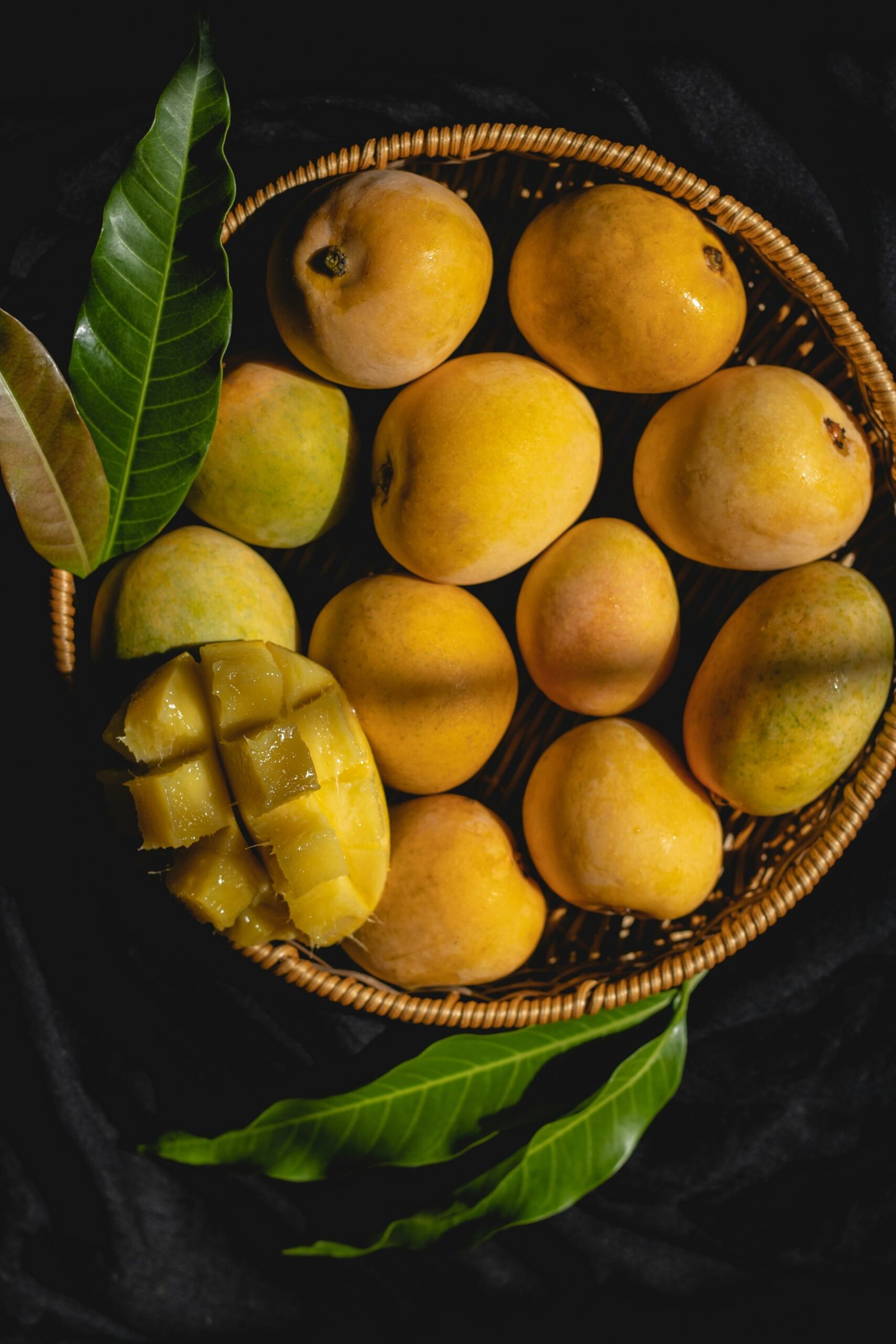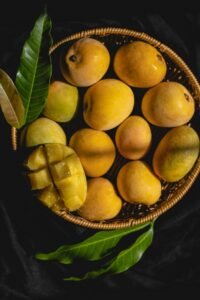
There are numbers on a mango box that most consumers never see. Not the weight or the variety — those are printed clearly. The invisible numbers are the ones that matter more: the years of accumulated knowledge it took to know when to prune and when to leave a branch alone. The number of pre-dawn mornings spent walking the orchard rows in November to check the first flower formations. The number of seasons a farmer has watched the Konkan sky and learned to read what it will do to the fruit before the fruit itself shows any sign. The Alphonso mango in your hand did not come from a supply chain. It came from a person — and at Kokan Samrat, we believe you deserve to know who that person is.
These are three of them.
Darshan: The One Who Stays
Darshan is thirty-four years old, which makes him the youngest of the three farmers whose orchards supply Kokan Samrat’s Alphonso mangoes. He is also the one most people his age in Ratnagiri chose not to be: a farmer who stayed.
When Darshan finished his schooling in 2008, the migration current that pulls young Konkan men toward Mumbai, Pune, and Bengaluru was running strong. His friends left one by one — for construction, for delivery work, for factory jobs that paid a monthly salary rather than the seasonal, weather-dependent income of an orchard. Darshan stayed. Not because he had no choices, but because he understood something his friends’ urban employers never would: that the twenty-five mango trees his family had maintained for three generations were not just trees. They were a relationship between the laterite hillside, the rainfall pattern, and forty years of specific decisions made by his father and grandfather about what to feed the soil and when to give it rest.
He took those trees from 25 to 80 over six years — extending the orchard slowly, grafting new trees from the highest-performing parents, and refusing the shortcuts that neighbouring farmers under financial pressure were taking: excessive nitrogen fertilizers, carbide ripening, early harvesting to catch the pre-season premium price. “The tree tells you when the fruit is ready,” he says. “If you harvest before it is ready, you get money for a week. If you harvest at the right time, you get a reputation that earns money for the next thirty years.”
Darshan now manages the orchard alone for most of the year — pruning after the monsoon, composting through October and November, monitoring the first flowering in December with the focused attention of someone who has learned that a single decision in the wrong direction costs the entire season. He is also the farmer most responsible for the sensory grading process at Kokan Samrat: it is Darshan who smells each batch before it is packed, and Darshan whose judgment determines what leaves the farm and what does not.
Ramesh: The One Who Came Back
Ramesh left at twenty-two and returned at thirty-eight. In the sixteen years between, he worked in a logistics company in Pune, drove a delivery truck, managed a small provisions store, and spent sixteen mango seasons eating imported, carbide-ripened fruit that bore the same name as what grew in his family’s orchard in Devgad and tasted nothing like it.
He came back because his father’s health declined and the orchard had no one. He came back because sixteen years of mango seasons spent away from Konkan had given him a precise, visceral understanding of what was at stake if the knowledge his father had accumulated died with him. And he came back, he will tell you with a specificity that carries no sentimentality, because he calculated that the direct-to-consumer mango market had reached a scale where farming intelligently — without intermediaries, without carbide, without the yield-at-all-costs logic of the mandi supply chain — was finally a financially viable decision for someone with his family’s land and trees.
What Ramesh brought back from sixteen years in logistics was a systems thinker’s eye applied to a traditional orchard. He reorganized the harvesting schedule to align with optimal ripeness windows rather than market calendar peaks. He implemented the pheromone trap network across the orchard that his father had never bothered with, reducing fruit fly damage by a measurable margin in the first season. He built the documentation system that allows Kokan Samrat to trace every box of mangoes back to the specific batch, the specific trees, and the specific harvest week — the traceability that GI-conscious consumers now expect and that most suppliers cannot provide.
He is also the farmer whose aamras his mother makes the first Sunday of every mango season, for the whole extended family, the same way she made it the year he was born and every year he was away. “That is why I came back,” he says. “Not for the money. For that first Sunday.”
Lata: The One Who Always Knew
Lata’s family has grown Alphonso mangoes in Ratnagiri for four generations. She is the first woman in that lineage to be acknowledged as the person who actually runs the orchard — a distinction that her grandmother and mother also earned in practice without receiving in name. She is fifty-one years old, unhurried in conversation, and has the particular confidence of someone who has been right about the mango season often enough that no one argues with her anymore.
She learned the orchard from her mother, who learned it from hers — a female line of agricultural knowledge transmission that operated largely outside the formal structures of cooperative societies and agricultural extension services, accumulated through observation and refinement rather than training programs. Lata knows the orchard by individual tree. She knows which four trees in the northeastern corner of the property produce the earliest flowers, and which three along the western boundary consistently produce the highest Brix readings, and why — the specific angle of afternoon sun exposure combined with the slightly greater depth of topsoil at the base of the slope creates a microclimate that intensifies both ripening and sugar concentration.
She is also the orchard’s principal decision-maker on one of the most consequential questions of the season: when to harvest. The temptation to harvest early — when the pre-season premium price is highest and the fruit is not yet quite ready — is the pressure that every Konkan farmer feels in March and April, and the one that separates the farmers who build lasting reputations from those who do not. Lata has never harvested early. Not in thirty years. The trees, she says, are more patient than the market, and they are almost always right.
Her orchard produces a smaller annual yield than many of comparable size in the region — a deliberate consequence of the organic management practices she refuses to compromise on — and the fruit it produces is, in the judgment of everyone at Kokan Samrat who handles it, among the most consistently fragrant, dense, and correctly ripened Alphonso in our supply network.
The Story Behind the Box
The three farmers described here are not representatives of a type. They are specific people with specific histories, specific knowledge, and specific reasons for doing what they do in the way they do it. What they share is not an ideology but a standard: the belief that the Alphonso mango is extraordinary enough to deserve to be grown, managed, and harvested exactly as its biological and geographic heritage demands — not as market pressure dictates.
At Kokan Samrat, every box we dispatch carries that standard. It also carries, invisibly, the knowledge of Darshan’s grandfather’s pruning decisions, Ramesh’s traceability systems, and Lata’s refusal to harvest a day too soon. That is the story behind the mango. We thought you should know it.