
From Portuguese Grafting to Global Fame: The 500-Year Legacy of Ratnagiri Mangoes
Discover how Ratnagiri Alphonso mangoes became India’s golden legacy. From Portuguese grafting in the 1500s to GI tag victory—500 years of Konkan pride.

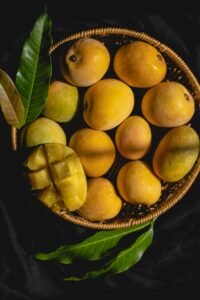
Discover how Ratnagiri Alphonso mangoes became India’s golden legacy. From Portuguese grafting in the 1500s to GI tag victory—500 years of Konkan pride.

Storing a mango correctly is the difference between experiencing perfection and watching it rot. From never refrigerating an unripe Alphonso to flash-freezing cubes that last six months, and from 2025’s ozonated water breakthrough extending shelf life to 28 days — this guide gives you the science to protect every single mango you buy.
The journey of a Ratnagiri Alphonso mango from tree to table is far more than logistics — it is a science. From reading maturity indices in a canopy to hand-picking every fruit with a 3-cm stalk, to irradiating exports for the US market, every step is precision-engineered perfection.
Ratnagiri’s Alphonso mango doesn’t just deserve to be eaten — it deserves to be celebrated in every form your kitchen can create. From the timeless golden ritual of Aamras with puri to the lavish indulgence of a Pune Mastani, these ten recipes are your complete guide to honoring the King of Fruits.
In India, the mango is not just eaten — it is worshipped, gifted, woven into wedding rituals, carved into temple walls, and celebrated across festivals from Ugadi to Ganesh Chaturthi. For over 5,000 years, this fruit has carried the weight of an entire civilization’s most sacred aspirations. No other fruit comes close.
The mango has outgrown the fruit bowl. From Michelin-starred kitchens deploying Alphonso in precision sorbets to molecular chefs crafting sodium alginate spheres that burst with tropical flavor, the King of Fruits is now one of the most strategically powerful ingredients in modern global gastronomy — and the culinary world is just getting started.
A mango orchard does far more than produce fruit. Sequestering up to 78 kg of CO₂ per tree annually, stabilizing hillside soils, conserving groundwater, and cooling surrounding microclimates — science now confirms that the mango tree is one of agriculture’s most powerful environmental allies. The King of Fruits is also the guardian of the land.
India doesn’t just grow the world’s most mangoes — it has spent centuries turning this one fruit into an extraordinary culinary map. From Kerala’s coconut-laced Mambazha Pulissery to Andhra’s fiery Avakaya pickle, Gujarat’s silky Aamrakhand to Karnataka’s tangy Chitranna, every region tells a different story through the same golden fruit.
A mango doesn’t just ripen — it executes a precise biochemical program orchestrated by ethylene, the most powerful ripening hormone in nature. From starch converting to sugar, to cell walls softening and aromatic volatiles building, every stage is science at work. Know the process, and you’ll never buy a fake mango again.
Mango season is short, precious, and entirely unforgiving to the unprepared. From knowing which variety to buy in March versus June, to freezing mango cubes for monsoon smoothies and crafting a slow-matured achar that lasts all year — every tip in this guide helps you live the season fully and fearlessly.
At Kokan Samrat, we bring you hand-picked, naturally ripened organic mangoes from the heart of Ratnagiri—grown sustainably, harvested with care, and delivered with unmatched freshness.