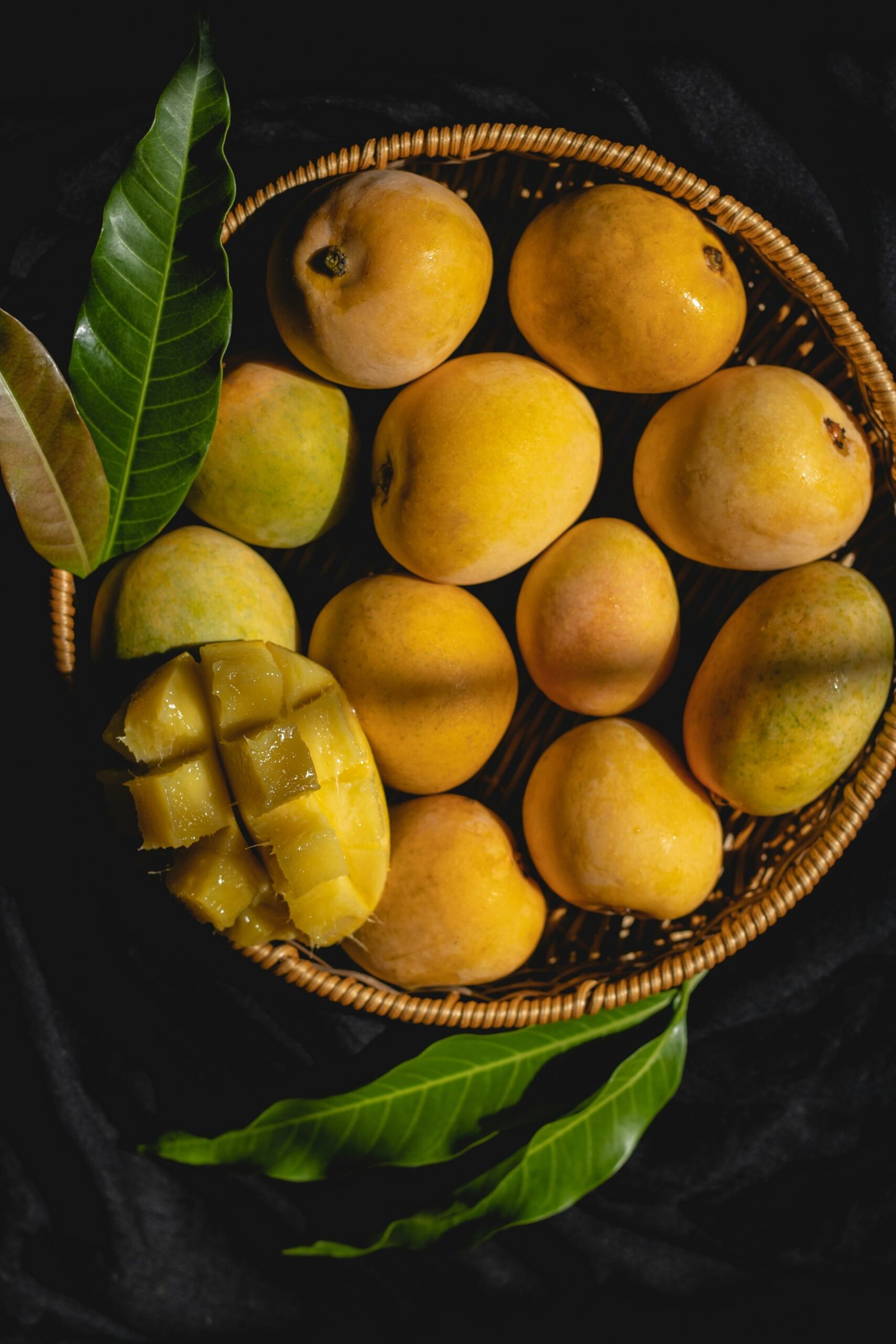
The Alphonso mango arrives in your life for roughly ten weeks a year. For the other forty-two weeks, it exists only as a memory, a craving, and the particular sadness of walking past fruit stalls in November. Given how brief the season is and how extraordinary the fruit, the question should never be whether to include mangoes in your diet — the science settled that in the mango’s favor a long time ago. The more useful question, and the one this article answers, is how to include mangoes in a way that delivers the most nutritional benefit, fits most naturally into daily meals, and allows you to eat the most intensely pleasurable fruit of the Indian summer without the anxiety that bad dietary advice has attached to it for no good reason.
Understand Your Portion Before You Pour
The evidence-based starting point for mango inclusion in any healthy diet is portion clarity. One medium Alphonso mango — approximately 200 to 250 grams of edible pulp — is the recommended daily serving for most healthy adults, providing roughly 120 to 150 calories, 3 to 4 grams of fiber, 67 percent of the daily recommended value of Vitamin C, and significant quantities of Vitamin A, folate, potassium, and mangiferin. This is one fruit. It is not a dietary indulgence requiring compensation elsewhere in the day. It is a nutrient delivery mechanism of exceptional efficiency.
For highly active individuals, athletes, or those with high daily energy requirements, one and a half to two medium mangoes per day sits comfortably within most caloric and macronutrient frameworks. For individuals managing insulin resistance, prediabetes, or blood sugar variability, beginning with half a medium mango — paired with a protein source — is the more conservative and metabolically appropriate starting point. Know your metabolic context, calibrate your portion accordingly, and proceed with confidence.
Timing: When You Eat Mango Matters
The single most effective dietary upgrade you can make to how you consume mangoes is shifting when you eat them. Most Indian households eat mango as a dessert — after a full meal of rice, dal, sabzi, and rotis — which means it arrives in a digestive system already processing a significant carbohydrate and caloric load.
Nutritionist Leema, quoted in the Hindustan Times, offers precise guidance: “Eat mango at mid-morning as a snack, not post your meal. Stick to 110 to 150 grams.” The mid-morning window — between 10 AM and noon — is when digestive capacity is strongest in most people, blood sugar from breakfast has stabilized, and the body is best positioned to utilize the fruit’s vitamins, minerals, and natural sugars for sustained energy rather than fat storage. A mango eaten as a standalone mid-morning snack delivers its full nutritional value cleanly. The same mango eaten after a large lunch is an additional carbohydrate load on an already full digestive system — not because the mango changed, but because the context did.
The mid-afternoon window — between 3 and 5 PM — is the second best option, particularly for active individuals who use the natural sugars as pre-workout energy. The time to avoid, if blood sugar management is a concern, is late at night — when digestive activity slows and the glucose from the fruit’s natural sugars has the least opportunity to be utilized before sleep.
Pairing: What You Eat Mango With
The most nutritionally intelligent approach to mango consumption involves pairing the fruit with foods that slow its natural sugar absorption and extend satiety — specifically protein and healthy fat. This pairing strategy buffers the blood glucose response, prolongs the feeling of fullness, and maximizes the practical value of the fruit within a balanced meal structure.
Concrete, practical pairing options that work naturally in the Indian diet context:
- Mango with Greek yogurt or hung curd — the protein and fat in the dairy slow the absorption of mango’s natural sugars while the combination produces a satisfying, flavour-complete meal. The Konkan aamrakhand tradition is, nutritionally, exactly this pairing
- Mango with a small handful of soaked almonds or walnuts — the fats and protein in the nuts buffer glucose absorption; the combination makes a nutritionally complete mid-morning snack
- Mango in overnight oats — mango cubes added to oats soaked in milk overnight contribute natural sweetness, fiber, and vitamins while the beta-glucan in the oats provides additional glucose-buffering capacity
- Mango in a dal curry — adding ripe mango chunks to a simple moong or toor dal creates a protein-fruit combination with the fiber, legume protein, and mango vitamins working synergistically
The pairings to minimize are those that stack sugar on sugar: mango after white rice meals, mango in sweetened smoothies with added sugar or fruit juice as the base, and mango consumed with other high-GI fruits in large quantities.
Mango in the Day’s Meals: A Practical Indian Framework
Rather than abstract dietary advice, here is how mango inclusion looks practically across a typical Indian day:
Breakfast option: Overnight oats with mango cubes, a teaspoon of chia seeds, and a tablespoon of unsweetened curd. Total preparation time: 3 minutes the night before. Nutritional output: fiber, protein, vitamins A and C, and the full sensory pleasure of the Alphonso before 9 AM.
Mid-morning snack option: One medium Alphonso mango — 200 grams — eaten fresh, at room temperature, with 10 soaked almonds. Total calories: approximately 200. Nutritional density: exceptional.
Lunch addition: Diced raw mango tossed through a chaat with chickpeas, red onion, cucumber, coriander, and a squeeze of lime — the mango providing natural acidity that replaces tamarind chutney and adding vitamins and fiber to a protein-rich meal.
Dinner option (light): A small bowl of aamrakhand — thick hung curd with Alphonso pulp and a pinch of cardamom — as the entire sweet component of a light summer dinner. Protein from the curd, vitamins from the mango, satisfaction from both.
The Raw Mango Advantage: Don’t Overlook Kairi
A nutritionally underappreciated dimension of mango inclusion in a healthy diet is the raw green mango — kairi — available from January through March before the Alphonso reaches full ripeness. Raw mango has a significantly lower sugar content than ripe mango, a higher Vitamin C concentration, and the same fiber profile — making it an excellent addition for blood sugar-conscious individuals who want mango’s nutrients without its ripened sweetness.
Grated raw mango in dal, raw mango rasam, aam panna concentrate diluted as a cooling summer drink, and thinly sliced raw mango with rock salt and red chilli as a snack — these are all dietary inclusions that deliver significant nutritional value with minimal glycemic impact. The raw mango season is not simply the prelude to the Alphonso. It is its own nutritional opportunity, and the Konkani tradition of treating kairi as a primary cooking ingredient rather than a lesser substitute is dietetically sound.
The Conclusion That Needs No Qualification
The mango belongs in a healthy diet. Not as an occasional treat, not as a guilty pleasure requiring careful rationing, and not as a seasonal indulgence to be consumed with anxiety. One medium Alphonso per day, eaten as a mid-morning snack or paired with protein, provides nutrients that most vitamin supplements cannot deliver in the same bioavailable, food-matrix form — Vitamin C, beta-carotene, mangiferin, folate, potassium, and soluble fiber — all in a package that tastes, genuinely and unmistakably, like the best thing the Indian summer produces.
Eat it with intention, eat it in appropriate portion, pair it with protein when possible, and eat it at room temperature — because a cold mango is a nutritionally diminished mango and a sensory disappointment simultaneously. The season is short. There is no good reason not to make the most of every week of it.