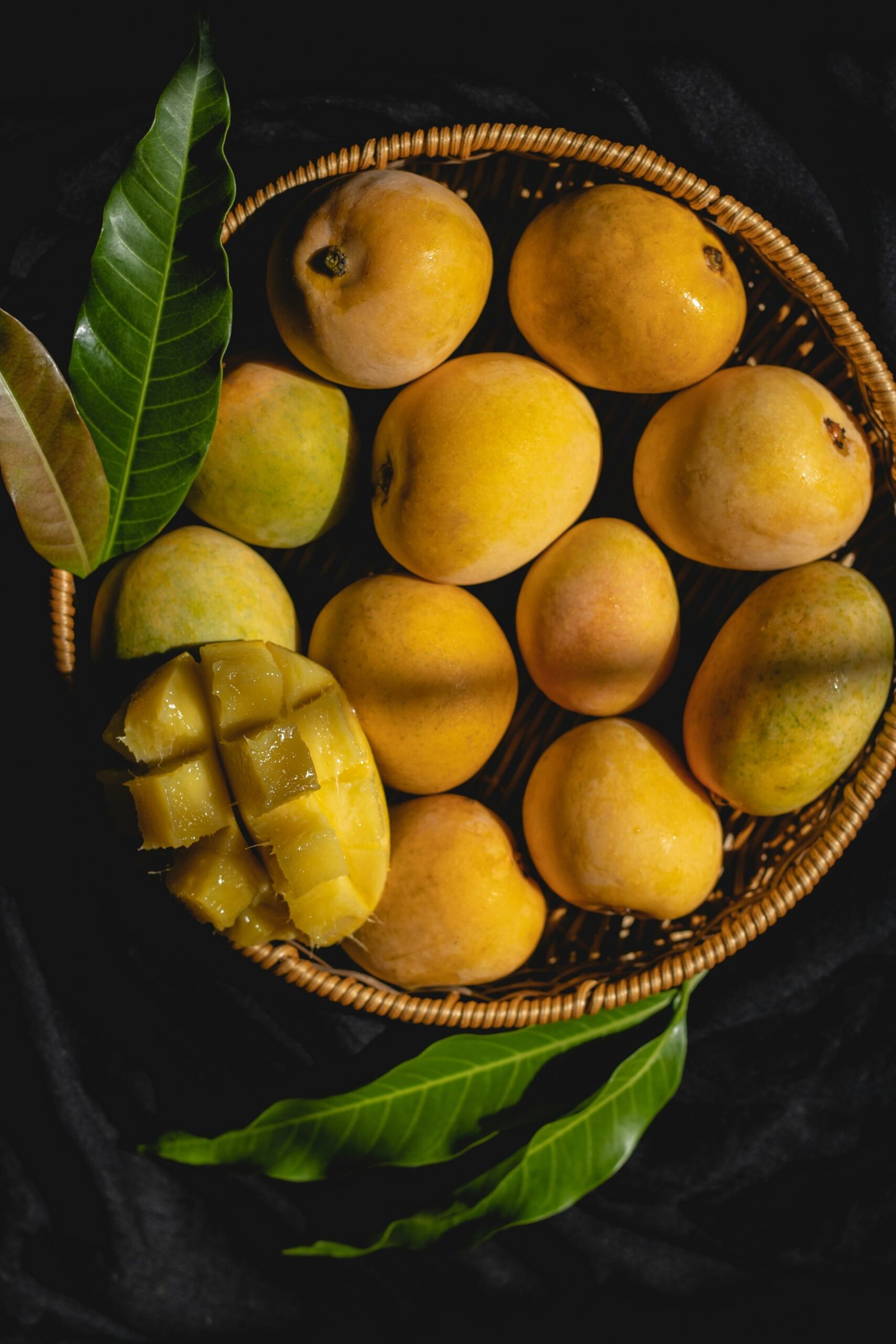
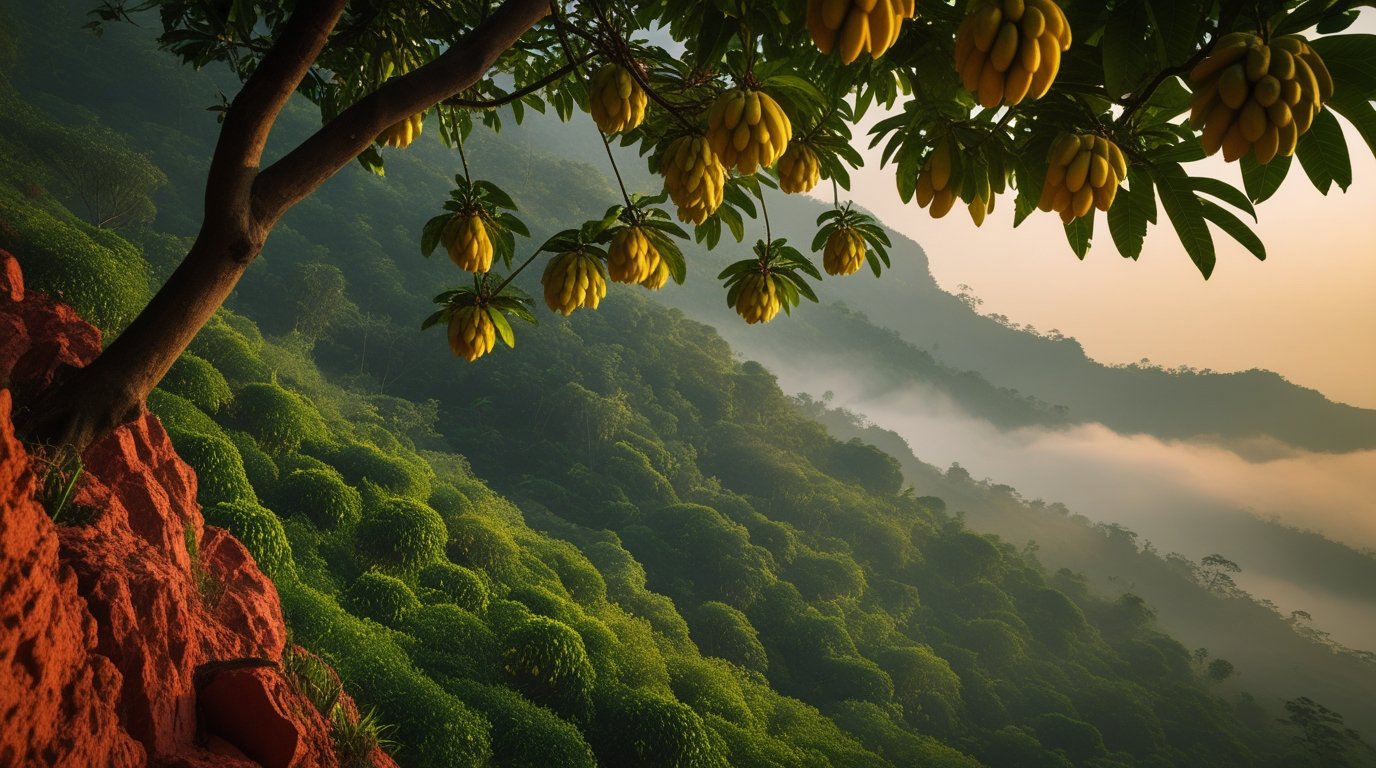
There is a reason why a Ratnagiri Alphonso mango tastes unlike anything else on the planet — and that reason is geography. The Western Ghats, India’s ancient mountain range stretching over 1,600 kilometres along the western coast, do far more than shape the landscape. They create a unique ecological cradle that determines the flavor, aroma, texture, and sweetness of every mango grown in their shadow. Understanding this relationship is the key to understanding why the Konkan mango is truly irreplaceable.
The Western Ghats: Nature’s Mango Laboratory
The Western Ghats span six Indian states — Gujarat, Maharashtra, Goa, Karnataka, Tamil Nadu, and Kerala — and are recognized as one of the world’s eight biodiversity hotspots. Their north-south orientation acts as a colossal wall that intercepts moisture-laden monsoon winds sweeping in from the Arabian Sea, triggering intense rainfall on the western slopes while keeping the eastern side comparatively dry. This rainfall interception is one of the most powerful environmental forces shaping mango quality in the Konkan region.
What makes this mountain range extraordinary for mango cultivation is not just the rainfall it generates, but the specific combination of altitude, sea proximity, temperature variation, and soil composition it produces across its slopes. The Konkan coastal belt — nestled between the Western Ghats and the Arabian Sea — exists in a microclimate that is virtually impossible to replicate elsewhere.
The Microclimate Factor
Mango trees are highly sensitive to their environment. Optimal growth requires temperatures between 24–30°C, adequate humidity, and a clearly defined dry period before flowering to trigger blossom development. The Western Ghats deliver all of this in a precise seasonal rhythm. Winters in the foothills are cool and dry, triggering early and abundant flowering in the Alphonso orchards of Ratnagiri and Devgad. By February, the first blossoms appear, setting the stage for fruits that ripen slowly under warm coastal sunshine.
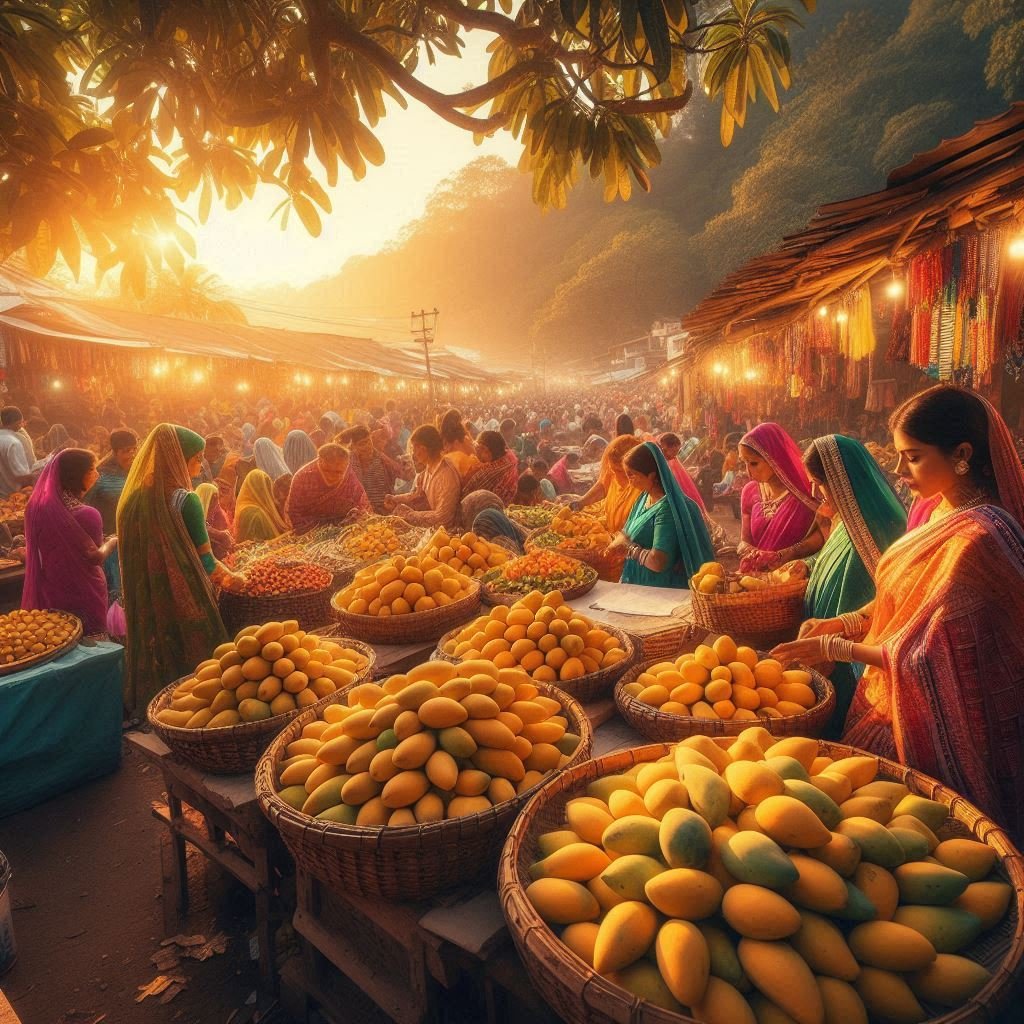
The proximity to the Arabian Sea introduces consistent sea breezes that moderate extreme heat and prevent temperature spikes during the critical fruiting phase. Orchards facing the sea benefit from what local farmers call “coastal exposure” — a combination of salty air, humidity, and light that accelerates flowering and encourages the development of fruit with exceptional sugar-acid balance. This is why mangoes grown closest to the sea in districts like Devgad and Ratnagiri consistently command premium prices in both domestic and international markets.
Laterite Soil: The Hidden Ingredient
Perhaps the most surprising influence of the Western Ghats on mango quality lies beneath the surface. The slopes of the Konkan are covered in laterite rock — a hard, iron-rich, reddish volcanic formation that, while initially appearing barren and inhospitable, creates remarkably unique growing conditions for the Alphonso mango.
Laterite soil has poor water retention, which forces mango tree roots to grow deep in search of moisture and minerals. This deep root development allows the tree to access a complex mineral profile unavailable in shallow, nutrient-rich soils. The result is a fruit with a flavor depth that simply cannot be engineered — it is a direct expression of what the earth provides. Farmers in Ratnagiri and Sindhudurg have for generations blasted through this hard rock, created bowl-shaped planting structures, and filled them with imported soil, all to plant grafts in this otherwise challenging terrain. The effort pays off in ways that science still struggles to fully explain.
The Devgad Alphonso, grown in a slightly different laterite profile than its Ratnagiri counterpart, develops a noticeably distinct flavor — deeper aroma, thicker pulp, and a sweetness that intensifies toward the center of the fruit. Both varieties carry the Geographical Indication (GI) tag, legally certifying that their unique qualities are inseparable from their geographic origin.
Rainfall, Timing, and Fruit Development
The Western Ghats receive 2,000–2,500 mm of rainfall annually in the Konkan belt, providing the hydration cycle that mango trees need — but with one crucial design feature: the rain stops completely between October and May, covering the entire flowering and fruiting season in dry, sunny conditions. This dry period is not a deficiency. It is the very mechanism that concentrates sugars and aromatic compounds in the developing fruit.
Disruptions to this pattern have increasingly alarming consequences. Climate-related unseasonal rainfall, heatwaves, and erratic temperatures have been observed to cause poor fruit-setting, spongy tissue development, and reduced aroma in recent seasons. The Alphonso mango’s extraordinary quality is, in essence, a product of meteorological precision — the Western Ghats’ seasonal reliability doing what no irrigation system or greenhouse can substitute.
A GI Tag Built on Geography
In 2018, the Geographical Indications Registry officially recognized that the Alphonso mango’s quality is inseparable from the Konkan geography, granting GI certification to orchards across five districts: Palghar, Thane, Raigad, Ratnagiri, and Sindhudurg. The Konkan region now has approximately 1,10,000 hectares under Alphonso cultivation, producing mangoes worth ₹30 billion annually — over 50% of which are exported globally.
This tag is more than a commercial designation. It is a formal acknowledgment by the Indian government that the Western Ghats are not just a backdrop for mango cultivation — they are an active ingredient in the final product on your plate.
The Irreplaceable Terrain of the Konkan
The concept of terrain— the idea that geography imprints itself on the taste of food — is most famously associated with French wine, but the Alphonso mango of the Western Ghats makes an equally compelling case. The sea breeze, the laterite rock, the monsoon rhythm, the winter chill, and the filtered sunlight of the Konkan slopes all work in concert to produce a flavor profile that is entirely unique to this patch of the earth.
When you bite into a true Alphonso from Ratnagiri or Devgad, you are tasting the Western Ghats themselves — their ancient geology, their monsoon memory, and the centuries of agricultural wisdom that learned to read this land and grow something extraordinary from it.