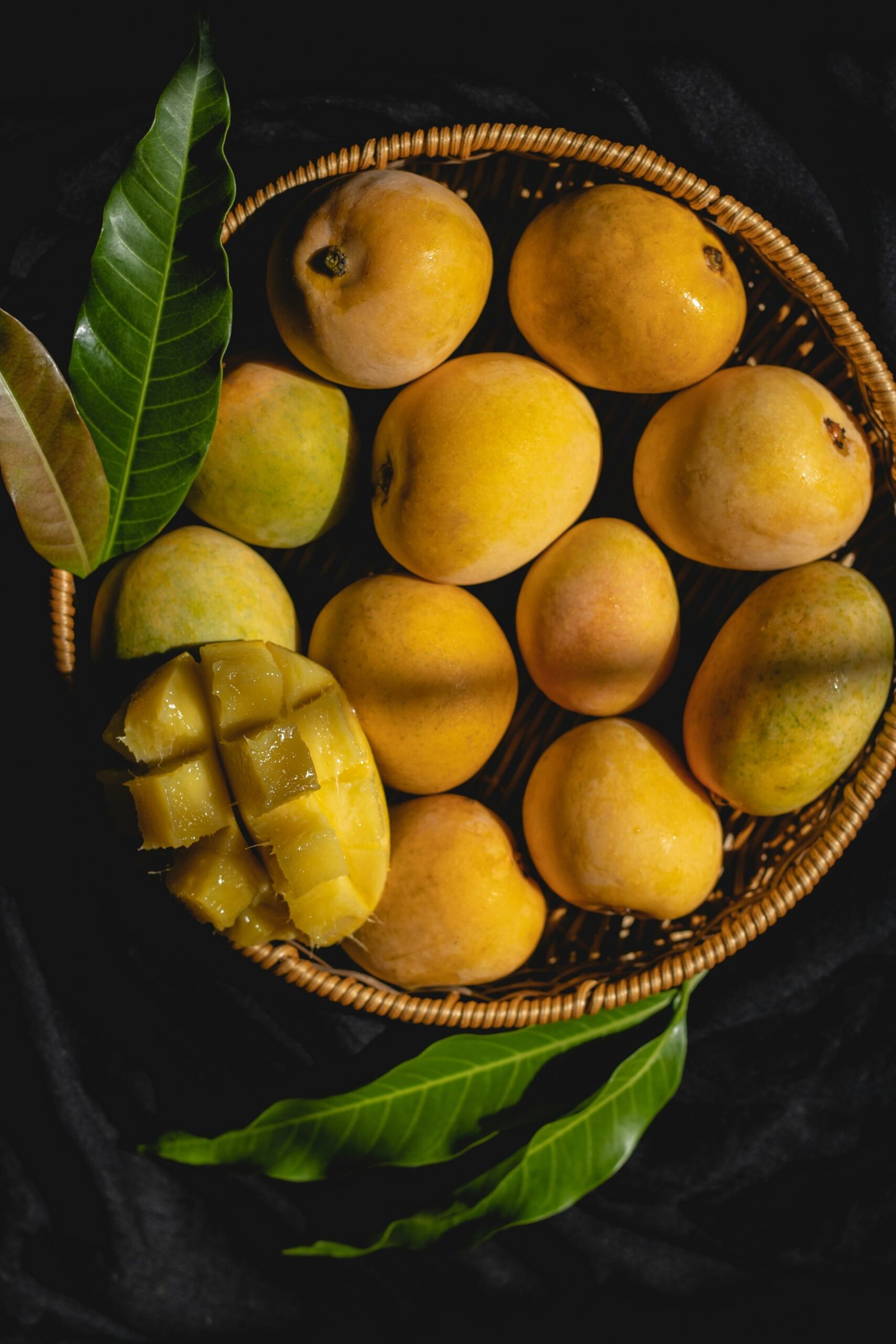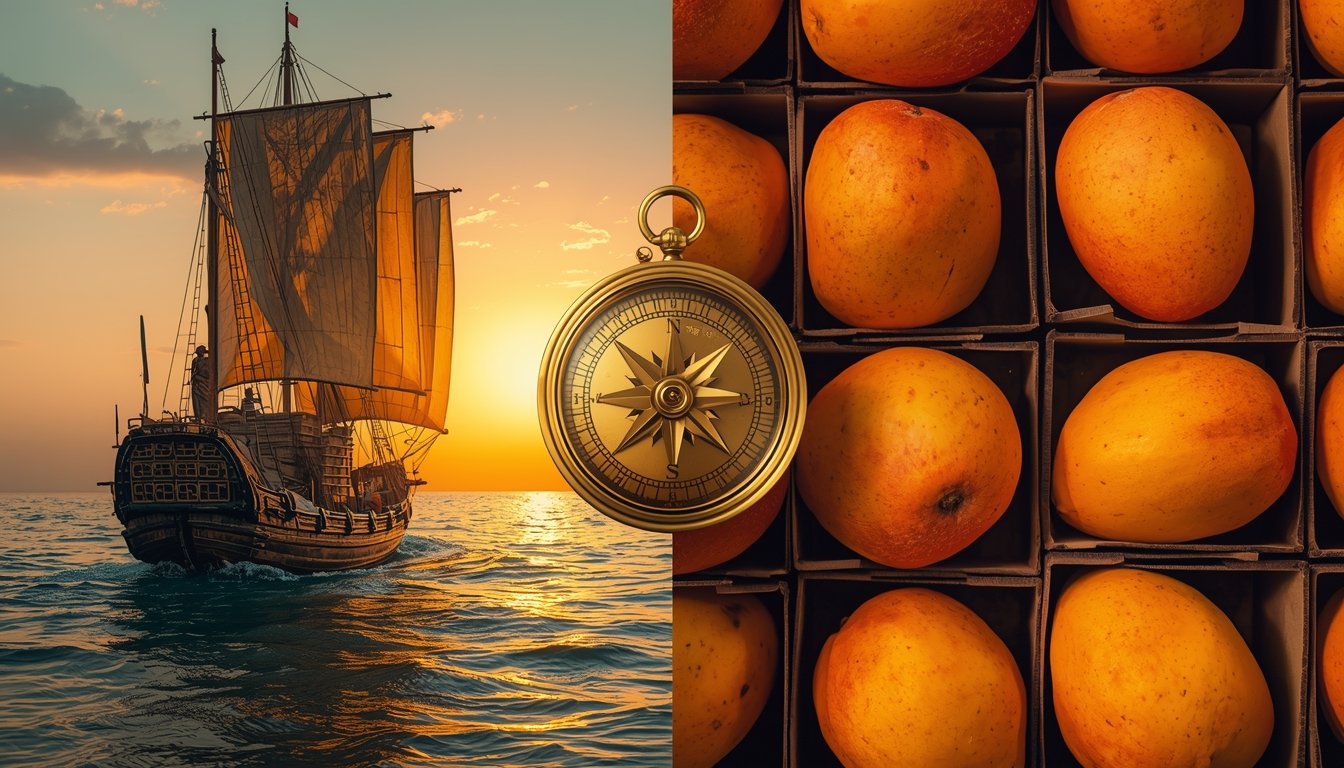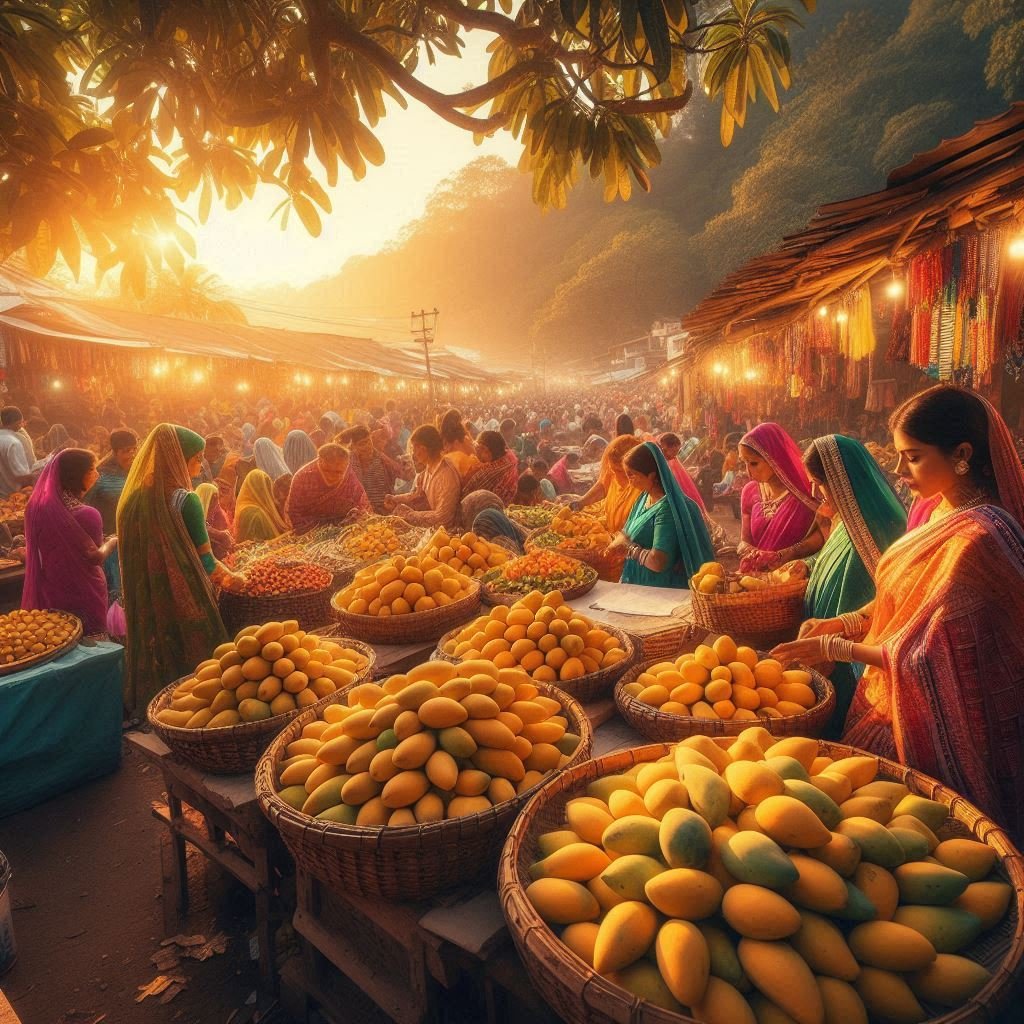
Most mango consumers think about the mango at two moments: when they order it, and when they eat it. Everything that happens between those two moments — the orchard decisions made months earlier, the harvest timing chosen to the day, the grading process that determines what is dispatched and what is not, the packaging designed to protect a fruit whose skin bruises under a thumbnail’s worth of pressure, the 24-hour transit window that determines whether the fruit arrives at its fragrant best or its diminished worst — is invisible. At most brands, it is designed to stay invisible. At Kokan Samrat, we believe the opposite: the journey from our orchard to your table is the story of everything that makes the Alphonso worth its price, and you deserve to know every step of it.
This is that story.
Step One: The Orchard Decisions That Begin in October
The quality of a Kokan Samrat mango dispatched in April was determined in the previous October — six months earlier — when our farmers made the decisions that shape everything the tree does in the season ahead.
October is pruning month. After the monsoon ends and the mango tree redirects its energy from vegetative growth to the flowering that will eventually produce the season’s fruit, the structure of the canopy determines how well airflow moves through the orchard, how much light penetrates to every branch, and whether the fungal pressure that follows the monsoon has the conditions it needs to establish itself before the first flowers appear. Our farmers prune methodically — removing crossed branches, thinning dense canopy sections, cutting back the previous year’s fruiting wood to stimulate the new growth that carries the next season’s flowering.
November and December bring the composting cycle — farm-produced compost of mango leaf matter, organic material, and carefully managed nutrients applied around the base of each tree to build the soil organic content that laterite soil requires to maintain its mineral profile across successive seasons. No synthetic fertilizers. No shortcuts. The soil that produced last season’s Alphonso is the same soil that will produce next season’s — and it is returned to the trees richer than it was before.
By December, the first flowers appear — small, yellowish panicles emerging from the tips of the new season’s growth. This is the moment our farmers watch most carefully, because the health and density of the first flowering determines the season’s potential yield before the first fruit has set.
Step Two: The Harvest Decision
The single most consequential decision in the entire farm-to-plate journey is the harvest timing — and it is a decision made by our farmers individually, for each tree, on the morning of each harvest day, using sensory criteria accumulated over decades of working the same orchards.
The conventional mango supply chain harvests early — sometimes two to three weeks before biological maturity — to capture the pre-season premium price and to give the fruit the maximum possible transit and shelf time. The consequence is a mango that reaches the consumer with an incomplete internal chemistry: the starch-to-sugar conversion unfinished, the aromatic compounds not fully synthesized, the acid-sweetness balance not yet at its expressive peak. It looks ripe because it has been made to look ripe. It is not.
At Kokan Samrat, our farmers harvest at firm-ripe biological maturity — the stage at which the Alphonso’s internal chemistry is complete or within one day of completion, the fragrance at the stem is fully present, the specific gravity test confirms the fruit will reach peak eating quality in 4 to 5 days at ambient temperature. This means accepting lower pre-season volume, because the earliest fruits harvested at correct maturity are fewer than those harvested prematurely. It means accepting the market timing risk of a 10-week season rather than a 14-week one. It means that every mango dispatched from our orchards is worth dispatching — and nothing else leaves.
The harvest itself happens in the pre-dawn hours — between 4 and 7 AM — when the ambient temperature is at its lowest and the fruit’s respiration rate is slowest. Mangoes harvested in the cooler morning hours maintain their quality through the subsequent grading and packing process more reliably than afternoon-harvested fruit, whose elevated internal temperature accelerates the enzymatic processes that shorten shelf life.
Step Three: Grading — The Rejection Process
Grading at Kokan Samrat is understood correctly as a rejection process rather than a selection one. The question asked of every mango is not “is this good enough to dispatch?” but “is there any reason this should not be dispatched?” — and the standard applied to that question is uncompromising.
Each mango is evaluated manually for fragrance at the stem — the primary ripeness and quality indicator that no optical scanner fully replicates — and physically for skin integrity, weight, and the absence of latex burn, pressure damage, and fungal spotting. Mangoes that pass every criterion are graded by size for consistent box composition: uniform sizing in each box ensures that all fruits in the same delivery reach peak ripeness within the same 24 to 48-hour window, which is critical for a household receiving a box and wanting to eat the fruit progressively over a week.
The rejection rate varies by season — in a difficult year, our farmers reject upward of 30 percent of harvested fruit at the grading stage. That fruit is not dispatched as lower-grade produce under a different label. It stays in the orchard, returns to the soil as organic matter, and contributes to the following season’s compost cycle.
Step Four: Packaging — The Engineering of Protection
The Alphonso mango is among the most packaging-sensitive commercial fruits in India. Its thin skin — the characteristic that makes it uniquely suited to fragrant ripening — is also what makes it uniquely vulnerable to pressure damage in transit. A fingerprint of force applied to an Alphonso at firm-ripe stage will produce a bruise that is invisible on the day of packing and a soft brown depression visible by delivery day.
Kokan Samrat’s packaging is designed around a single engineering objective: zero contact between individual fruits, and between fruits and box surfaces, throughout the transit journey. Each mango is individually wrapped in soft tissue paper, nested in a foam net cradle, and positioned in a corrugated fiberboard box with dividers that prevent any lateral movement. The box is sized to eliminate headspace — the vertical gap above the fruit layer that allows mangoes to shift and impact during transport — and sealed with sufficient rigidity to resist the stacking pressure of other packages in transit vehicles.
The box that reaches your door has been designed so that the mango inside it arrives in exactly the condition it left the orchard — not approximately, and not well enough.
Step Five: Dispatch and the 24-Hour Window
Mangoes are packed and dispatched on the same day they are harvested. The 24-hour window between harvest and consumer delivery is not a logistical convenience — it is a quality prerequisite. Every additional day a firm-ripe Alphonso spends in transit or storage at ambient temperature is a day of ripening progress it cannot recover if conditions are suboptimal.
Our dispatch logistics use temperature-controlled overnight courier services for pan-India deliveries — Pune, Mumbai, Delhi, Bengaluru, Hyderabad, Chennai — with delivery windows designed to place the mango in the consumer’s hands within 24 to 48 hours of the harvest morning. Customers in Maharashtra and Goa receive their orders within 12 to 18 hours of dispatch. Customers further away receive their mangoes within 48 hours — still at firm-ripe stage, with 4 to 5 days of natural ripening ahead of them, and with the full fragrance and nutritional profile of an Alphonso harvested that same day.
What This Journey Means for You
The Kokan Samrat mango that arrives at your door has never been in a cold storage facility. It has never been exposed to ethylene treatment to standardize ripening across a batch. It has never been harvested prematurely to give a supply chain more time. It has never been held in a distribution center for redistribution. It left our orchard the same morning it was harvested, in a box designed to deliver it intact, within a timeline designed to deliver it at its best.
The journey from our farm to your plate takes less than 48 hours. But it is built on decisions made six months earlier — in October, when the pruning shears are out and the season has not yet begun — and on a standard of quality that makes every part of those 48 hours worth the care we put into them.