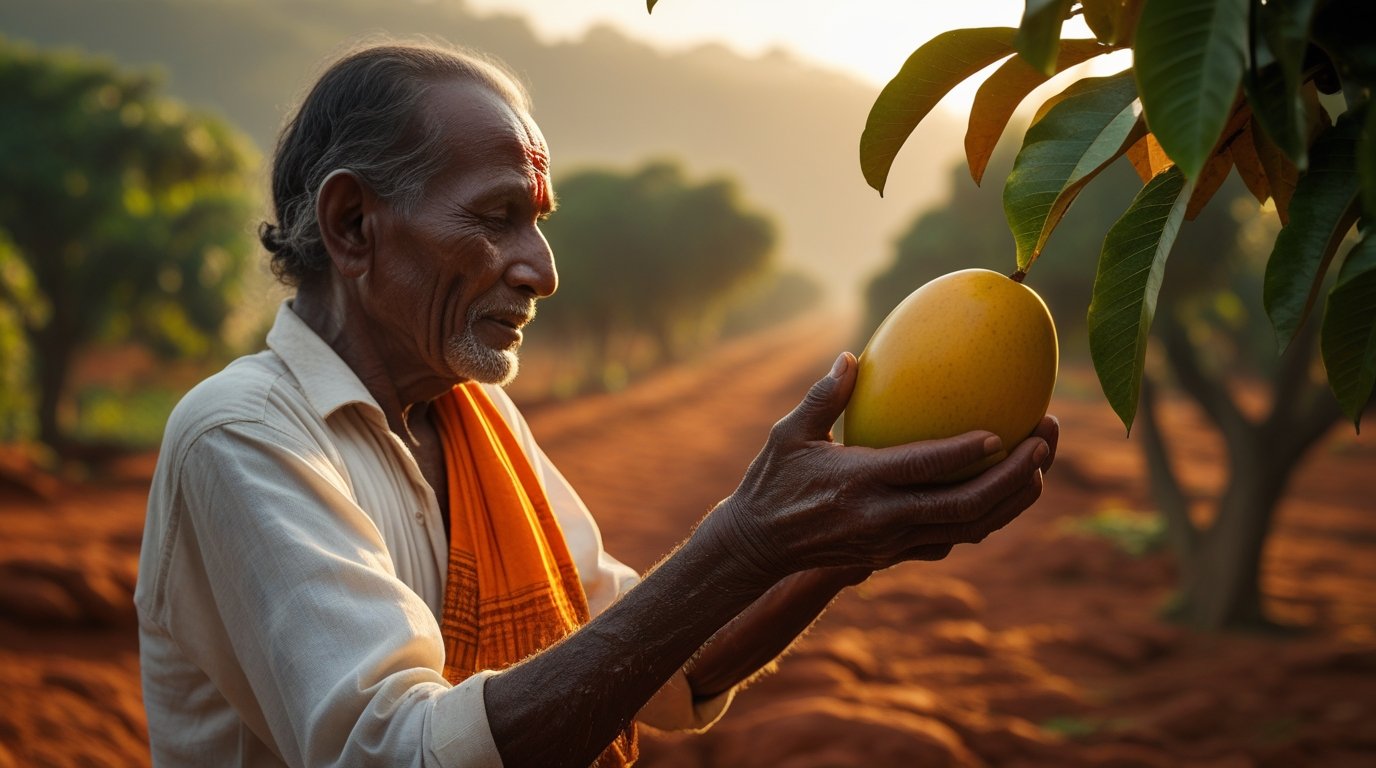
Long before agriculture became a science, it was a way of life. In the villages of Konkan — the narrow coastal strip hugged by the Western Ghats on one side and the Arabian Sea on the other — mango farming was never just a livelihood. It was a ritual, a legacy, and a conversation between a family and the land it had tended for generations. The traditional mango farming practices of Konkan villages are a living heritage, as rich and layered as the fruit they produce.
A Relationship That Begins With the Soil
Every Konkan farmer will tell you that you cannot grow a great mango without first respecting the land. The predominant soil type across Ratnagiri, Sindhudurg, and Raigad districts is laterite — a hard, iron-rich, reddish rock that most agricultural textbooks would dismiss as unproductive. Konkan farmers saw something different. Over generations, they developed a painstaking technique of blasting into the laterite bedrock, carving out bowl-shaped planting pits, and filling them with soil brought from fertile riverbeds and forest floors. Locally, these rocky plateau surfaces are called katals, and transforming them into productive mango orchards remains one of the most remarkable feats of traditional agricultural engineering in India.
After planting, young grafts require years of careful earthing — a process of packing additional soil around the base of the tree to support roots as they push deeper through the rock. Only after three years, when the roots have anchored themselves deeply into the laterite, can the tree sustain itself without regular watering. This patience is not just practical wisdom — it is the philosophical foundation of Konkan farming: slow, careful, and built to last.
The Art of Grafting: Preserving the Alphonso Bloodline
One of the most important traditional practices in Konkan mango cultivation is vegetative grafting — specifically the veneer and wedge grafting methods used to propagate Alphonso (Hapus) trees. Farmers do not grow Alphonso from seed. A seed-grown mango tree may take 10–15 years to fruit and will rarely preserve the characteristic taste of the parent tree. Grafting, practiced in Konkan for centuries, ensures that every new tree is genetically identical to the finest mother trees in the orchard.
The selection of the scion — the cutting taken from the mother tree — is done with the precision of a craftsman. Experienced farmers choose scions only from the most productive, healthy branches, at the tight bud stage, when the terminal bud is swollen but not yet open. The rootstock is prepared by splitting the stem to receive the wedge-shaped scion, which is then bound and left to fuse. This knowledge, passed down orally and through practice within farming families, is what has kept the Alphonso mango’s legendary quality consistent for over 200 years.
Pruning: The Discipline of the Orchard
Traditional Konkan mango farming follows a disciplined pruning calendar rooted in the region’s specific climatic rhythm. March and October are the two culturally accepted pruning seasons in the Konkan, timed carefully to coincide with post-harvest recovery and pre-flowering preparation. Experienced farmers prune with restraint — removing dead wood, crossing branches, and diseased growth — but never cutting aggressively. Research from Dr. Balasaheb Sawant Konkan Krishi Vidyapeeth (BSKKV), Dapoli, confirms that severe pruning, while effective in some global mango-growing regions, is harmful in Konkan conditions. The traditional farmer’s instinct to prune gradually and gently has proven to be scientifically sound.
Pruning also serves a social function in Konkan villages. Orchard work during pruning season brings families together, with multiple generations working side by side. Knowledge about which branch to spare, which shoot shows flowering potential, and which tree is yielding less than its neighbors is exchanged in these shared hours — an oral agricultural library that no textbook has ever fully documented.
Natural Ripening: Rejecting the Shortcut
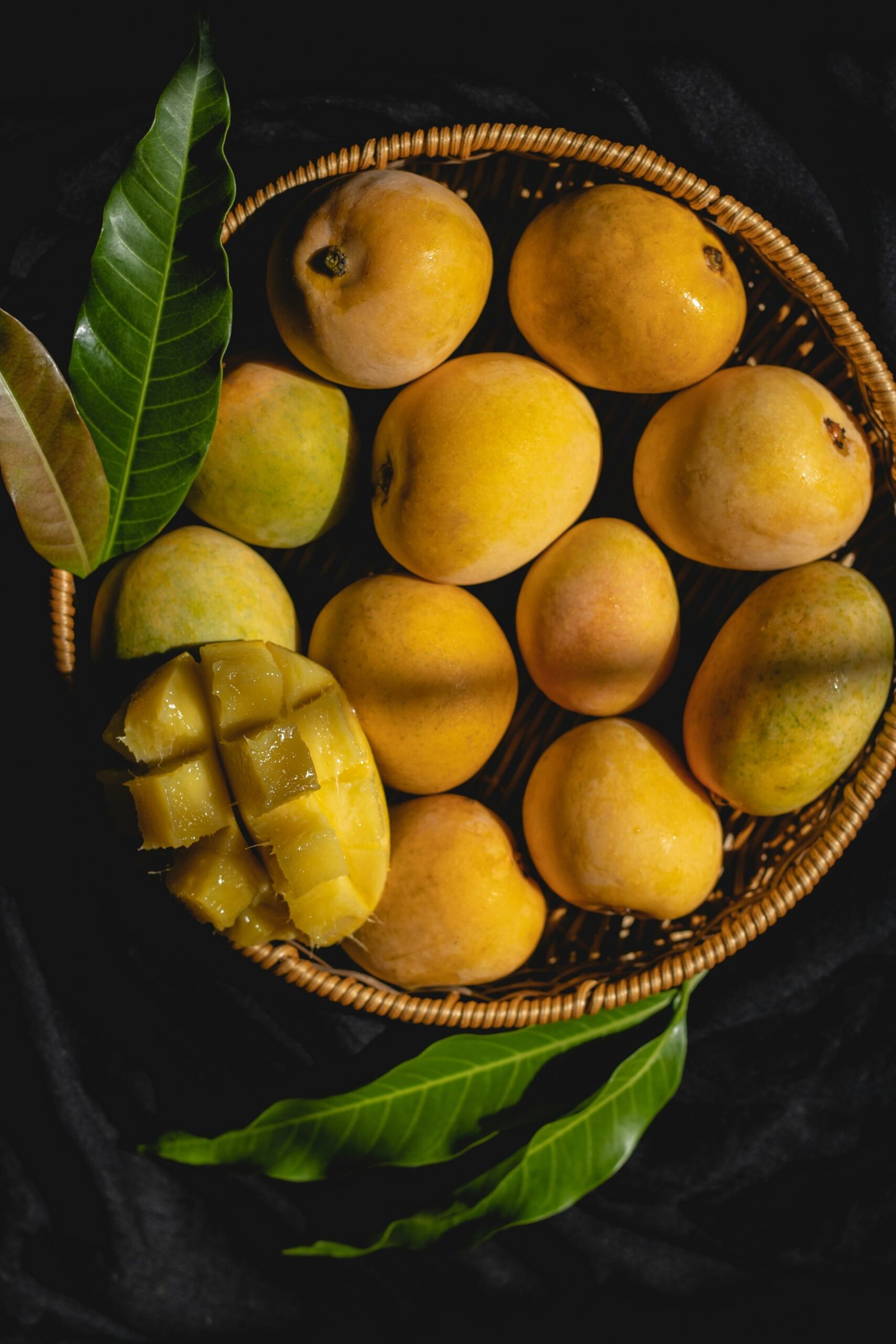
Perhaps the most defining feature of traditional Konkan mango farming is its insistence on natural ripening. In a market economy that rewards volume and speed, Konkan farmers have historically resisted artificial ripening agents. Traditionally harvested mangoes are allowed to ripen at room temperature, resting on beds of dry paddy straw that cushion the fruit and permit uniform airflow around each mango. This method produces the characteristic golden-yellow skin, the intoxicating fragrance, and the smooth, fiber-free pulp that defines a genuine Hapus mango.
The timing of the harvest itself is a skill honed over generations. Farmers look for subtle cues — the slight yellowing at the tip of the fruit, the change in the fragrance of the orchard air, and the characteristic drop in a few fruits from the tree — before they begin picking. Each mango is hand-plucked with a small portion of stem intact to prevent sap burn, a technique that preserves both the skin and the shelf life of the fruit.
Spacing, Density, and the Old Orchard Wisdom
Traditional Alphonso orchards in Konkan are planted at wide spacing — typically 8m × 8m — accommodating 80 to 100 trees per acre. This generous spacing reflects traditional wisdom about root competition, sunlight access, and airflow — all factors that influence fruit quality. Older Konkan orchards, some with trees over 60 years old, are considered the most prized for flavor precisely because the deep-rooted, mature trees extract a complex mineral profile from the laterite below in ways young trees cannot replicate.
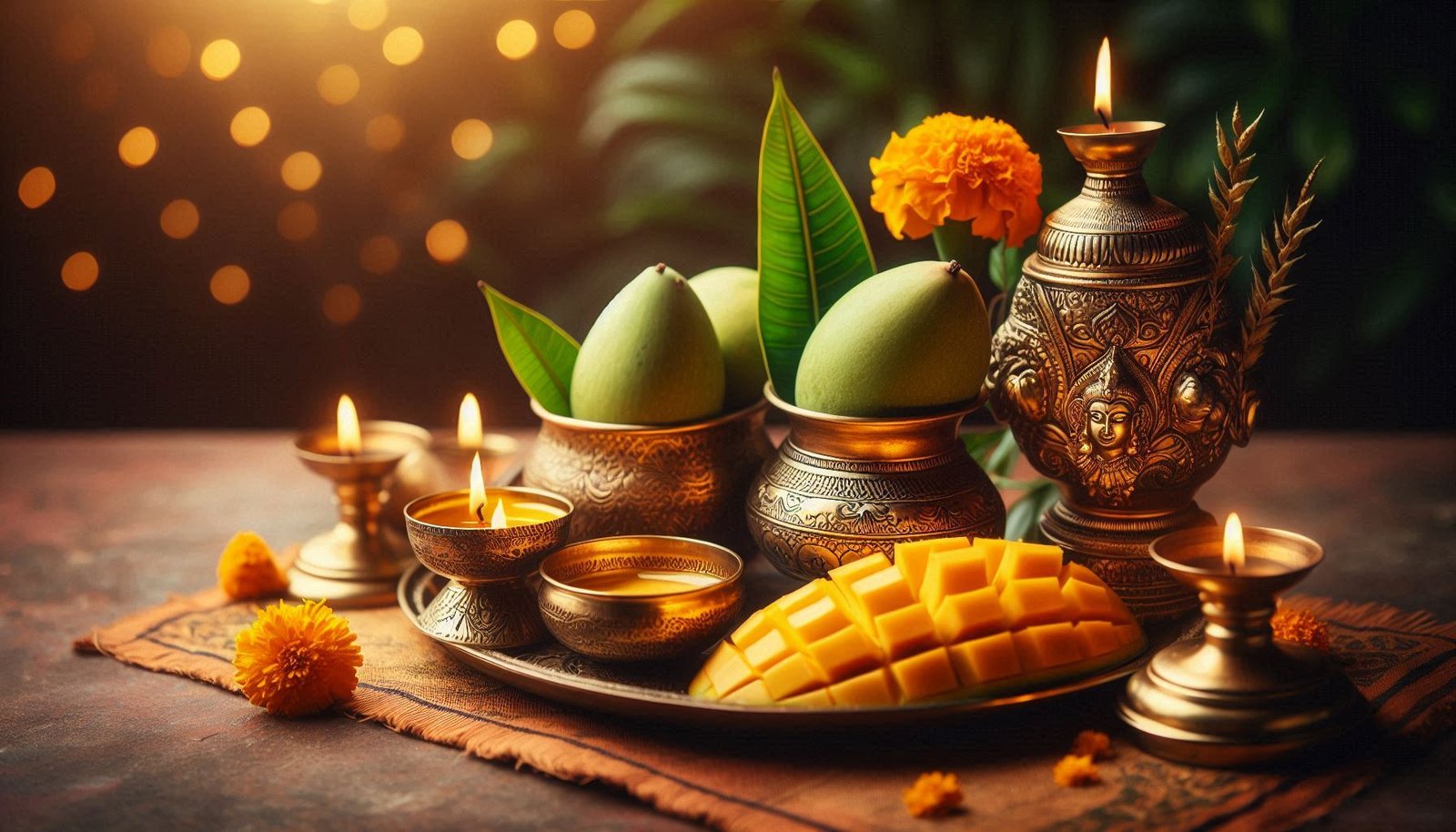
These ancestral orchards are more than farms. In Konkan culture, the aamrai — the mango grove — is a sacred space associated with family identity, ancestral memory, and seasonal celebration. The first Alphonso of the season is traditionally offered to the family deity before it is sold or eaten — a ritual that speaks to how deeply the mango is woven into the spiritual fabric of Konkan village life.
Passing the Flame Forward
Today, traditional Konkan mango farming faces pressure from climate variability, rising labor costs, and the temptation of chemical shortcuts. Yet, in villages across Ratnagiri, Devgad, Guhagar, and Lanja, farmers who have maintained traditional practices continue to produce the finest Alphonso mangoes in the world. Their orchards are living proof that the most advanced technology in mango farming is, and has always been, generations of accumulated wisdom — patient, precise, and deeply rooted in the land.